Archives

Play Video

Method converts plastic trash into clean fuel

(Credit: Getty Images)

A new chemical conversion process could transform the world’s polyolefin waste, a form of plastic, into useful products, such as clean fuels.

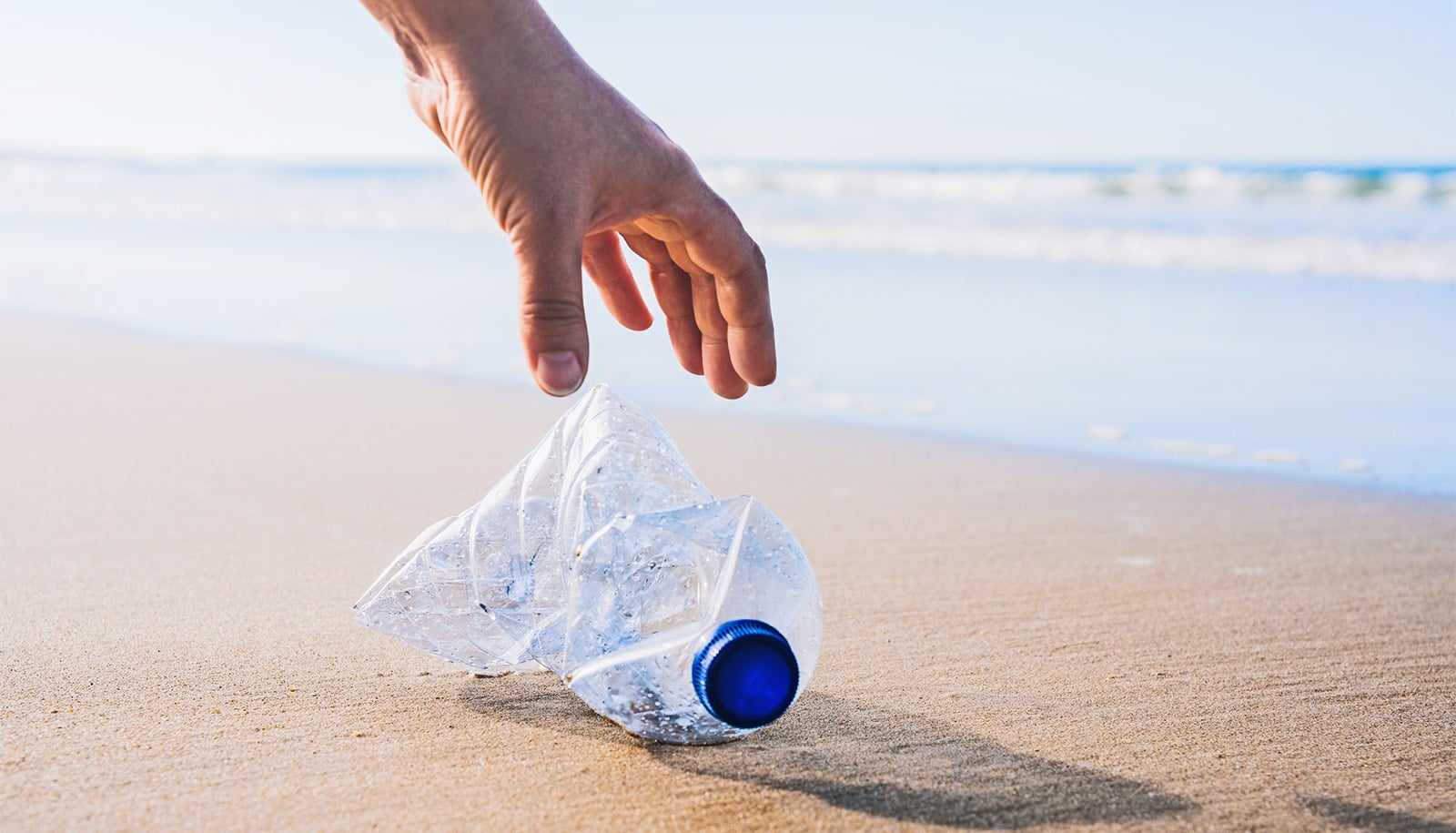
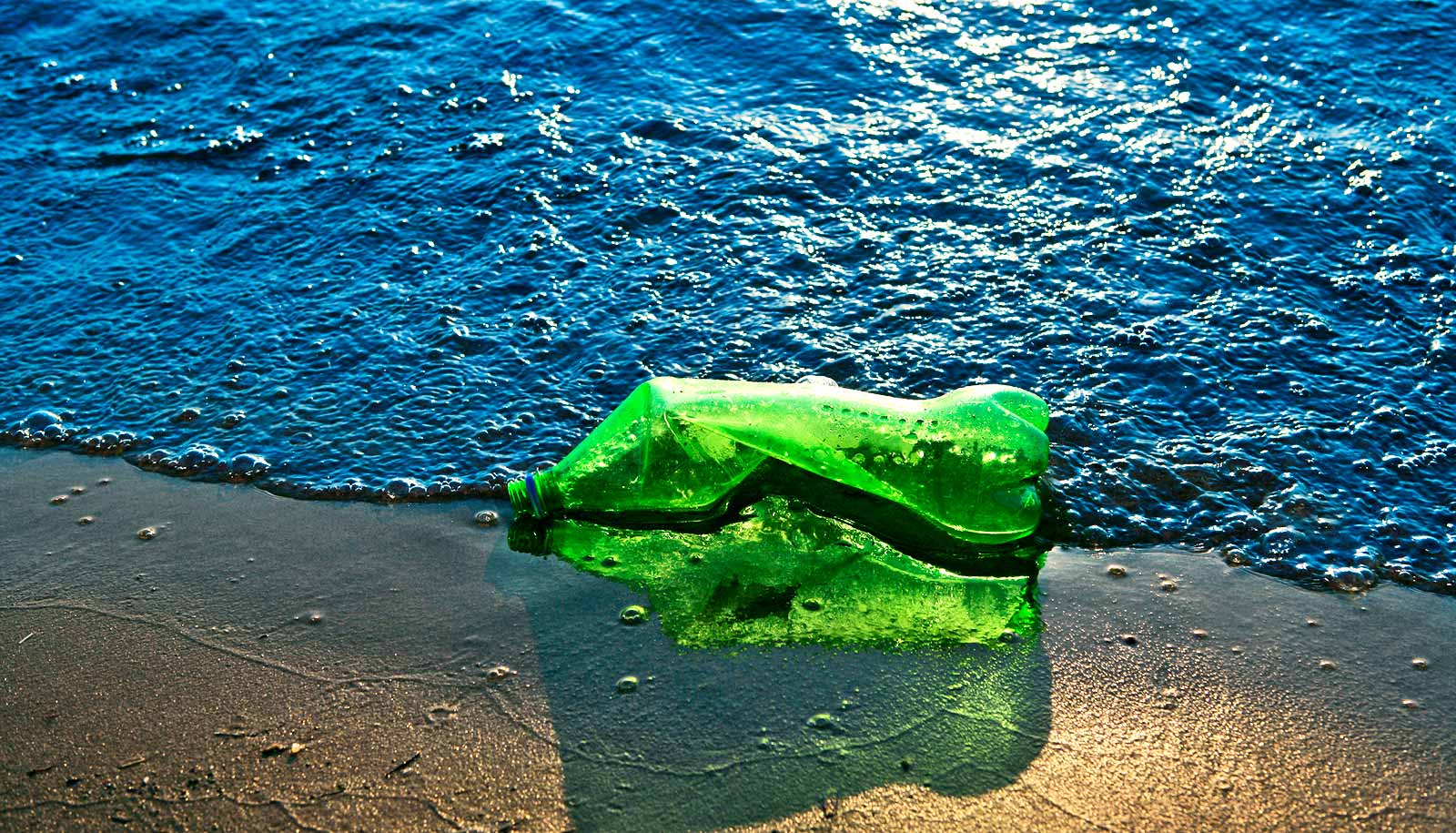
The United Nations estimates that more than 8 million tons of plastics flow into the oceans each year.

“Our strategy is to create a driving force for recycling by converting polyolefin waste into a wide range of valuable products, including polymers, naphtha (a mixture of hydrocarbons), or clean fuels,” says Linda Wang, a professor in the Davidson School of Chemical Engineering at Purdue University and leader of the research team developing this technology.

By 2050, estimates suggest the oceans will hold more plastic waste than fish.

“Our conversion technology has the potential to boost the profits of the recycling industry and shrink the world’s plastic waste stock.”

The technology can convert more than 90 percent of polyolefin waste into different products, including pure polymers, naphtha, fuels, or monomers. Now, the team is working to optimize the conversion process to produce high-quality gasoline or diesel fuels.

The conversion process incorporates selective extraction and hydrothermal liquefaction. Once researchers convert the plastic into naphtha, they can use it as a feedstock for other chemicals or further separate it into specialty solvents or other products. The clean fuels derived from the polyolefin waste generated each year can satisfy 4 percent of the annual demand for gasoline or diesel fuels.

“Plastic waste disposal, whether recycled or thrown away, does not mean the end of the story…”

Reading about the plastic waste pollution of the oceans, ground water, and the environment inspired Wang to pursue this technology.

Of all the plastics produced over the past 65 years (8.3 billion tons), about 12 percent have been incinerated and only 9 percent have been recycled. The remaining 79 percent have gone into landfills or the oceans. The World Economic Forum predicts that by 2050 the oceans will hold more plastic waste than fish if people continue dumping the waste into bodies of water.

“Plastic waste disposal, whether recycled or thrown away, does not mean the end of the story,” Wang says. “These plastics degrade slowly and release toxic microplastics and chemicals into the land and the water. This is a catastrophe, because once these pollutants are in the oceans, they are impossible to retrieve completely.”

Wang says she hopes her technology will stimulate the recycling industry to reduce the rapidly rising amount of plastic waste. She and her team are looking for investors or partners to assist with demonstrating this technology at a commercial scale.

Some results of Wang’s study appear in ACS Sustainable Chemistry and Engineering.

Wang’s technology is patented through the Purdue Research Foundation’s Office of Technology Commercialization.

Source: Purdue University

  • Human activity is dissolving the ocean floor
  • Play Video

    This alternative film for fields actually biodegrades

    (Credit: Getty Images)

    Biodegradable films could be a more eco-friendly alternative to the thin polyethylene films common in agriculture in many countries.

    Eight million tons of plastic end up in the oceans every year. Plastic pollution also threatens agricultural soils. Farmers around the world apply enormous amounts of polyethylene (PE) mulch films onto soils to combat weeds, increase soil temperature, and keep the soil moist, all of which increase overall crop yields.

    After harvest, it often is impossible for farmers to re-collect the entire films, particularly when films are only a few micrometers thin. Film debris then makes its way into the soil and accumulates in the soil over time, because PE does not biodegrade. Film residues in soils decrease soil fertility, interfere with water transport, and diminish crop growth.

    It really does biodegrade

    Researchers at ETH Zurich and the Swiss Federal Institute of Aquatic Science and Technology (Eawag) have demonstrated that soil microbes degrade films composed of the alternative polymer poly(butylene adipate-co-terephthalate) (PBAT). Their work appears in the journal Science Advances.

    “Many plastic materials simply crumble into tiny fragments that persist in the environment as microplastics—even if this plastic is invisible to the naked eye.”

    “This research directly demonstrates, for the first time, that soil microorganisms mineralize PBAT films in soils and transfer carbon from the polymer into their biomass,” says Michael Sander, senior scientist in the Environmental Chemistry Group in the department of environmental systems science at ETH Zurich.

    Like PE, PBAT is a petroleum-based polymer that is part of various products, including mulch films. Because PBAT was already classified as biodegradable in compost, the researchers aimed to assess whether PBAT also biodegrades in agricultural soils. By comparison, PE does not biodegrade in compost or in soil.

    In their experiments, the researchers used PBAT material custom-synthesized from monomers to contain a defined amount of the stable carbon-13 isotope. This isotope label enabled the scientists to track the polymer-derived carbon along different biodegradation pathways in soil.

    Upon biodegrading PBAT, the soil microorganisms liberated carbon-13 from the polymer.

    Using isotope-sensitive analytical equipment, the researchers found that the carbon-13 from PBAT was not only converted into carbon dioxide (CO2) as a result of microbial respiration but also incorporated into the biomass of microorganisms colonizing the polymer surface.

    “The beauty of our study is that we used stable isotopes to precisely track PBAT-derived carbon along different biodegradation pathways of the polymer in the soil,” says Michael Zumstein.

    The researchers are the first to successfully demonstrate that a plastic material is effectively biodegraded in soils.

    Not just microplastic bits

    In the past, not all materials with the “biodegradable” label really fulfilled the necessary criteria. “By definition biodegradation demands that microbes metabolically use all carbon in the polymer chains for energy production and biomass formation—as we now demonstrated for PBAT,” says Hans-Peter Kohler, environmental microbiologist at Eawag.

    The definition highlights that biodegradable plastics fundamentally differ from those that merely disintegrate into tiny plastic particles, for instance after exposure of the plastic to sunlight, but that do not mineralize. “Many plastic materials simply crumble into tiny fragments that persist in the environment as microplastics—even if this plastic is invisible to the naked eye,” Kohler says.

    In their experiment, the researchers placed 60 grams of soil into glass bottles each with a volume of 0.1 liter and subsequently inserted the PBAT films on a solid support into the soil.

    After six weeks of incubation, the scientists assessed the extent to which soil microorganisms had colonized the PBAT surfaces. They further quantified the amount of CO2 that was formed in the incubation bottles and how much of the carbon-13 isotope the CO2 contained. Finally, to directly demonstrate the incorporation of carbon from the polymer in the biomass of microorganisms on the polymer surfaces, they collaborated with researchers from the University of Vienna.

    Some plants have a trick for growing on extra-salty land

    At this stage, the researchers cannot yet say with certainty over which timeframe PBAT degrades in soils in the natural environment given that they conducted their experiments in the lab, not in the field. Longer-term studies in different soils and under various conditions in the field are now needed to assess the biodegradation of PBAT films under real environmental conditions.

    “Unfortunately, there is no reason to cheer as of yet: we’re still far from resolving the global environmental problem of plastic pollution,” says Sander, “but we’ve taken a very important first step in the direction of plastic biodegradability in soil.”

    At the same time, he cautions against unrealistic expectations for biodegrading plastics in the environment: “As we have demonstrated, there is hope for our soils in the form of biodegradable polymers. The results from soils should, however, not be directly transferred to other natural environments. For instance, biodegradation of polymers in seawater might be considerably slower, because the conditions there are different and so are the microbial communities.”

    Source: ETH Zurich