Researchers have discovered how heat-treated fish scales can be upcycled for pollution control and encryption.
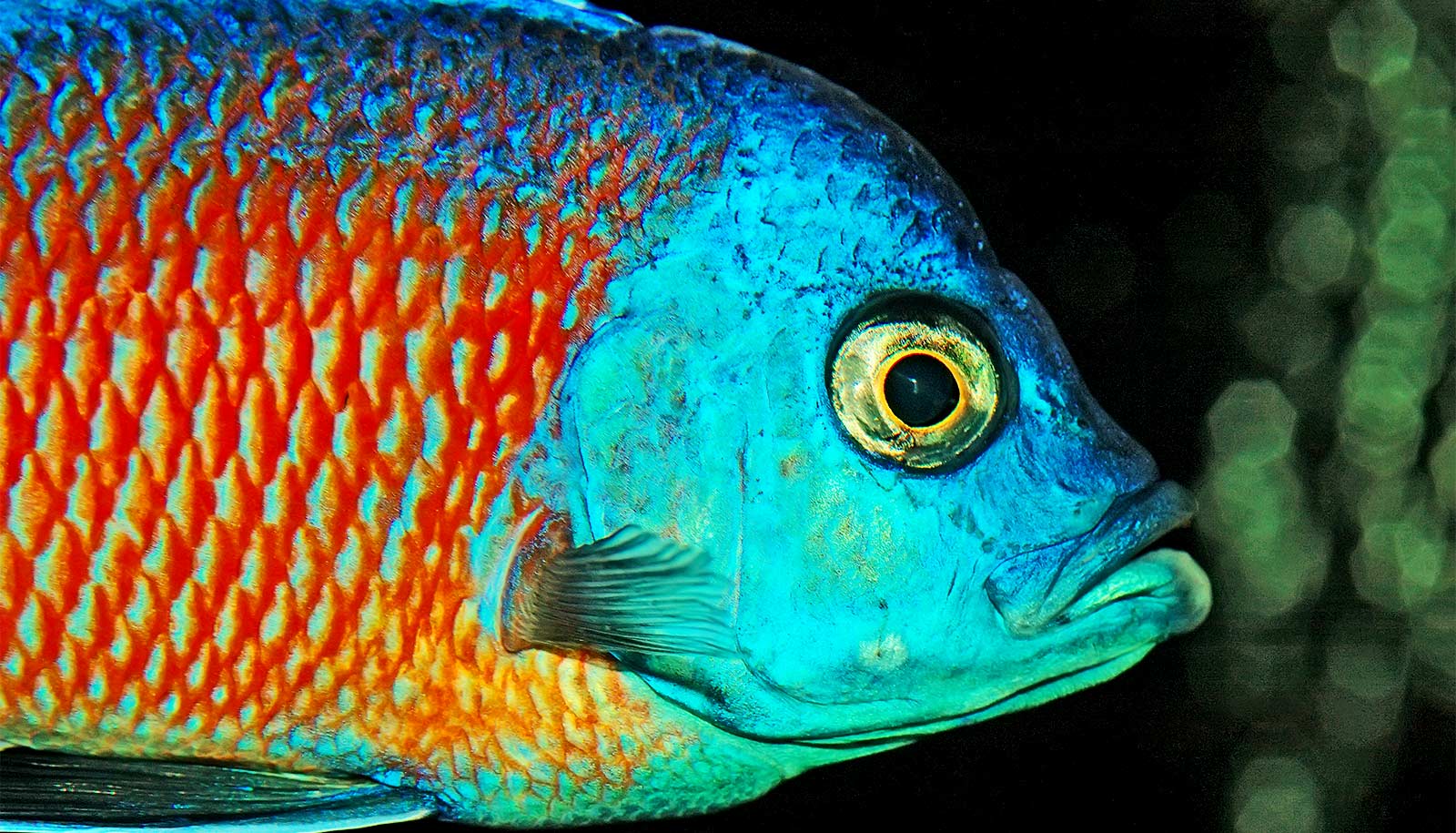
The food and aquaculture sectors generate a huge amount of fish scale waste from processes such as preparation, canning, filleting, salting, and smoking. Disposal of fish scale waste in landfills may cause serious environmental pollution problems.
Therefore, converting fish scale waste into functional materials could help to reduce environmental impact and generate economic benefits.
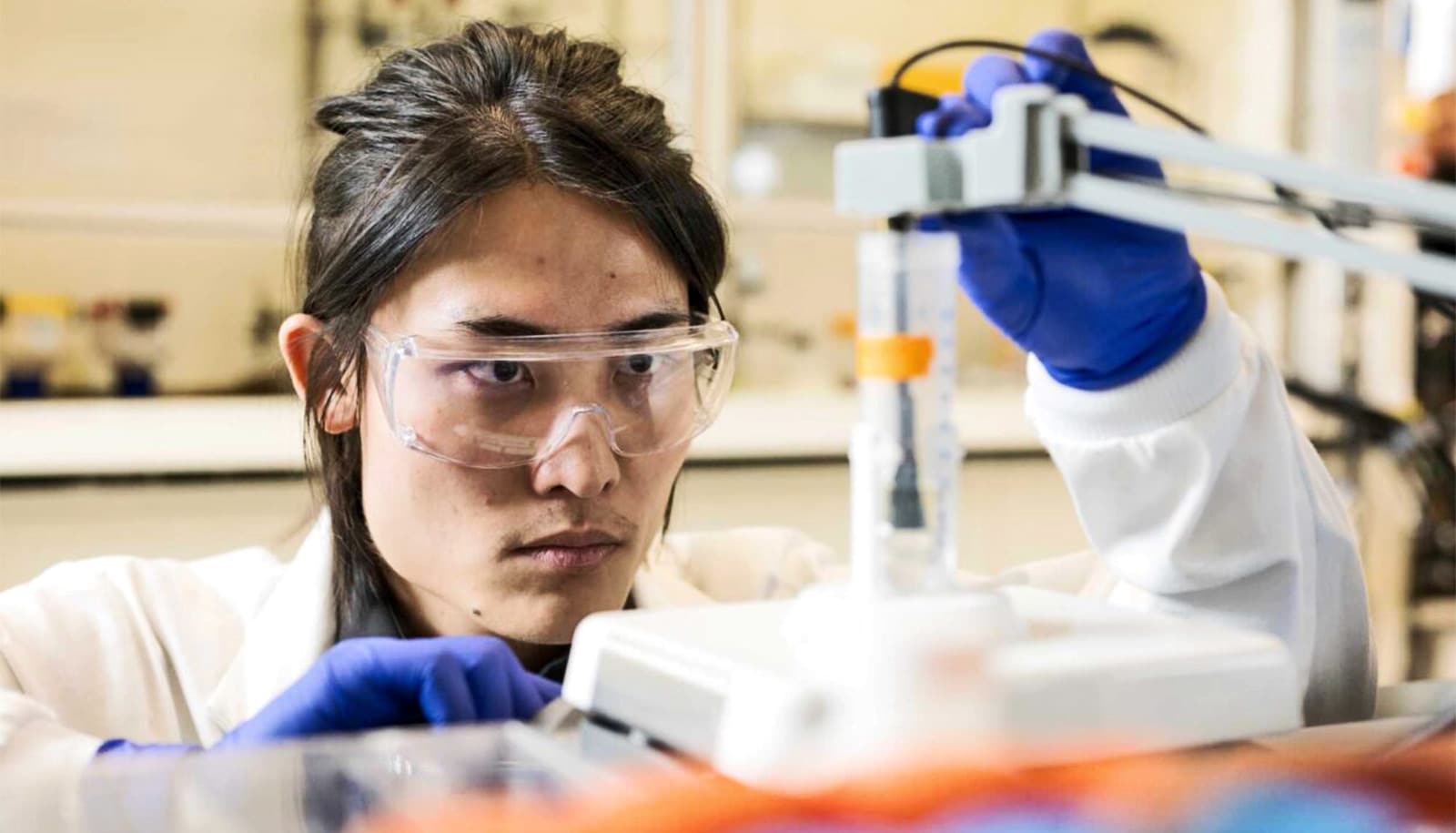
Contributing to this effort, physicists from the National University of Singapore (NUS) have developed a novel method of repurposing fish scale waste to act as a bio-adsorbant to effectively remove the pollutant Rhodamine B from water, and a material for information encryption.
A research team, led by Professor Sow Chorng Haur from the NUS physics department, discovered that heating fish scales at an optimal temperature transformed them to become suitable adsorbents for water pollutant Rhodamine B, a common pink dye used in textiles, paper, paints, and water flow tracing agents. Rhodamine B is associated with potential health risks such as cancer and liver failure, and threats to marine ecosystems.
The scientists also found that the heat-treated fish scales emitted a vibrant cyan glow, compared to a dim royal blue fluorescence when they were untreated, under ultraviolet (UV) light. This characteristic can be harnessed to utilize fish scales as a natural material capable of transmitting micro and macroscopic text and imagery.
“As the global population grows and resources become more limited, sustainability involves greater emphasis on reusing waste materials. Globally, an estimated 7.2-12 million tons of fish waste is projected to be discarded yearly. This makes fish scale waste an abundant resource for upcycling. By re-evaluating waste streams, fascinating properties and multifunctionalities can be discovered in materials that may have been overlooked previously,” says Sow.
Fish scales primarily consist of interlacing collagen, a protein known for maintaining a youthful appearance, and hydroxyapatite, a mineral found in bones and teeth. Due to the good biocompatibility of these two compounds, different methods have been used to extract them for further development into fluorescence labels which help detect biomolecules in research. However, these processes often require significant amounts of time, energy, and chemical resources. Enhancing the fluorescence of fish scales through a more direct and efficient method would improve cost-effectiveness.
With the researchers’ heating method, the fish scales undergo both chemical and physical changes. Long chains of collagen are broken down into smaller segments that emit blue light under UV excitation. Simultaneously, atom arrangement is altered which creates surface and internal pores that transform fluorescence properties and enhance pollutant adsorption.
When in contact with Rhodamine B, the heat-treated fish scales effectively removed 91% of the pollutant within a short 10-minute contact time. Fish scales contaminated with Rhodamine B can be reused through a simple sonication process, enhancing the sustainability of the material. With just a single thermal annealing step required, this innovative technique is more cost, energy, and time efficient than using other inexpensive biomass such as activated carbon white sugar which needs to go through multiple steps of chemical treatment, washing, and thermal annealing in order to remove Rhodamine B.
The fluorescent properties of the heat-treated fish scales under different types of light can also be harnessed for steganographic purposes. Scales can be heated in bulk on a hotplate and arranged to convey a message, or laser-engraved with text and images on a microscopic scale. These hidden messages can be revealed under UV light. Heat-treated fish scales which have adsorbed Rhodamine B also glow orange under green light excitation, compared to the same heat-treated fish scales without Rhodamine B that display a very dim blue fluorescence under the same light. This presents another option for steganographic pattern design.
Looking ahead, the research team will look into developing economical and readily accessible Rhodamine B test kits for use in outfield detection using heat-treated fish scales. The approach will help minimize the risk of Rhodamine B consumption and exposure by communities relying on natural water bodies, and outfield scientists transporting contaminated water sources.
Further research is also planned to explore whether the heat-treated fish scales can adsorb other toxic chemicals.
Additional researchers are from the NUS physics department; the Agency of Science, Technology and Research; and from the NUS High School of Math and Science.
The findings appear in the journal Nature Communications.
Source: National University of Singapore