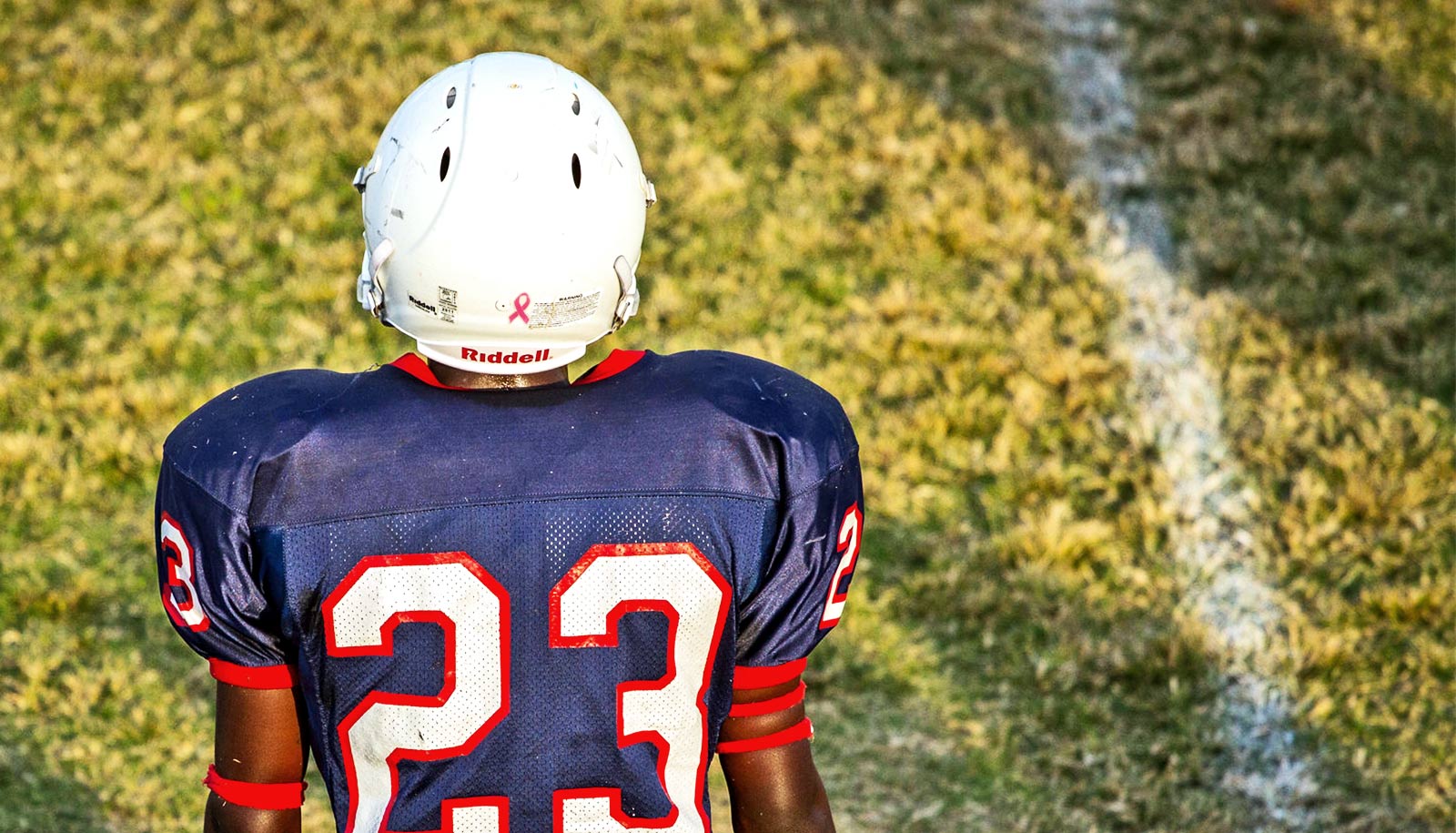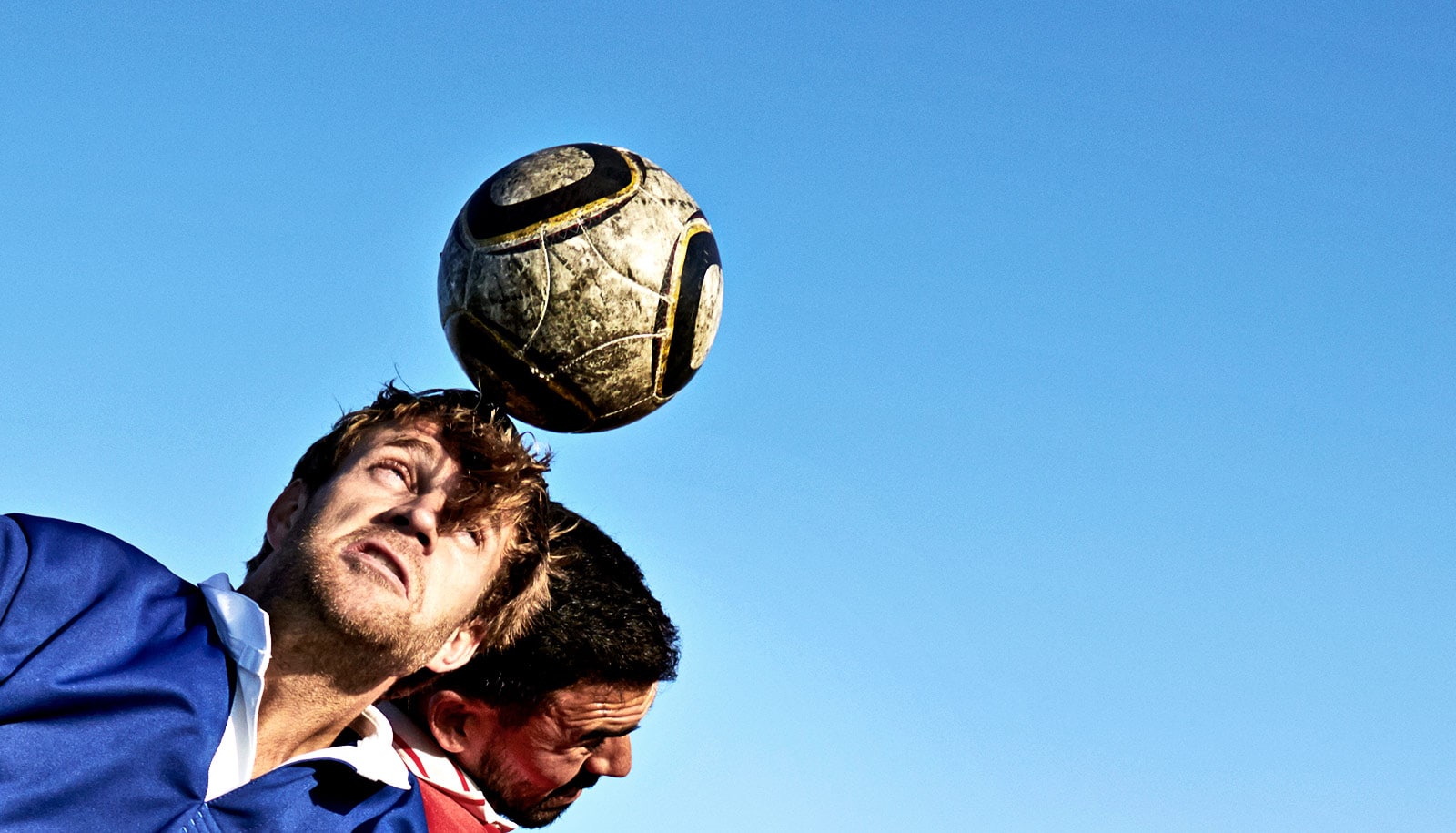
The largest study of concussion ever conducted in college athletes redefines the timeline for recovery from the suggested normal recovery time of up to 14 days to up to 28 days.
“Normal return-to-play time was previously set at 14 days–meaning 50% of people recovered in that time. Our paper suggests that 28 days more fully encapsulates the recovery process. At that point, 85% of people have returned to play,” says Steve Broglio, director of the University of Michigan Concussion Center.
The study, which appears in the journal Sports Medicine, shows that though median recovery times were consistent with the previously suggested 14 days, it was not until one month post-injury that most athletes were cleared for unrestricted sport participation.
This doesn’t mean that universities must revise their return to play protocols. “The RTP protocols are driven by clinical presentation (symptoms), not time, so they don’t need to be revised,” Broglio says.
Rather, coaches, parents, and athletes should reframe their expectations for return to play, in part to avoid stigmatizing concussed athletes who take longer than 14 days to recover, he says.
Reframing the normal recovery time to 28 days helps eliminate unintentional social pressure from teammates, coaches, or parents who hope to see their player back on the field. If a concussed athlete takes longer than 14 days or up to a month, that’s completely normal, he says.
There wasn’t much variation in recovery times among study subgroups, with various factors altering recovery by only up to two days. The total return-to-play duration was shorter with ADHD medication usage, males, and greater assessment frequency. Those with greater initial post-injury symptom severity, practice/training-related injuries, and three or more prior concussions had longer recoveries.
Concussion management recommendations are outlined every four years by the Concussion in Sport Group, an international body that reviews the medical literature and develops guidelines on clinical care. This paper and others resulting from the CARE Consortium will likely be taken into consideration when the group meets next year, says Broglio, who is also a member of CISG.
Despite increased research in concussion over the previous decade, the trajectory of concussion recovery times across diverse populations of athletes has remained poorly defined, because most sport concussion research centered on male athletes in collision sports, or on female soccer players, Broglio says.
The current study included 34,709 male and female athletes from 30 colleges and universities—more than 1,700 of whom were concussed while participating in 22 sports.
Concussed male athletes most commonly played football (54.7%), soccer (10.7%), basketball (6.8%), and wrestling (6.4%), while concussed female athletes most commonly played soccer (23.4%), volleyball (14%), basketball (12.9%), and lacrosse (8.4%).
Male and female athletes took about the same amount of time to recover from concussion, give or take a day, Broglio says.
Concussion education and treatment has improved dramatically in the last two decades, he says.
“Back when I started in concussion research 20 years ago, we’d manage these injuries with a light switch. We’d ask, ‘Do you have symptoms?’ and if the answer was no, the athlete was put back on the field. Gone are the days when concussed athletes are put back in the same day,” Broglio says.
“Now, we can think of it as a dial, where we slowly progress people back into the sport. Once a player is asymptomatic, it can still take some time. We have to respect the injury and respect the recovery process.”
Additional coauthors are from Indiana University, the Medical College of Wisconsin, and CARE Consortium investigators.
Source: University of Michigan