Archives

  • Egyptian fruit bat brains suit tongue echolocation
  • Play Video

    To track sea turtles, get DNA from the sand

    "You don't need to be a highly trained scientist to collect eDNA, which makes this technology a lot more democratic," David Duffy says. "This really opens up the ability to monitor wildlife non-invasively to a much wider pool of people." (Credit: ericdalecreative/Flickr)

    The DNA “fingerprints” that sea turtles leave behind offer scientists a way to track the health and whereabouts of the endangered animals, say researchers.

    The study is the first to sequence sea turtles’ environmental DNA, or eDNA—genetic material shed as they travel over beaches and in water. The research project is also the first to successfully collect animal eDNA from beach sand. Scientists could use the techniques to trace and study other kinds of wildlife, advancing research, and informing conservation strategies.

    “We wanted to test the boundaries of this technology, which hadn’t really been applied to sea turtles before and certainly not on sand,” says David Duffy, assistant professor of wildlife disease genomics at the University of Florida. “This is a way to survey areas for elusive animals or species that can be hard to study otherwise. It’s essentially wildlife forensics.”

    Nearly all of the planet’s sea turtle species are endangered and face a multitude of threats, including warming temperatures, habitat destruction and degradation, disease, hunting, and pollutants such as plastics. Conserving sea turtles is also complicated because current survey methods rely on spotting them in one of their multiple habitats—in the open sea, coastal ecosystems, or on beaches where they nest. This makes it difficult to monitor their numbers, genetic diversity, and overall health and tailor conservation efforts accordingly, Duffy says.

    “Some of these threats are quite new and even ones that existed for a longer time are getting worse,” says Duffy, who is based at the university’s Whitney Laboratory for Marine Bioscience and Sea Turtle Hospital. “That’s why it’s very important for us to have these DNA tools to be able to get a proper handle on what’s happening to the population in real time.”

    eDNA techniques were originally developed to extract and analyze DNA from microbes in soil and water. Now, however, scientists are using the technology to detect the presence of much larger animals, which regularly leave behind small amounts of genetic material via skin, hair, scales, feces, or bodily fluids.

    A team led by Duffy and graduate students Jessica Farrell and Liam Whitmore created techniques that can identify the presence of green turtles, Chelonia mydas, and loggerheads, Caretta caretta—both endangered species—via DNA in a small scoop of sand or a liter of seawater. Minuscule amounts of DNA revealed not only which species of sea turtles had recently passed through, but also their place of origin and the subpopulation to which they belonged. On sand, the team was even able to extract viable DNA from a crawl track made by a single loggerhead hatchling, which weighs about as much as a dozen paperclips.

    The methods could help scientists verify where sea turtles are living and how their range and numbers are shifting over time, Duffy says. eDNA also omits the need to take tissue and blood samples, which can be stressful for turtles, particularly nesting females.

    “By optimizing eDNA practices for sea turtles, we had a much better success rate of identifying them in an area than with traditional survey methods,” Duffy says. “We were surprised at how sensitive it was.”

    The team could also ascertain sea turtle pathogens in eDNA samples, including the main virus that causes fibropapillomatosis, an increasingly common cancer that causes cauliflower-like tumors on sea turtles’ skin, eyes, mouth, and internal organs. About 50% of green turtles that strand on Florida beaches are afflicted with these tumors, which can become so debilitating that they affect turtles’ ability to catch food and swim. eDNA techniques could pinpoint specific variants of the virus and its concentration in the water column—helpful advancements in following its spread and developing potential treatments in the future, Duffy says.

    The next step in the research project will focus on conservation genetics—using DNA to capture a snapshot of how many individual animals live in an area and how genetically diverse they are, a crucial predictor in how they will weather threats, Duffy says.

    “You can say not only whether the species is present or absent, but you can potentially start to measure how many of those species are present, which is not easy to do for marine animals,” he says.

    Before testing eDNA methods in the wild, the team refined their techniques in the tanks and sand occupied by recuperating turtles at the Whitney Laboratory. Duffy and his team also used Whitney Laboratory’s statewide network of volunteers to collect sand samples from nesting beaches across Florida. The scientists found that eDNA from sea turtle nests remained viable for more than a day before collection. Once collected and stored, DNA in sand and water samples was stable for weeks to months, allowing time for citizen scientists as far away as the Florida Keys to obtain and ship samples to the Whitney Lab for processing.

    “You don’t need to be a highly trained scientist to collect eDNA, which makes this technology a lot more democratic,” Duffy says. “This really opens up the ability to monitor wildlife non-invasively to a much wider pool of people.”

    The study appears in Molecular Ecology Resources. Funding for the research came from the National Save The Sea Turtle Foundation, Inc.’s Fibropapillomatosis Training and Research Initiative; a Welsh Government Sêr Cymru II; European Union’s Horizon 2020 research and innovation program; the Gumbo Limbo Nature Center; and an Irish Research Council Government of Ireland Postgraduate Scholarship.

    Source: University of Florida
    Play Video

    Environmental DNA tracks invasive green crabs

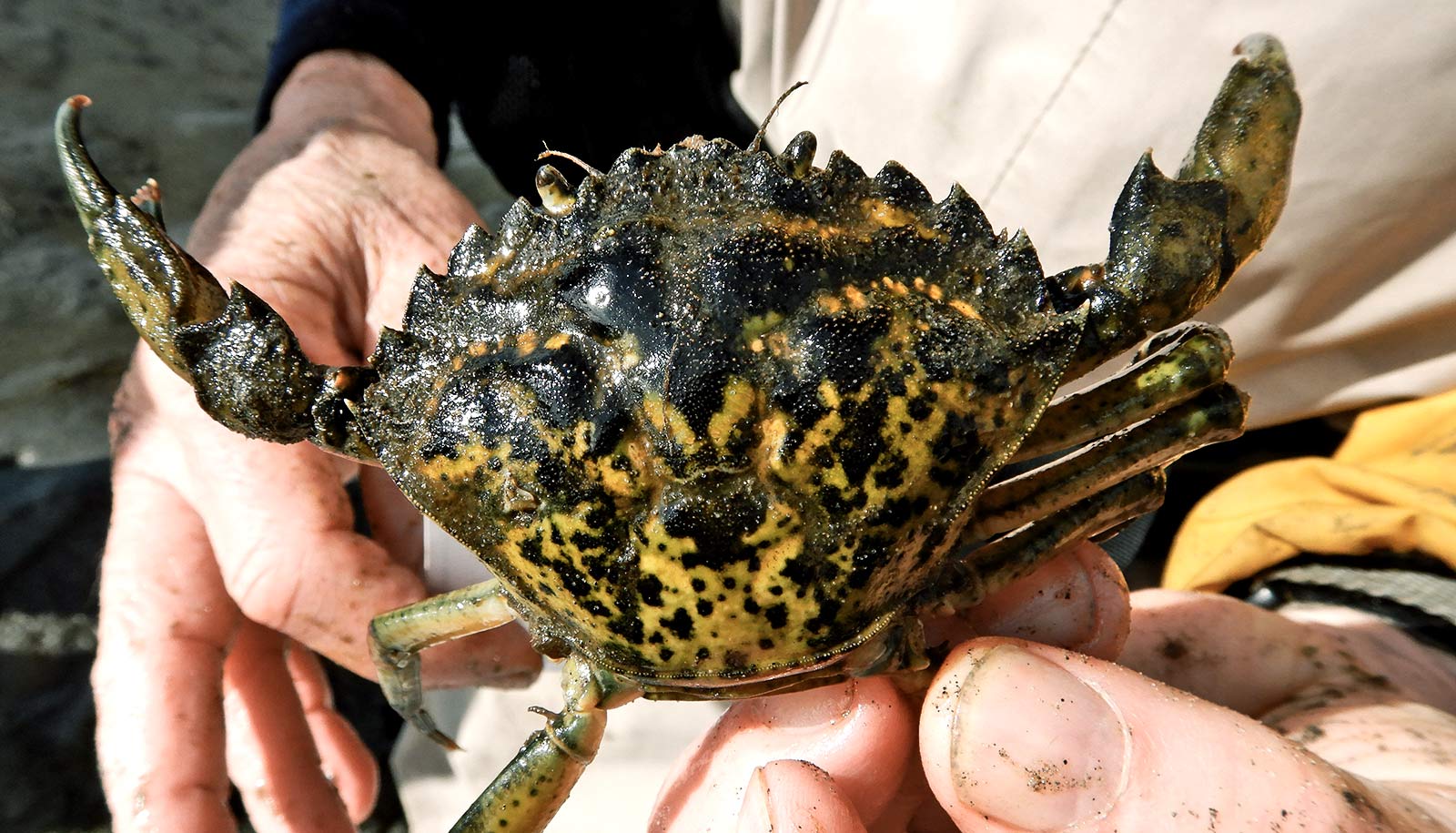
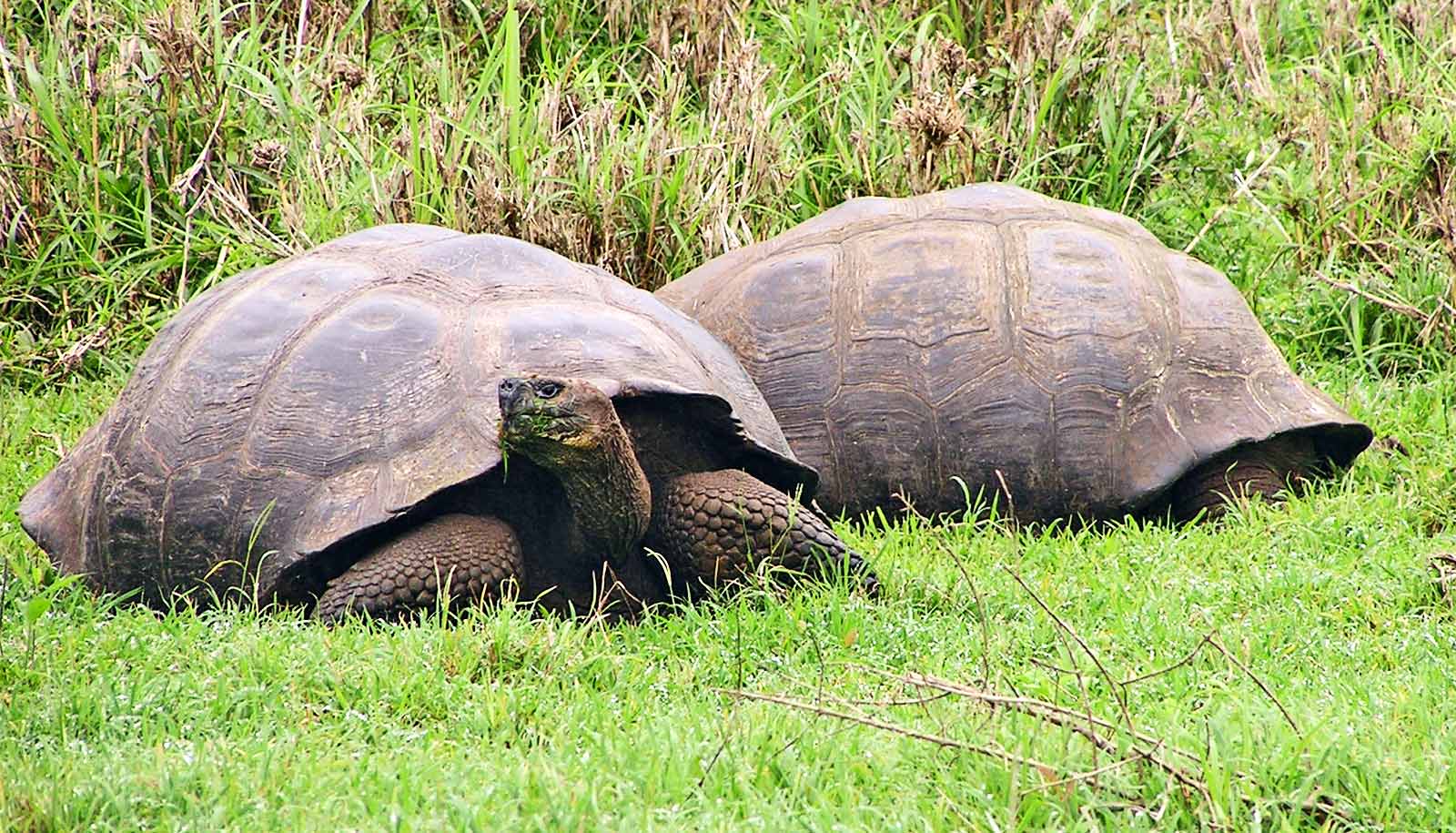
    "From a management perspective, the value of this tool just really comes to life in places that are more remote or have a lot of shoreline to cover, like Alaska, where green crabs haven't yet been detected," says Emily Grason. Above, a European green crab. (Credit: USFWS/Flickr)

    A new method using water testing and genetic analysis could help contain future European green crab invasions, say researchers.

    European green crabs feast on shellfish, destroy marsh habitats by burrowing in the mud, and obliterate valuable seagrass beds. The invasive species also reproduces quickly, making it a nightmare for wildlife managers seeking to control its spread in Washington state’s marine waters.

    Last month, Governor Jay Inslee issued an emergency order in response to more than 70,000 crabs caught on Lummi Nation land as well as dramatic increases in crab populations on Washington’s outer coast and other locations in Puget Sound in recent years.

    In the journal Ecological Applications, researchers show that the new DNA-based technique works as well at detecting the presence of green crabs as setting traps to catch the live animals, which is a more laborious process. Results suggest these two methods could complement each other as approaches to learn where the species’ range is expanding.

    The new method relies on genetic material in the environment, known as eDNA, that is found in the water after organisms move through. Scientists can collect a bottle of water from a location, extract DNA from the water, and discern which species were present recently in that area.

    “We have limited resources to be able to combat this problem, and it’s important to think about how to allocate those resources efficiently and effectively,” says lead author Abigail Keller, who completed the work as a master’s student in the University of Washington School of Marine and Environmental Affairs. “Knowing the best situations for using eDNA to detect invasive green crabs is important, and that’s what our study tried to tackle.”

    The research team relied on data collected over three months in 2020 from green crab traps in 20 locations throughout Puget Sound and the outer coast. Trapping at these locations was done by a large number of partners participating in statewide efforts to monitor and control European green crab, including multiple tribes, Washington Department of Fish and Wildlife—the state lead for green crab management—Washington Sea Grant’s Crab Team, and other state and federal agencies.

    Environmental DNA

    For the study, the researchers visited each location and collected water samples, then ran genetic analyses to detect both the presence and quantity of European green crab in each location. In this way they could validate the eDNA data with the actual presence and numbers of crabs. They found that using eDNA to detect the presence and abundance of the species was as sensitive as trapping and counting live crabs.

    This is significant, the researchers say, because eDNA as a detection method is new, and it hasn’t always been clear how to interpret eDNA detections in past scenarios. This study shows how conventional monitoring methods—in this case, trapping and counting crabs—can combine with eDNA techniques to more effectively find and control invasive species outbreaks.

    “Here’s a really well-validated example of how to use eDNA in the real world. To me that’s really exciting,” says coauthor Ryan Kelly, associate professor in the University of Washington’s School of Marine and Environmental Affairs. “There are lots of invasive species, and many imperiled and endangered species that are hard to monitor, so this is one significant way forward on all of those fronts.”

    The study also evaluates when eDNA would add value in monitoring for invasive crabs, and when conventional trapping and counting still make the most sense. For example, taking water samples and testing for green crab DNA in remote locations—or in areas where outbreaks haven’t yet been identified—could save time and resources instead of deploying traps. Alternatively, eDNA probably wouldn’t be helpful in locations where large numbers of green crabs are already living and where community scientists and managers are already trapping and controlling those populations, the researchers explain.

    “From a management perspective, the value of this tool just really comes to life in places that are more remote or have a lot of shoreline to cover, like Alaska, where green crabs haven’t yet been detected,” says coauthor Emily Grason, a marine ecologist who leads the Washington Sea Grant Crab Team. “I see eDNA as another tool in the toolkit, and we can imagine scenarios where it can be used alongside trapping, especially as an early detection method.”

    Stop those green crabs

    Finding these crabs soon after they have occupied a new location is important for controlling the population and protecting native habitats. Managers could get ahead of new invasions by testing water from multiple locations, and then follow up with more water testing, on-the-ground monitoring and trapping if green crab DNA is detected.

    The paper identified green crab DNA in one location where the species hasn’t yet been captured, near Vashon Island. The research team followed up a year later with intensive trapping and retested the water; no green crabs or additional green crab DNA were found. The researchers think the earlier positive sample likely was picking up green crab larvae, which weren’t present in that location a year later. Notably, the effort represented an important test case for how eDNA and traditional trapping can be implemented together for green crab management.

    “The reason we pursued this project in the beginning is that early detection of green crabs is difficult—it’s like finding a needle in a haystack,” says coauthor P. Sean McDonald, associate teaching professor in environmental studies and aquatic and fishery sciences and the university’s principal investigator for Crab Team research. “So if adding eDNA to our toolkit helps us detect those needles, then that’s great to have at our disposal.”

    Ana Ramón-Laca of the Cooperative Institute for Climate, Ocean, and Ecosystem Studies is an additional coauthor. Funding came from Washington Sea Grant.

    Source: University of Washington