Archives

  • Interventions really do reduce lead dust. But not enough?
  • Play Video

    ‘Twitter for aircraft’ keeps drones from getting lost

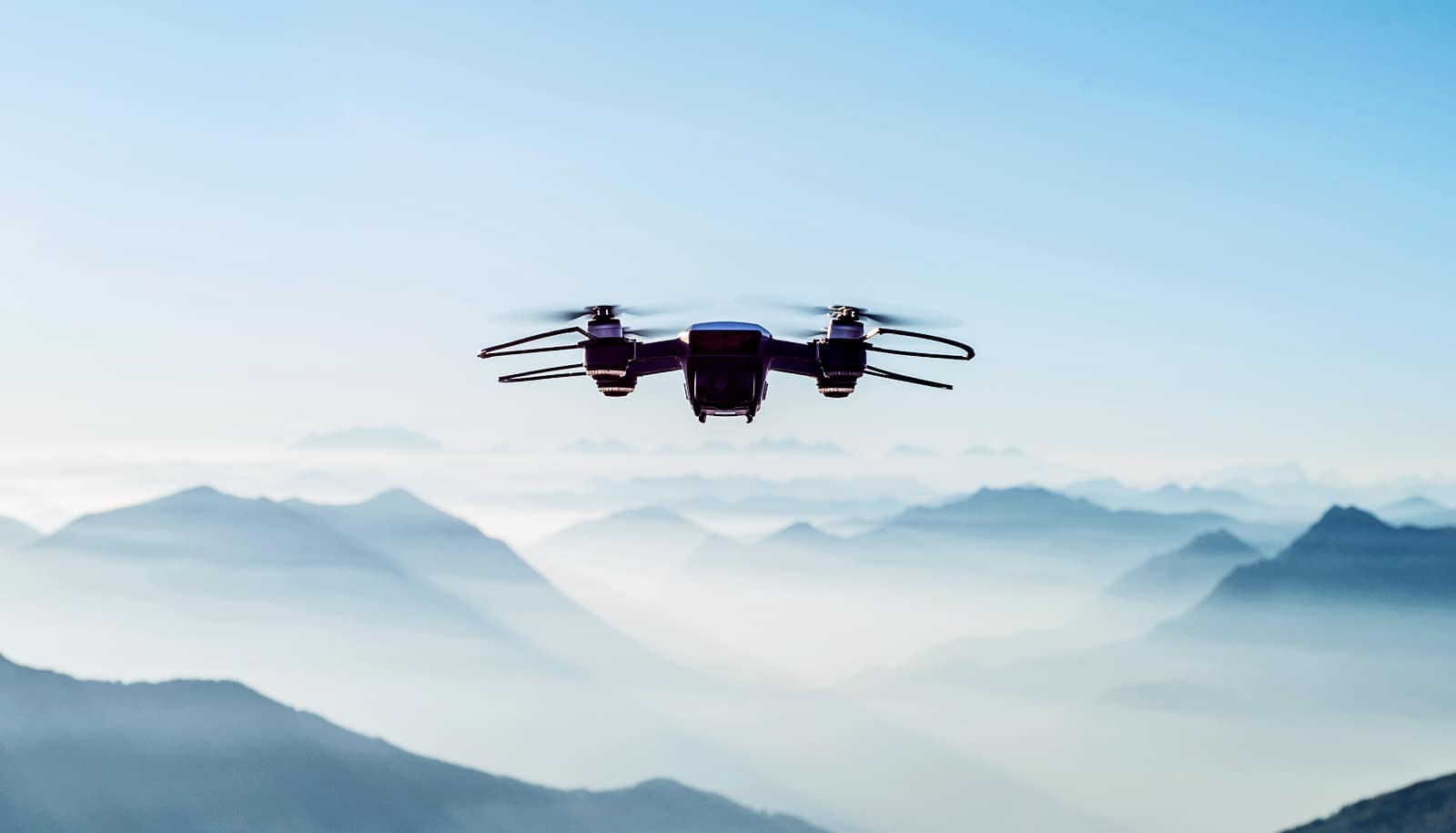
    (Credit: asoggetti/Unsplash)

    Drones use GPS to find their way without a pilot. But when GPS signals get blocked, drones can get lost. A new method that uses an antenna on the ground offers a backup.

    “…Without [GPS], tiny drones all the way up to commercial aircraft can’t do their jobs.”

    “Right now GPS is the one ring to rule them all: Without it, tiny drones all the way up to commercial aircraft can’t do their jobs. It’s a huge liability,” says Christopher Lum, a research assistant professor of aeronautics and astronautics at the University of Washington and director of the Autonomous Flight Systems Laboratory.

    “Before GPS was widely used, pilots had myriad other techniques for navigation. Now we need to fall back to some of those older techniques to keep unmanned vehicles like drones in the air without GPS.”

    The team’s unmanned drones carry transponders on board that send signals to operators and any surrounding aircraft about their whereabouts.

    “A transponder is like Twitter for aircraft,” says Lum. “It blabs out information to anyone who’s listening, such as: ‘Here’s my GPS position, here’s my GPS position.’ Then everyone else knows where the aircraft is.”

    Where am I?

    If GPS is knocked out, the transponder doesn’t know its location, but it will still send signals. So the team used a large ground-based antenna array to pick up the signals and then triangulate the position of the aircraft.

    “The ground station is smarter than the aircraft at that point,” says Lum. “We’re just modifying the autopilot onboard the aircraft. Instead of using GPS information to navigate, it’s listening to this message coming from the ground to figure out where it is.”

    The team tested their system with the antenna array in June at the Columbia Gorge Regional Airport, just across the Columbia River from The Dalles, Oregon. The drone successfully completed its 1.25-mile flight path without using GPS. The only time it deviated from the designated path was due to wind.

    drone researchers
    Cory Cantey (left) and Karine Chen prepare the drone, Papaya, for flight. (Credit: Autonomous Flight Systems Laboratory/U. Washington)

    While this is not the first technique researchers have developed to keep aircraft flying without using GPS, what’s new is the transponder.

    “It’s the size of a pack of cards,” says Helen Kuni, an undergraduate student and the director of flight operations for the lab. “And the hardware that makes the system work is extremely simple. It’s really easy to stick it on an aircraft and make it work. It won’t add much weight to a small aircraft with weight limits.”

    What’s next?

    The ground-based antenna system, on the other hand, makes this technique cumbersome. Right now it only works when the team is flying a drone at an airport with that antenna system.

    But the team has plans to expand the drones’ ranges. Starting this fall, Lum will partner with T-Mobile to try to use cellphone towers to perform the same function.

    “T-Mobile has got that black magic to know where a phone is located anywhere within their antenna array,” says Lum. “So instead of being stuck in the Columbia Gorge region, our drones could use the cell network to get that location information anywhere there is cell coverage. It’s beautiful.”

    Once the drones can fly larger distances without GPS, the team hopes to use them to help transport medical supplies to and from rural areas in the state of Washington.

    The Advanced Navigation and Positioning Corporation, Hood Technologies, Sagetech Corp, Insitu, and the Joint Center for Aerospace Technology Innovation funded the work.

    Source: Sarah McQuate University of Washington

    Play Video

    Watch: VR lets users control robots from miles away

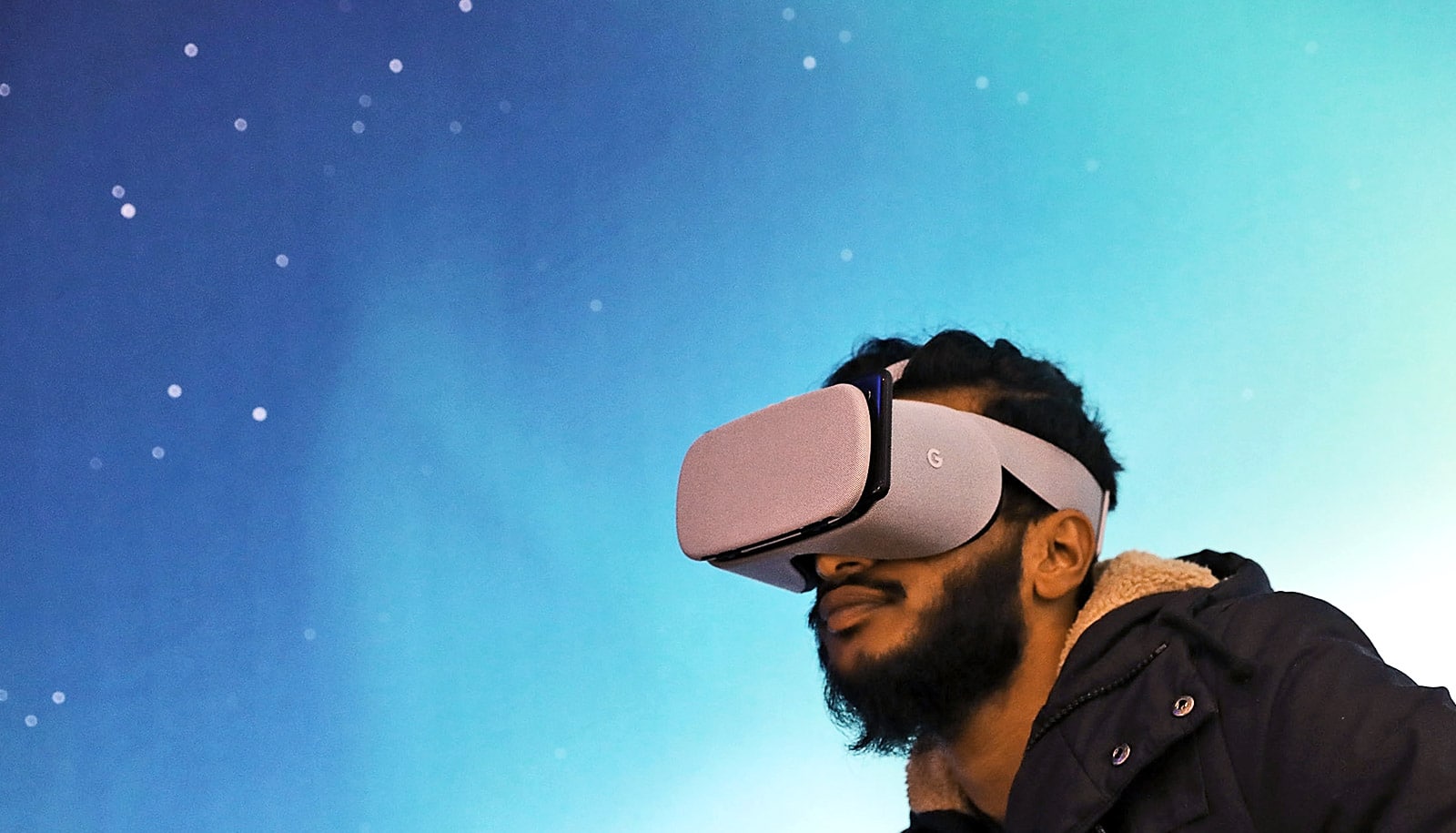
    (Credit: Getty Images)

    New software allows people using virtual reality hardware to control robots over the internet.

    Even as autonomous robots get better at doing things on their own, there will still be plenty of circumstances where humans might need to step in and take control. The new software allows remote control over the robots and helps users to become immersed in a robot’s surroundings despite being miles away physically.

    The software connects a robot’s arms and grippers as well as its onboard cameras and sensors to off-the-shelf virtual reality hardware via the internet.

    Using handheld controllers, users can control the position of the robot’s arms to perform intricate manipulation tasks just by moving their own arms. Users can step into the robot’s metal skin and get a first-person view of the environment, or can walk around the robot to survey the scene in the third person—whichever is easier for accomplishing the task at hand.

    student controlling robot with VR headset
    Undergraduate Eric Rosen operates a Baxter robot using a virtual reality interface developed in the Humans to Robots lab. (Credit: Nick Dentamaro/Brown)

    The data transferred between the robot and the virtual reality unit are compact enough to be sent over the internet with minimal lag, making it possible for users to guide robots from great distances.

    “We think this could be useful in any situation where we need some deft manipulation to be done, but where people shouldn’t be,” says David Whitney, a graduate student at Brown University who co-led the development of the system.

    “Three examples we were thinking of specifically were in defusing bombs, working inside a damaged nuclear facility, or operating the robotic arm on the International Space Station.”

    “In VR, people can just move the robot like they move their bodies, and so they can do it without thinking about it…”

    Whitney co-led the work with undergraduate student Eric Rosen. Both work in the Humans to Robots lab, which Stefanie Tellex, an assistant professor of computer science, leads.

    Even highly sophisticated robots are often remotely controlled using some fairly unsophisticated means—often a keyboard or something like a video game controller and a two-dimensional monitor. That works fine, Whitney and Rosen say, for tasks like driving a wheeled robot around or flying a drone, but can be problematic for more complex tasks.

    “For things like operating a robotic arm with lots of degrees of freedom, keyboards and game controllers just aren’t very intuitive,” Whitney says. And mapping a three-dimensional environment onto a two-dimensional screen could limit one’s perception of the space the robot inhabits.

    Whitney and Rosen thought virtual reality might offer a more intuitive and immersive option. Their software links together a Baxter research robot with an HTC Vive, a virtual reality system that comes with hand controllers. The software uses the robot’s sensors to create a point-cloud model of the robot itself and its surroundings, which is transmitted to a remote computer connected to the Vive. Users can see that space in the headset and virtually walk around inside it. At the same time, users see live high-definition video from the robot’s wrist cameras for detailed views of manipulation tasks to be performed.

    Gentle nudges teach robots to better assist us

    For their study, the researchers showed that they could create an immersive experience for users while keeping the data load small enough that it could be carried over the internet without a distracting lag.

    A user in Providence, Rhode Island, for example, was able to perform a manipulation task—the stacking of plastic cups one inside the others—using a robot 41 miles away in Cambridge, Massachusetts.

    In additional studies, 18 novice users were able to complete the cup-stacking task 66 percent faster in virtual reality compared with a traditional keyboard-and-monitor interface. Users also reported enjoying the virtual interface more, and they found the manipulation tasks to be less demanding compared with keyboard and monitor.

    Rosen thinks the increased speed in performing the task was due to the intuitiveness of the virtual reality interface.

    “In VR, people can just move the robot like they move their bodies, and so they can do it without thinking about it,” Rosen says. “That lets people focus on the problem or task at hand without the increased cognitive load of trying to figure out how to move the robot.”

    The researchers plan to continue developing the system. The first iteration focused on a fairly simple manipulation task with a robot that was stationary in the environment. They’d like to try more complex tasks and later combine manipulation with navigation. They’d also like to experiment with mixed autonomy, where the robot does some tasks on its own and the user takes over for other tasks.

    There are perks to attending class as a robot

    The researchers have made the system freely available online. They hope other robotics researchers might give it a try and take it in new directions of their own.

    The researchers presented a paper describing the system and evaluating its usability at the International Symposium on Robotics Research in Chile.

    In addition to Whitney, Rosen, and Tellex, other authors on the paper were Elizabeth Phillips, a postdoctoral researcher with Brown’s Humanity Centered Robotics Initiative, and George Konidaris, as assistant professor of computer science. Grants from the Defense Advanced Research Projects Agency (DARPA) funded this work in part.

    Source: Brown University