Archives

Play Video

Watch: Morphing material goes from flat to face

(Credit: Jeff Fitlow/Rice)

Scientists have created a rubbery, shape-shifting material that morphs from one sophisticated form to another on demand.

The shapes programmed into a polymer appear in ambient conditions and melt away when under heat. The process also works in reverse.

The smooth operation belies a battle at the nanoscale, where liquid crystals and the elastomer in which they’re embedded fight for control. When cool, the shape programmed into the liquid crystals dominates, but when heated, the crystals relax within the rubber band-like elastomer, like ice melting into water.

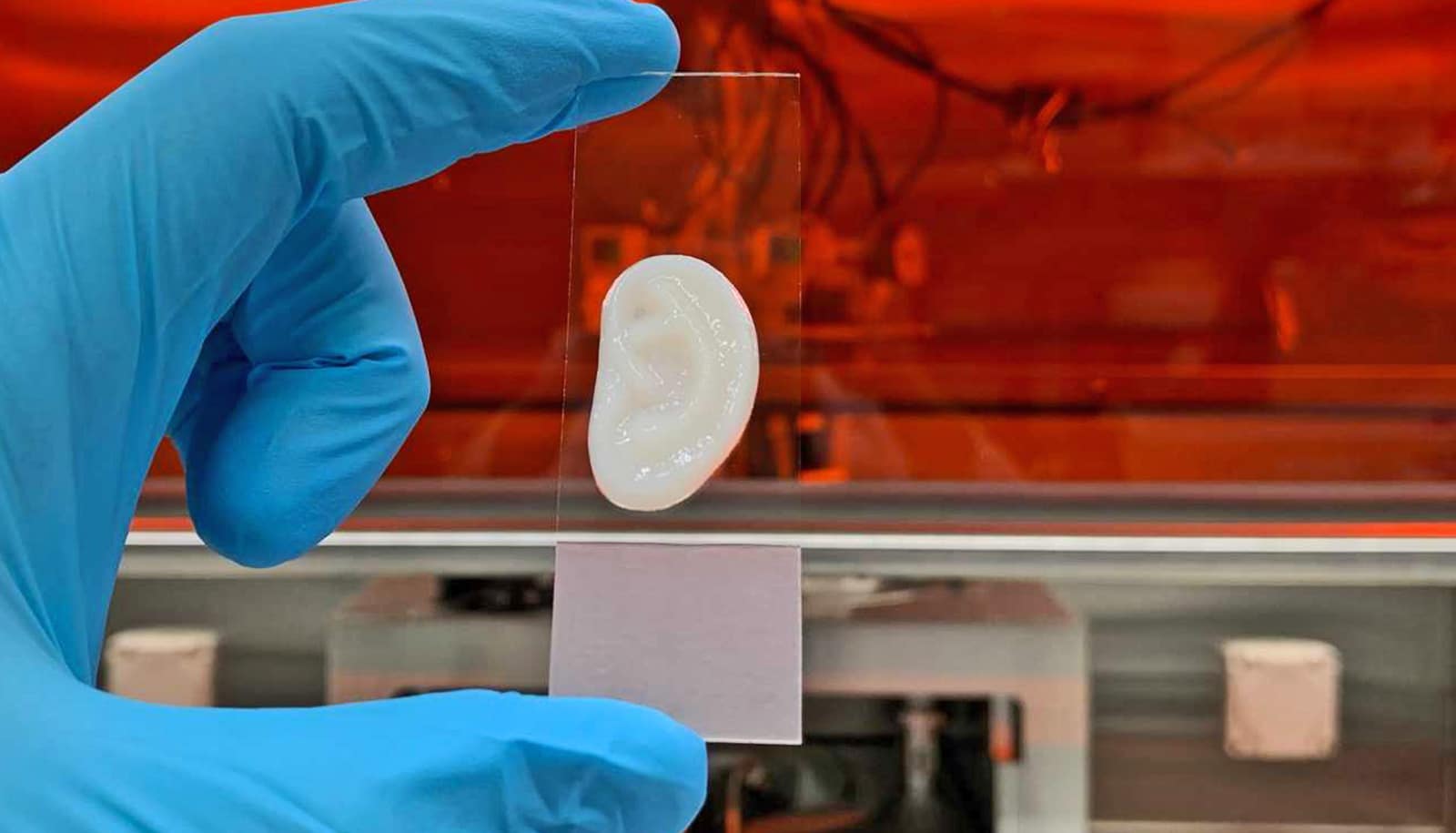
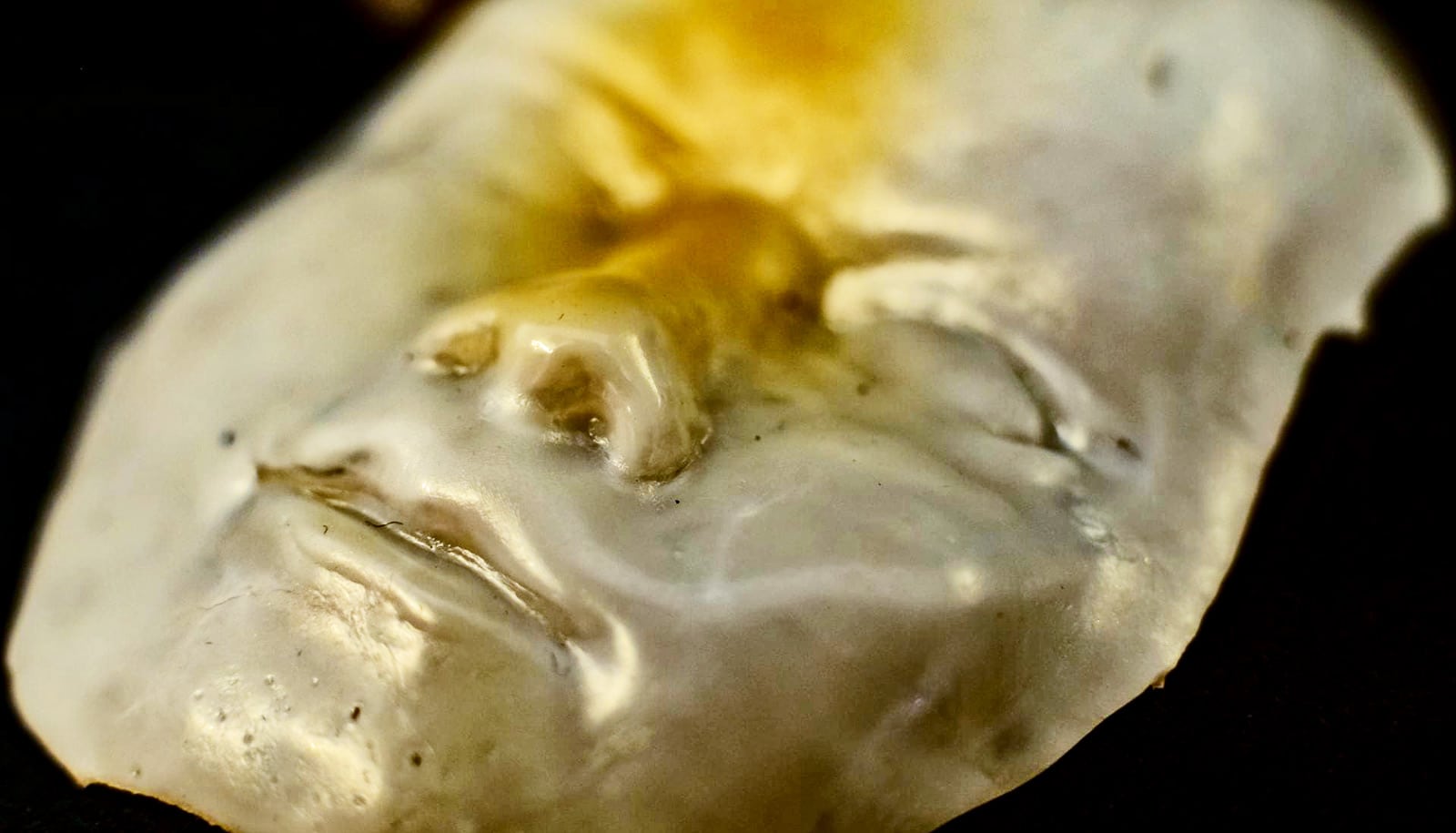
In most of the samples Rice University graduate student Morgan Barnes has made so far—including a face, the university logo, a Lego block, and a rose—the material takes on its complex shape at room temperature, but when heated to a transition temperature of about 80 degrees Celsius (176 degrees Fahrenheit), it collapses into a flat sheet. When the heat goes away, the shapes pop back up within a couple of minutes.

Soft robots

As fanciful as this seems, the material shows promise for soft robots that mimic organisms and in biomedical applications that require materials that take pre-programmed shapes at body temperature.

Materials scientist Rafael Verduzco and Barnes describe their work in the journal Soft Matter.

“These are made with two-step chemistry that has been done for a long time,” says Verduzco, a professor of chemical and biomolecular engineering and of materials science and nanoengineering. “People have focused on patterning liquid crystals, but they hadn’t thought about how these two networks interact with each other.

“We thought if we could optimize the balance between the networks—make them not too stiff and not too soft—we could get these sophisticated shape changes.”

Lower the temp

The liquid crystal state is easiest to program, he says. Once the material is given shape in a mold, five minutes of curing under ultraviolet light sets the crystalline order. Barnes also made samples that switch between two shapes.

“Instead of simple uniaxial shape changes, where you have something that lengthens and contracts, we’re able to have something that goes from a 2D shape to a 3D shape, or from one 3D shape to another 3D shape,” she says.

The lab’s next target is to lower the transition temperature. “Activation at body temperature opens us up to a lot more applications,” Barnes says. She says tactile smartphone buttons that appear when touched or reactive braille text for the visually impaired are within reach.

She’d also like to develop a variant that reacts to light rather than heat. “We want to make it photo-responsive,” Barnes says. “Instead of heating the entire sample, you can activate only the part of the liquid crystal elastomer you want to control. That would be a much easier way to control a soft robot.”

The Welch Foundation for Chemical Research, the US Army Research Office Chemical Sciences Division, and the Shared Equipment Authority at Rice supported the research.

Source: Rice University
Play Video

Watch: Temp grows and shrinks ‘4D-printed’ objects

(Credit: Daehoon Han/Rutgers University–New Brunswick)

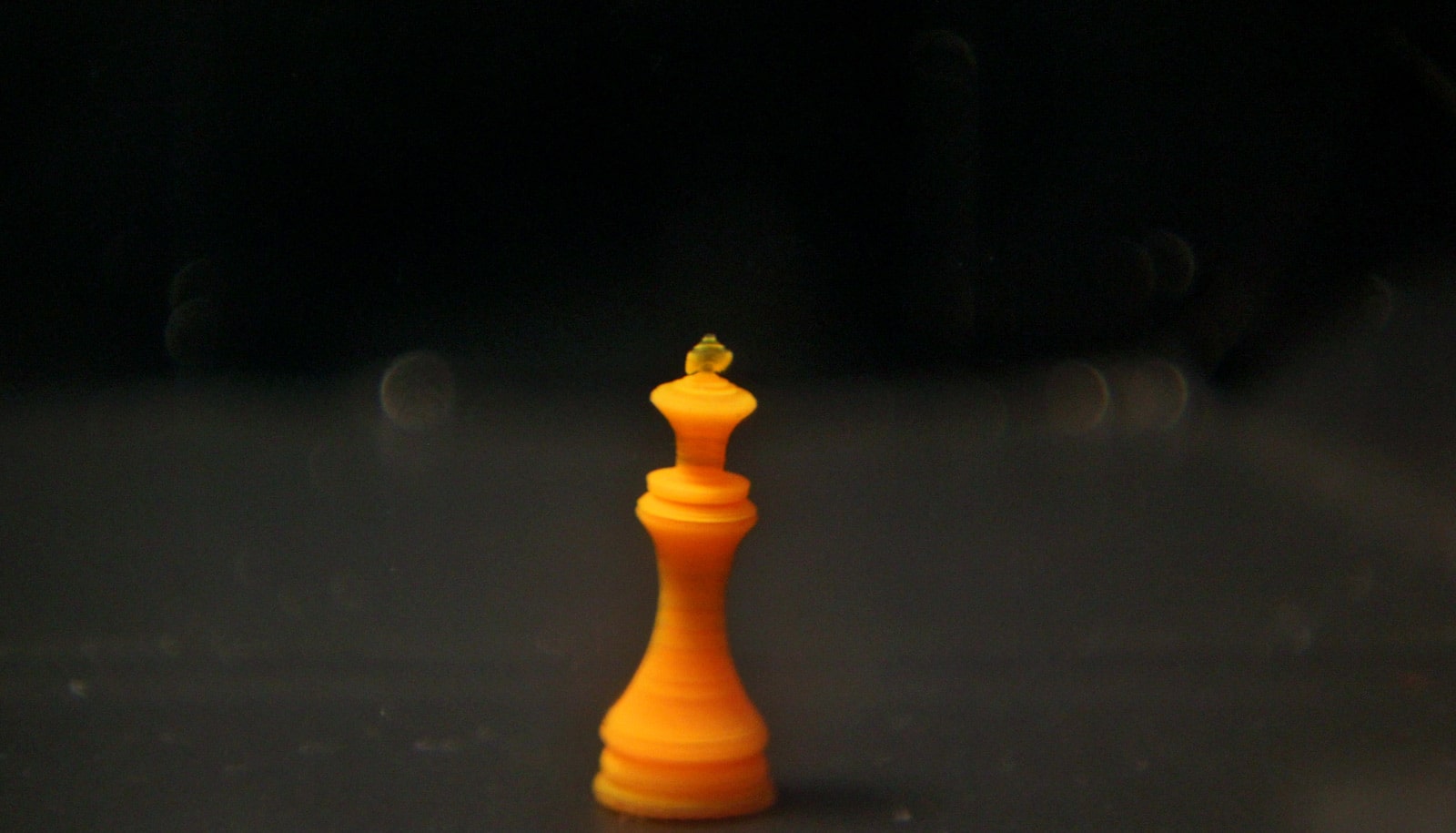
A new “4D printing” method for a smart gel could lead to the development of “living” structures in human organs and tissues, soft robots, and targeted drug delivery.

The 4D printing approach involves printing a 3D object with a hydrogel (water-containing gel) that changes shape over time when temperatures change, says Howon Lee, senior author of a new study and assistant professor in the department of mechanical and aerospace engineering at Rutgers University–New Brunswick.

“If you have full control of the shape, then you can program its function.”

The study, published in Scientific Reports, demonstrates fast, scalable, high-resolution 3D printing of hydrogels, which remain solid and retain their shape despite containing water. Hydrogels are everywhere in our lives, including in Jell-O, contact lenses, diapers, and the human body.

The smart gel could provide structural rigidity in organs such as the lungs, and can contain small molecules like water or drugs to be transported in the body and released. It could also create a new area of soft robotics, and enable new applications in flexible sensors and actuators, biomedical devices, and platforms or scaffolds for cells to grow, Lee says.

“The full potential of this smart hydrogel has not been unleashed until now,” says Lee, who works in the School of Engineering. “We added another dimension to it, and this is the first time anybody has done it on this scale. They’re flexible, shape-morphing materials. I like to call them smart materials.”

In their study, the engineers used a lithography-based technique that’s fast, inexpensive, and can print a wide range of materials into a 3D shape. It involves printing layers of a special resin to build a 3D object. The resin consists of the hydrogel, a chemical that acts as a binder, another chemical that facilitates bonding when light hits it and a dye that controls light penetration.

Heat makes 3D-printed box fold itself up

The engineers learned how to precisely control hydrogel growth and shrinkage. In temperatures below 32 degrees Celsius (about 90 degrees Fahrenheit), the hydrogel absorbs more water and swells in size. When temperatures exceed 32 degrees Celsius, the hydrogel begins to expel water and shrinks. The objects they can create with the hydrogel range from the width of a human hair to several millimeters long. The engineers also found that they can grow one area of a 3D-printed object—creating and programming motion—by changing temperatures.

“If you have full control of the shape, then you can program its function,” Lee says. “I think that’s the power of 3D printing of shape-shifting material. You can apply this principle almost everywhere.”

Additional coauthors are from Rutgers and the New Jersey Institute of Technology.

Source: Rutgers University