Archives

Play Video

For bees, growing up and leaving home has a scent

(Credit: Getty Images)

Honey bees develop different scent profiles as they age, and the gatekeeper bees respond differently to returning foragers than they do when they encounter younger bees who have never ventured out, report researchers.

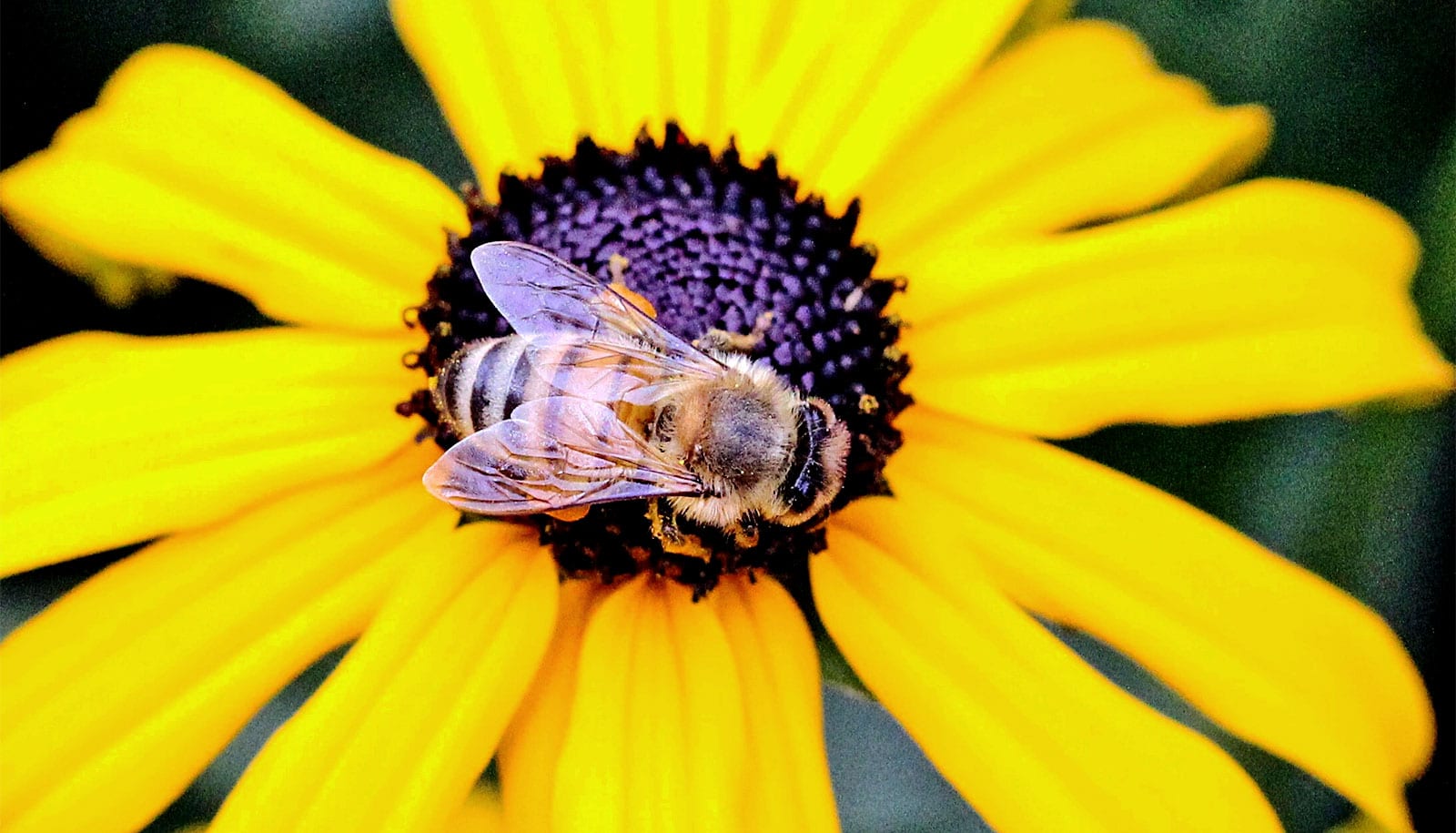
A honey bee (Apis mellifera) hatches and grows up deep inside a hive. Surrounded by 40,000 of her closest relatives, this dark and constantly buzzing place is all that she knows. Only after she turns 21 days old does she leave the nest to look for pollen and nectar. For her, this is a moment of great risk, and great reward.

It’s also the moment when she becomes recognizable to other bees, according to the new research, which appears in eLife.

The research offers new insight into one of the most important interactions in the lives of social insects: recognizing self and other.

Changing smells

Until this point, most researchers thought bees recognize and respond to a scent that is the homogenized scent of all of the members of their own colony. That’s how it works for some ants and other insects, at least.

The new work from the laboratory of Yehuda Ben-Shahar, associate professor of biology in the School of Arts & Sciences at Washington University in St. Louis, however, shows that nestmate recognition instead depends on an innate developmental process that is associated with age-dependent division of labor.

“It was always assumed that the way that honey bees acquire nestmate recognition cues, their cuticular hydrocarbon (CHC) profiles, is through these mechanisms where they rub up against each other, or transfer compounds between each other,” says Cassondra L. Vernier, a graduate student and first author of the study.

“You would expect, then, that even younger bees would have a very similar pheromonal profile as older bees. When in fact that is not what we saw,” she says.

Age and activity

Vernier compared the CHC profiles of bees on the day they were born and at 1 week, 2 weeks, and 3 weeks old. The 3-week-old bees had significantly different profiles than their younger siblings.

A 3-week-old foraging bee also has a very different job to support the hive than a younger bee—one who spends her time as a nurse caring for bee larvae and building the waxy honeycomb structures in the hive.

The researchers wanted to separate out whether the differences they saw were based on age alone, or were somehow tied to the older bees’ foraging activities. Bees that exit the hive to collect nectar encounter lots of scents on flowers and other surfaces they touch. They also are exposed to different environmental factors such as sunshine and rain that could affect their body coatings.

So Vernier also compared the CHC profiles of foraging-age bees that were held in the hive and not permitted to forage with bees that were able to venture out. These two groups were also significantly different.

“What we found is that it’s actually a combination of both—of being at the age for foraging, and actually performing the foraging activities,” says Ben-Shahar.

Bee bouncers

Importantly, not every bee notices the difference in scent profiles. Guard bees are the only ones who care to identify outsiders.

“They sit in the entrance and they have a very specific posture,” Ben-Shahar says of the guards. “They’re very attentive. Their forelegs are usually raised, and they’re very alert. Still, it is hard to know who they are until they react to somebody.”

Place a 1-day-old, 1-week-old, or 2-week-old outsider on the stoop in front of a guard, and she is likely to be able to waltz on through. But it’s a different story after 3 weeks of age—when guards bite, sting, and/or drag outsiders away from the door.

“Nestmate recognition is something that is very context-specific. It involves an interaction between very specific bees within the colony,” Ben-Shahar says. “Most bees are completely oblivious. Most colony members don’t produce the signal that tells anyone if they belong or not, and they don’t care about the signal. They don’t react to it.”

As an important caveat, the new study does not directly address the mechanism that determines cue specificity in bees. Which specific components of the honey bee CHC profile represent the nestmate recognition cue remains unknown.

“Something environmentally related is causing expression-level changes in the CHC profiles of the bees,” Vernier says. “That’s our model for now.”

Researchers from the University of Toronto contributed to the work. The bees in this study were kept in two different locations: Tyson Research Center, the environmental field station for Washington University in St. Louis, and an amateur beekeeper’s private residence in University City, Missouri. The National Science Foundation funded the study.
Source: Washington University in St. Louis

  • Superior navigators are good at picking out smells, too
  • Play Video

    Wasp-inspired robots open doors by themselves

    (Credit: Getty Images)

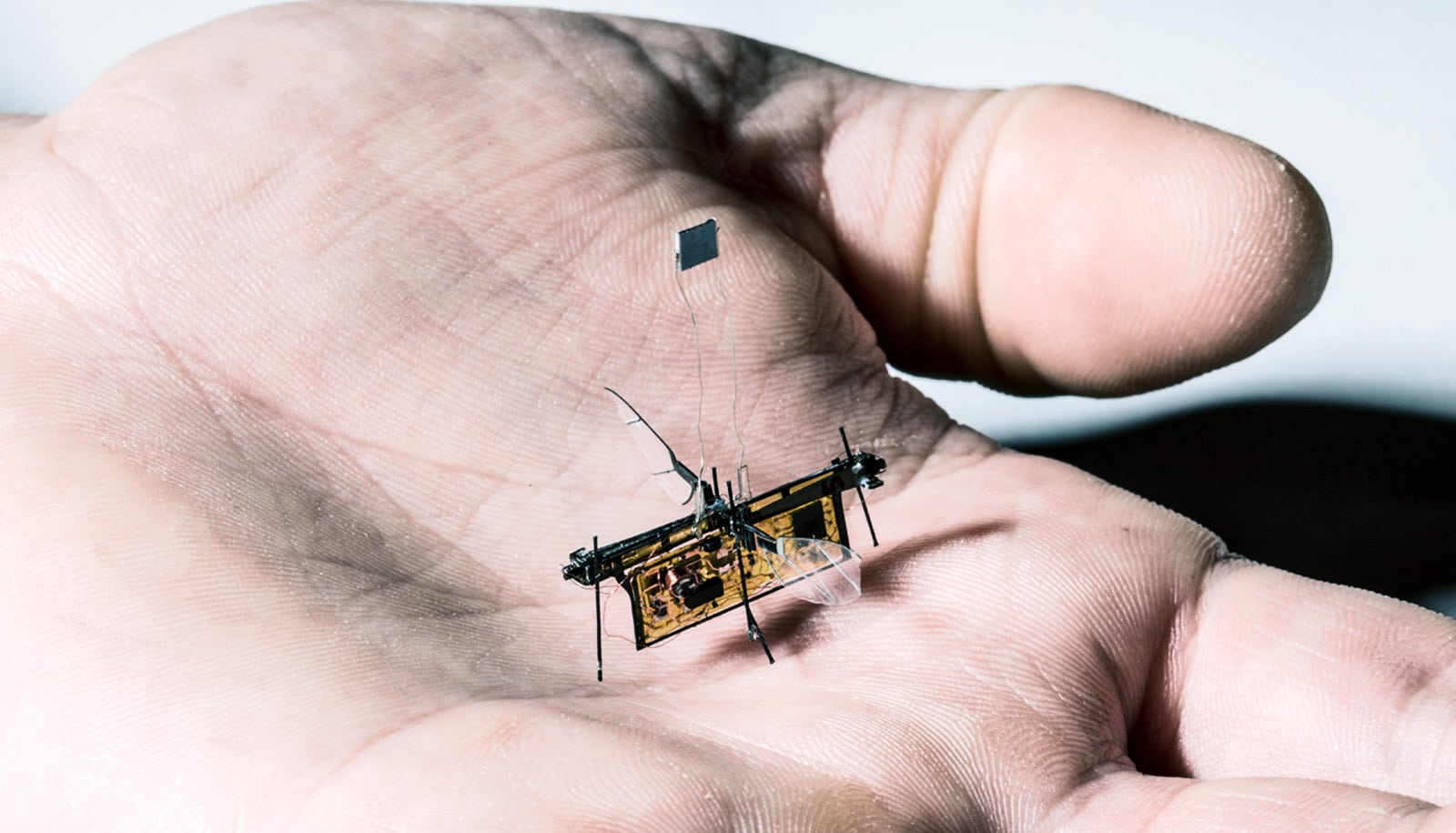
    Researchers have modified small flying robots to grab and haul heavy loads with the help of powerful winches and two previous inventions: gecko adhesives and microspines.

    A closed door is just one of many obstacles that poses no barrier to a new type of flying, micro, tugging robot called a FlyCroTug. Outfitted with advanced gripping technologies and the ability to move and pull on objects around it, two FlyCroTugs can jointly lasso the door handle and heave the door open.

    FlyCroTugs are micro air vehicles that the researchers have modified so the vehicles can anchor themselves to various surfaces using adhesives inspired by the feet of geckos and insects, previously developed in Cutkosky’s lab.

    FlyCroTugs can pull objects up to 40 times their weight. Similar vehicles can only lift objects about twice their own weight.

    With these attachment mechanisms, FlyCroTugs can pull objects up to 40 times their weight, like door handles in one scenario, or cameras and water bottles in a rescue situation. Similar vehicles can only lift objects about twice their own weight using aerodynamic forces.

    “When you’re a small robot, the world is full of large obstacles,” says Matthew Estrada, a Stanford graduate student and lead author of the paper, which appears in the journal Science Robotics. “Combining the aerodynamic forces of our aerial vehicle along with interaction forces that we generate with the attachment mechanisms resulted in something that was very mobile, very forceful, and micro as well.”

    The researchers say the FlyCroTugs’ small size means they can navigate through snug spaces and fairly close to people, making them useful for search and rescue. Holding tightly to surfaces as they tug, the tiny robots could potentially move pieces of debris or position a camera to evaluate a treacherous area.

    Nature-inspired gecko grippers and microspines

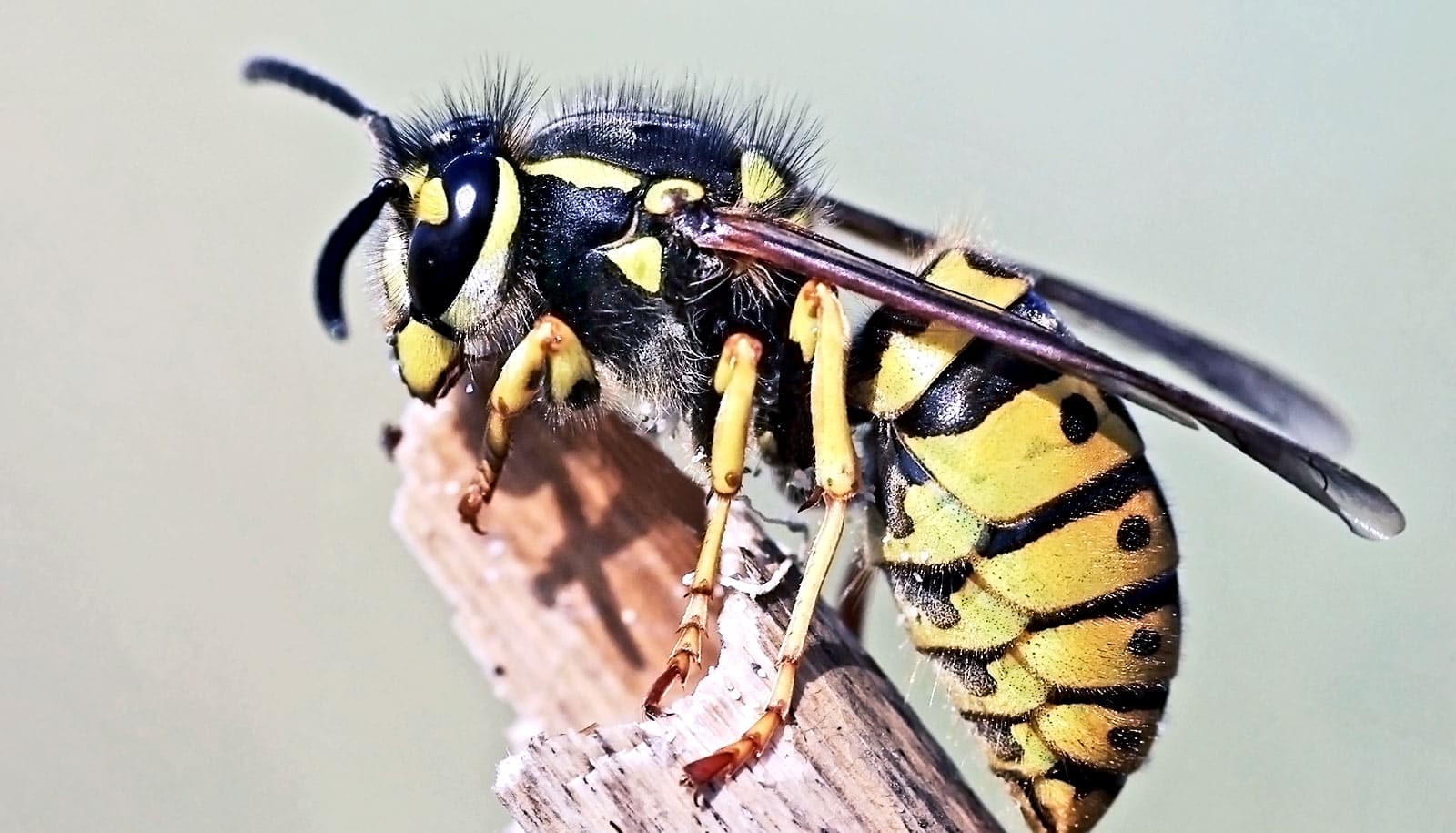
    The natural world inspired FlyCroTugs. Hoping to have an air vehicle that was fast, small, and highly maneuverable but also able to move large loads, the researchers looked to wasps.

    “Wasps can fly rapidly to a piece of food, and then if the thing’s too heavy to take off with, they drag it along the ground. So this was sort of the beginning inspiration for the approach we took,” says coauthor Mark Cutkosky, a professor of mechanical engineering.

    The researchers read studies on wasp prey capture and transport, which identify the ratio of flight-related muscle to total mass that determines whether a wasp flies with its prey or drags it. They also followed the lead of the wasp in having different attachment options depending on where the FlyCroTugs land.

    For smooth surfaces, the robots have gecko grippers, non-sticky adhesives that mimic a gecko’s intricate toe structures and hold on by creating intermolecular forces between the adhesive and the surface. For rough surfaces, researchers equipped these robots with 32 microspines, a series of fishhook-like metal spines that can individually latch onto small pits in a surface.

    Each FlyCroTug has a winch with a cable and either microspines or gecko adhesive in order to tug. Beyond those fixed features they are otherwise highly modifiable. The location of the grippers can vary depending on the surface where they will be landing, and the researchers can also add parts for ground-based movement, such as wheels. Getting all of these features onto a small air vehicle with twice the weight of a golf ball was no small feat, according to the researchers.

    “People tend to think of drones as machines that fly and observe the world, but flying insects do many other things—such as walking, climbing, grasping, building—and social insects can even cooperate to multiply forces,” says Dario Floreano, the senior author on the paper. “With this work, we show that small drones capable of anchoring to the environment and collaborating with fellow drones can perform tasks typically assigned to humanoid robots or much larger machines.”

    Literally opening new doors

    Drones and other small flying robots may seem like all the rage these days but the FlyCroTugs—with their ability to navigate to remote locations, anchor, and pull—fall into a more specific niche, according to Cutkosky.

    “There are many laboratories around the world that are starting to work with small drones or air vehicles, but if you look at the ones that are also thinking about how these little vehicles can interact physically with the world, it’s a much smaller set,” he says.

    The researchers can successfully open a door with two FlyCroTugs. They also had one fly atop a crumbling structure and haul up a camera to see inside. Next, they hope to work on autonomous control and the logistics of flying several vehicles at once.

    “The tools to create vehicles like this are becoming more accessible,” says Estrada. “I’m excited at the prospect of increasingly incorporating these attachment mechanisms into the designer’s tool belt, enabling robots to take advantage of interaction forces with their environment and put these to useful ends.”

    Additional researchers at École Polytechnique Fédérale de Lausanne in Switzerland helped develop the FlyCroTugs.

    The Swiss National Science Foundation, the National Science Foundation, a Swiss Government Excellence Scholarship, and the United States Army Research Laboratory MAST program funded this work.

    Source: Stanford University