Archives

Play Video

Electronic ‘tattoo’ monitors heart for days

(Credit: UT Austin)

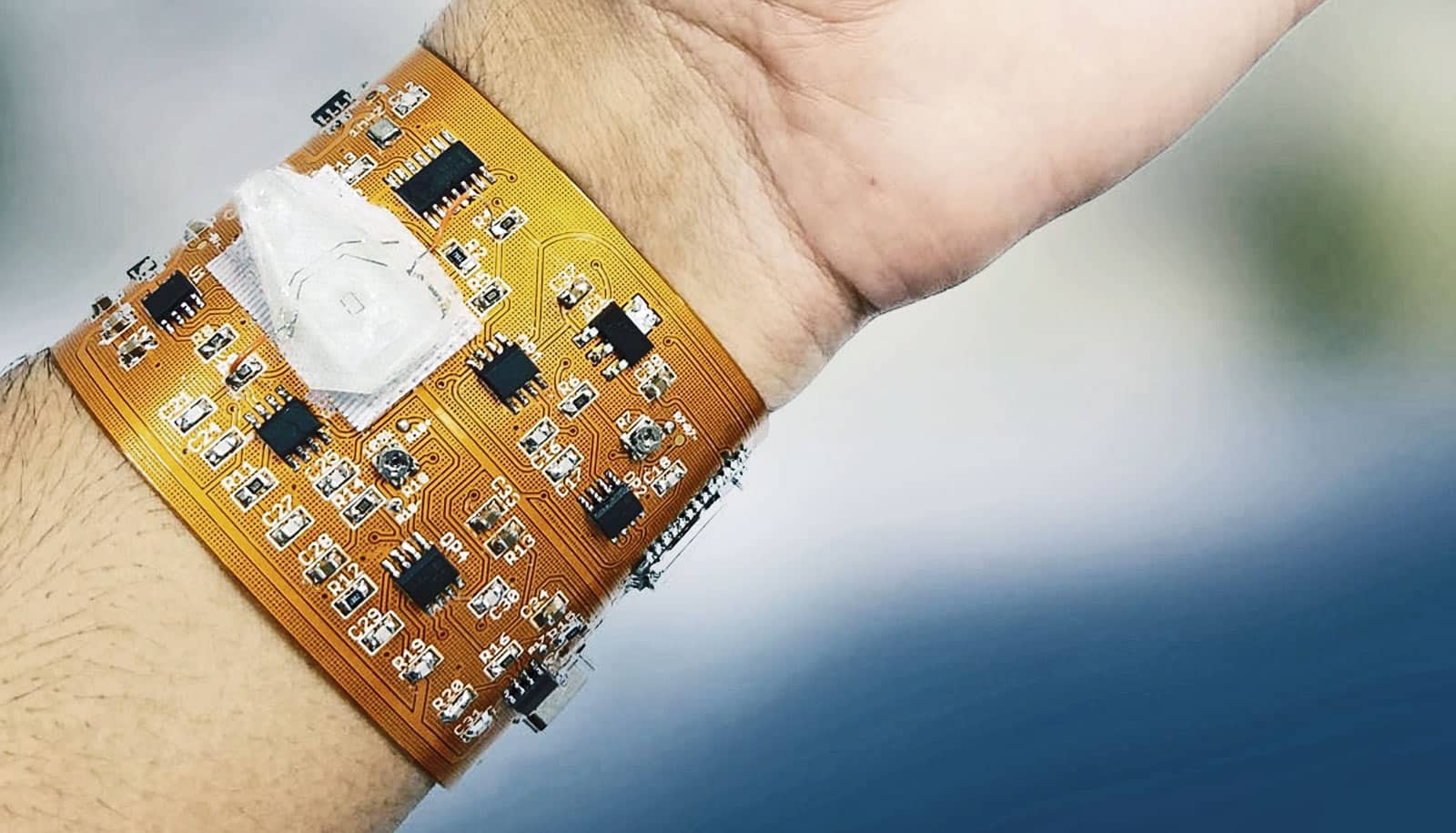
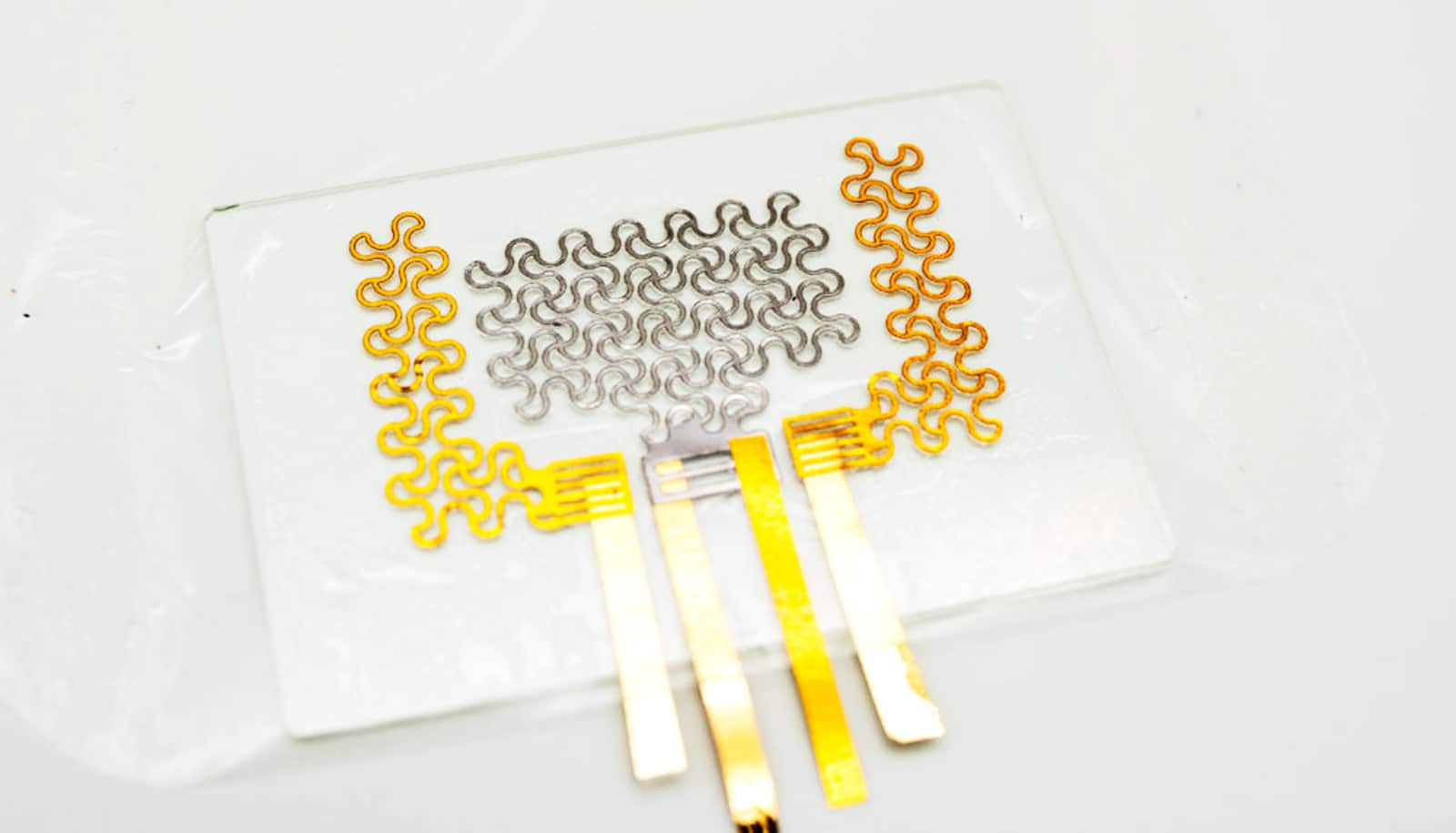
New wearable technology made from stretchy, lightweight material could make heart health monitoring easier and more accurate, a new study reports.

Existing electrocardiogram (ECG) technology hasn’t changed much in almost a century, researchers say.

The new device is so lightweight and stretchable that it can remain over the heart for extended periods with little or no discomfort. It measures cardiac health in two ways, taking electrocardiograph and seismocardiograph readings simultaneously.

Most of us are familiar with the electrocardiogram (ECG), a method that records the rates of electrical activity produced each time the heart beats. Seismocardiography (SCG) is a measurement technique using chest vibrations associated with heartbeats.

A smartphone remotely powers the e-tattoo, which researchers say is the first ultrathin and stretchable technology to measure both ECG and SCG.

“We can get much greater insight into heart health by the synchronous collection of data from both sources,” says Nanshu Lu, an associate professor in the aerospace engineering and engineering mechanics and biomedical engineering departments at the University of Texas at Austin.

ECG readings alone are not accurate enough for determining heart health, but they provide additional information when combined with SCG signal recordings. Like a form of quality control, the SCG indicates the accuracy of the ECG readings.

Although soft e-tattoos for ECG sensing are not new, other sensors, such as the SCG sensor, are still made from nonstretchable materials, making them bulky and uncomfortable to wear.

The new e-tattoo is made of a piezoelectric polymer called polyvinylidene fluoride, capable of generating its own electric charge in response to mechanical stress. The device also includes 3D digital image correlation technology used to map chest vibrations in order to identify the best location on the chest to place the e‐tattoo.

The e-tattoo has another advantage over traditional methods. Usually an ECG measurement requires going into a doctor’s office, where doctors can monitor heart health for only a couple of minutes at a time. Patients can wear the new device for days for constant heart monitoring.

The device is the latest incarnation of Lu’s electronic tattoo technology, a graphene-based wearable device that can be placed on the skin to measure a variety of body responses, from electrical to biomechanical signals.

Lu and colleagues are already working on improvements to data collection and storage for the device, as well as ways to power the e-tattoo wirelessly for longer periods. They recently developed a smartphone app that not only stores the data safely but can also show a heart beating on the screen in real time.

The paper appears in Advanced Science. The Office of Naval Research, the Air Force Office of Scientific Research, the National Science Foundation, and the National Institutes of Health funded the work.

Source: University of Texas at Austin
  • Wrist sensor is like a Fitbit that monitors your blood
  • Play Video

    Wearable ‘microbrewery’ tracks radiation exposure

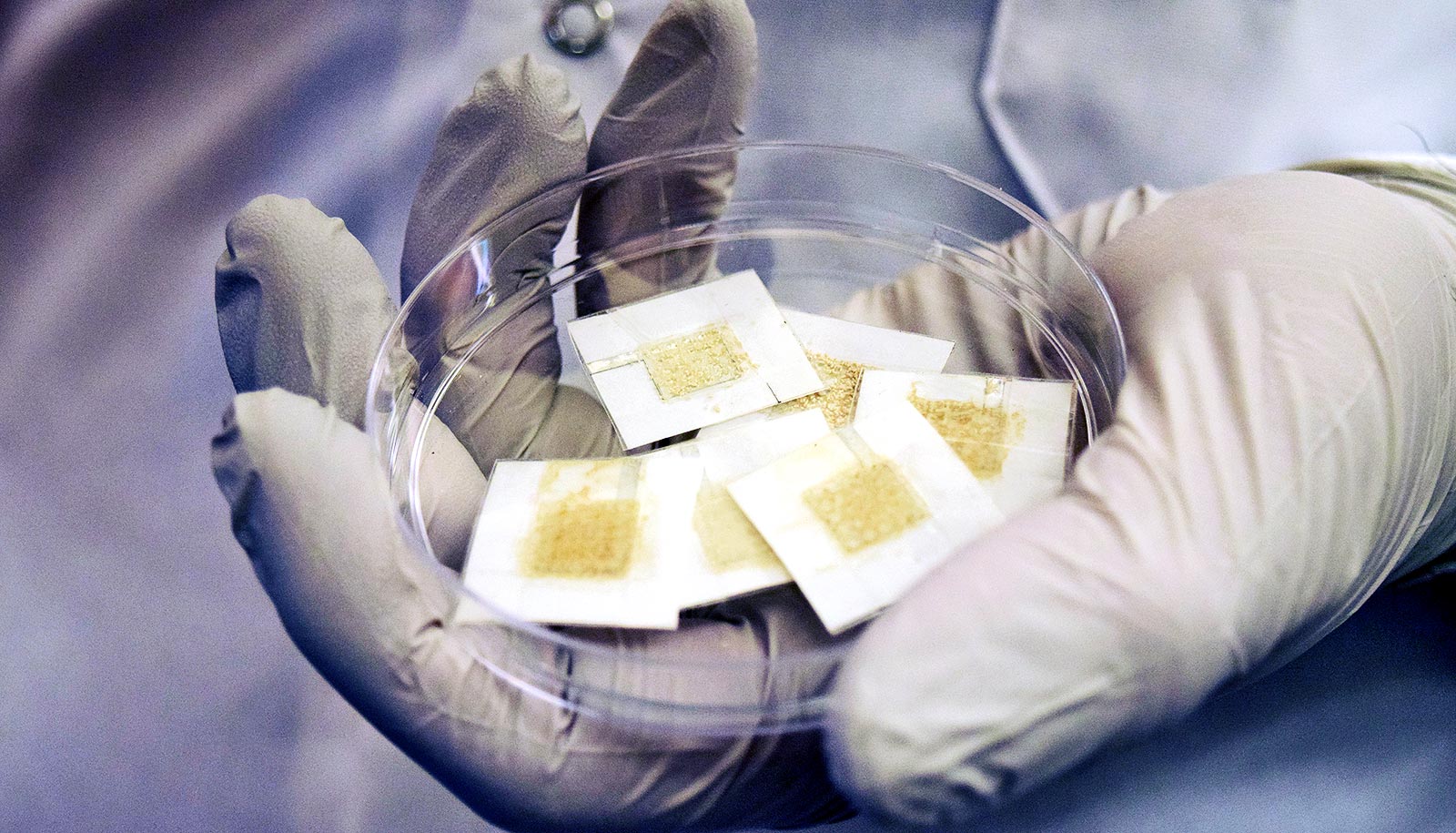
    Workers in hospitals and nuclear facilities can wear disposable yeast badges to check their daily radiation exposure instantly. (Credit: Kayla Wiles/Purdue)

    Yeast “microbreweries” within disposable badges could help hospital lab workers track daily exposure to radiation, which would allow faster assessment of tissue damage that could lead to cancer.

    Made from freezer paper, aluminum, and tape, the patch works by simply adding a drop of water to activate the yeast to show radiation exposure, which an electronic device can read.

    On a commercial level, the readout device could one day be a tablet or phone. Researchers could also adapt the badge in the future for nuclear power plant workers and victims of nuclear disasters.

    Instant reading

    “You would use the badge when you’re in the lab and recycle it after you’ve checked your exposure by plugging it into a device,” says Manuel Ochoa, a postdoctoral researcher in the School of Electrical and Computer Engineering at Purdue University.

    adding yeast (radiation yeast)
    Simply adding a drop of water to one of the badges activates yeast to show radiation exposure as read by an electronic device. (Credit: Kayla Wiles/Purdue)

    Radiology workers are regularly exposed to low doses of radiation when they obtain patient imagery, such as X-rays. While protective gear largely keeps workers within a safe range of radiation exposure, absorbing a little bit is still inevitable.

    Radiation doses creeping above regulated guidelines pose risk for developing conditions such as cancer, cataracts, skin irritation, or thyroid disease.

    “Currently, radiology workers are required to wear badges, called dosimeters, on various parts of their bodies for monitoring their radiation exposure,” says Babak Ziaie, professor of electrical and computer engineering. “They wear the badges for a month or two, and then they send them to the company that made them. But it takes weeks for the company to read the data and send a report back to the hospital. Ours give an instant reading at much lower cost.”

    Easy readout

    The success of the badge lies in the quick and measurable response of yeast to radiation: The higher the radiation dose, the higher the percentage of yeast cells that die. Wetting the badge activates the cells that are still alive to eat glucose and release carbon dioxide—the same fermentation process responsible for brewing beer and making bread rise.

    When carbon dioxide bubbles at the surface, ions also form. The concentration of these ions increases the electrical conductivity of yeast, which can be measured by hooking up the badge to a readout system.

    Wearable patch measures stress hormone in sweat

    “We use the change in electrical properties of the yeast to tell us how much radiation damage it incurred. A slow decrease in electrical conductivity over time indicates more damage,” says Rahim Rahimi, postdoctoral researcher in electrical and computer engineering.

    Numbers from the readout system translate to rads—the units used by entities like the Occupational Safety and Health Administration to specify limits on how much radiation human tissue can safely absorb. Skin of the whole body, for example, shouldn’t be exposed to more than 7.5 rad over a three-month period.

    The new device can detect a radiation dose as little as 1 millirad in the yeast badges, which is comparable to current commercial badges.

    Yeast is also known to be genetically similar to human tissue. Data from the badges can, therefore, inform future work on how radiation damage happens to human DNA and proteins.

    Tiniest wearable sticks on your nail to monitor UV rays

    “For yeast, it seems that radiation primarily affects the cell walls of the membrane and mitochondria,” Ochoa says. “Since biologists are already familiar with yeast, then we’re more likely to understand what’s causing the biological effects of radiation in organic matter.”

    The findings appear in Advanced Biosystems. A patent is pending for the technology via the Purdue Research Foundation. NextFlex funded the work.

    Source: Purdue University