Archives

Play Video

Team transforms old tires in super-light aerogels

"By converting waste rubber tires into high-value aerogels, we could enhance the monetary incentive for recycling rubber and in turn, cut down rubber waste," says Duong Hai-Minh. (Credit: Getty Images)

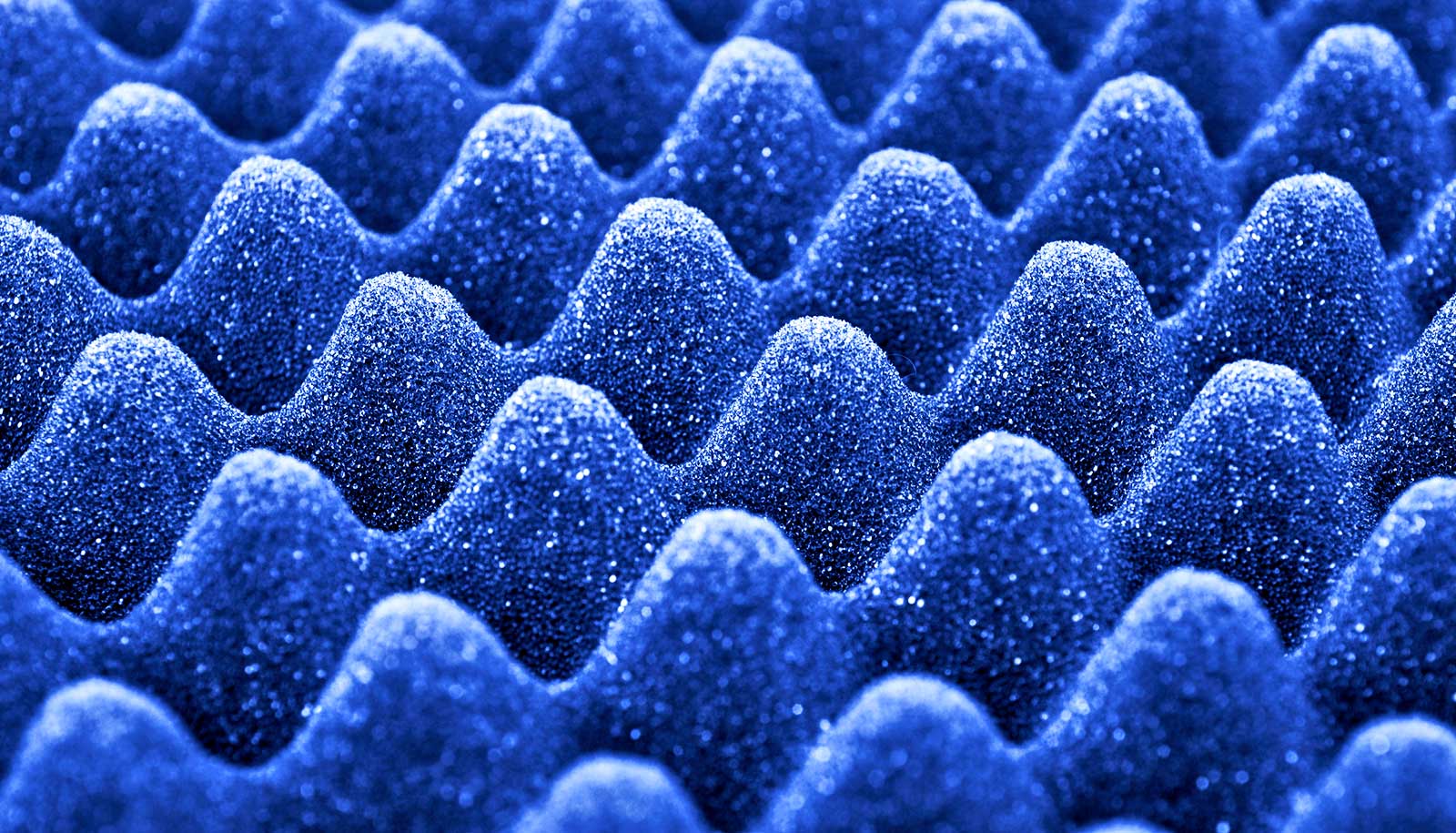
Researchers have used waste rubber tires to create super-light aerogels that are highly absorbent, extremely durable, and efficient at trapping heat and sound.

Upcycling waste rubber into products of a higher commercial value offers an eco-friendly way to recycle rubber.

About 1 billion rubber tires—which are highly durable and non-biodegradable—are generated worldwide every year. Only 40% get recycled into low-value-added products, 49% are incinerated to generate energy, and at least 11% end up in landfills.

While many go into landfills, landfill sites are running out of space. There is also a risk of the consequential leachate causing environmental pollution. Further, burning rubber produces toxic substances that pose health and safety concerns.

“Although 40% of waste rubber tires are recycled, the rate of recycling worldwide remains low because processing used rubber is costly and energy-intensive, coupled with a lack of monetary incentive,” says Duong Hai-Minh from the mechanical engineering department at NUS Engineering at the National University of Singapore.

“Our team has decided to focus on creating rubber aerogels from used rubber tires because they are a cheap and abundant source of raw materials. By converting waste rubber tires into high-value aerogels, we could enhance the monetary incentive for recycling rubber and in turn, cut down rubber waste.”

To create the rubber aerogels, researchers first blended recycled car tire fibers into finer fibers and then soaked them in water and very small amounts of chemical cross-linkers. Next, they dispersed a mixture of rubber fibers and eco-friendly solvents using a stirrer for 20 minutes. The team then freeze-dried the uniform suspension gel at minus 50 degrees Celsius (120 degrees Fahrenheit) for up to 12 hours to produce rubber aerogels.

“The fabrication process is simple, cost-effective, and eco-friendly. The entire production process takes between 12 to 13 hours to complete and it only costs less than S$10 (about $7 US) to produce a sheet of rubber aerogel that is 1 square meter (about 10 feet) in size and 1 centimeter (less than a half inch) thick. The process can also be easily scaled up for mass production. This makes rubber aerogels a commercially attractive product.”

The rubber aerogels have properties for a variety of applications:

  • Extremely light and stiffer than commercial foam.
  • Highly porous: The aerogels are twice as absorbent as conventional absorbents such as the polypropylene mat, making them ideal for removal of spilled oil.
  • Excellent sound absorption: Rubber aerogels are 27% more effective than commercial foam absorbers with the same thickness.
  • Excellent heat insulation: Rubber aerogels have high heat resistance. A piece of rubber aerogel with a thickness of one inch (2.54 centimeters) has a heat transfer limit that equivalent to 25 standard glass window panes.
  • Highly durable: Most aerogels are extremely brittle and friable (i.e. they tend to fragment and pulverize), but rubber aerogels can spring back to its original shape after compression. This unique property makes them suitable as insulation material for industrial purposes such as in subsea systems, oil refineries, and industrial buildings, and also in homes, refrigerators, as well as personal items such as jackets and shoe insoles.
  • When coated with a chemical called methoxytrimethylsilane, the rubber aerogels become extremely water-repellent and they can prevent moisture from corroding or damaging insulation equipment.

“Potential markets of aerogels are huge. For example, vehicle noise and thermal comfort are vital in vehicle designs—the global automotive heat and sound insulation solution markets are expected to reach US$3.2 billion by 2022,” says professor Nhan Phan-Thien, a senior member of the research team. “In addition, the global oil spill management market is expected to reach US $182.7 billion by 2025.”

The study appears in Colloids and Surfaces A: Physicochemical and Engineering Aspect.
Source National University of Singapore

Play Video

Old clothes become aerogels that fight bleeding

(Credit: Pexels)

A fast, cheap, and eco-friendly method converts cotton-based fabric waste, like unwanted clothing, into aerogels.

The ultra-light and highly compressible aerogels could be useful for a range of things, including control of rapid bleeding and heat insulation.

Aerogels are among the lightest materials in the world and are highly porous with strong absorption capacity and low thermal conductivity. These unique properties make aerogels highly suitable for applications in areas including oil-spill cleaning, personal care products such as diapers, and heat and sound insulation.

Since aerogels’ creation in the 1930s, high production costs have kept industries from widely adopting them.

Led by associate professor Hai Minh Duong and professor Nhan Phan-Thien from the department of mechanical engineering at the NUS Faculty of Engineering, the research team discovered that the novel cotton aerogels can be easily compressed, and they can also very quickly recover up to 97 percent of their original size when placed in water.

“This new eco-friendly cotton aerogel is a major improvement from the aerogel that our team had previously developed using paper waste. It is highly compressible, hence storage and transportation costs could be greatly reduced,” says Duong.

“Furthermore, these cotton aerogels can be fabricated within eight hours—this is nine times faster than our earlier invention and about 20 times faster than current commercial fabrication processes. They are also stronger, making them more suitable for mass production.

“While we have demonstrated novel application of the cotton aerogels for effective hemorrhage control and heat insulation, we will continue to explore new functions for this advanced material.”

Control bleeding fast

Hemorrhage, or the excessive and rapid loss of blood, resulting from gunshot or other deeply penetrating wounds, can often be life threatening. Hemorrhage control devices exert internal pressure to stop bleeding and promote blood clotting.

Existing hemorrhage control devices comprise a syringe filled with small capsules of cellulose-based sponge coated with chitosan, a natural agent derived from the shells of shrimp and other crustaceans that promotes blood clotting. The syringe goes into the wound to release the capsule, which expands and applies pressure on the wound to stop the blood flow. However, the expansion and absorption rates of cellulose-based sponges are still relatively slow.

To address these limitations, the researchers developed highly compressible hybrid cotton aerogel pellets that are more effective than cellulose-based sponges for treatment of deep hemorrhagic wounds. These pellets—comprising an optimal mix of cotton and cellulose aerogels coated with chitosan—are simple and cost-effective to produce, and are easy to integrate into a clinical syringe for hemorrhage control. The cotton aerogel pellets are also biocompatible.

This gold aerogel is almost as light as air

“Each cotton aerogel pellet can expand to 16 times its size in 4.5 seconds—larger and more than three times faster than existing cellulose-based sponges—while retaining their structural integrity. The unique morphology of the cotton aerogels allows for a larger absorption capacity, while the compressible nature enables the material to expand faster to exert pressure on the wound,” adds Duong.

The findings appear in Colloids and Surfaces A.

Canteen jackets

Soldiers regularly embark on vigorous physical activities in hot and humid conditions. The military canteen is an essential item in a soldier’s survival kit, carrying fluid for rehydration and mitigation of heat injuries. A military canteen can typically hold one liter of water and maintain its cool temperature for about 30 minutes in a tropical climate.

The NUS research team, in collaboration with DSO National Laboratories, developed a lightweight thermal jacket to maintain the temperature of ice at 0.1 to 1.0 degree Celsius for more than four hours. The thermal jacket, which weighs about 200 grams, consists of a cotton aerogel layer embedded within commonly used fabrics to provide heat insulation.

Souped-up cotton gives clothing new powers

The cotton aerogel-insulated military canteen offers better heat insulation performance compared to commercial insulated water bottles such as FLOE bottles, and is highly comparable to that of vacuum flasks. However, FLOE bottles and vacuum flasks are much heavier and more costly.

“The heat insulation property of the novel cotton aerogels can be applied to various consumer products, such as cooler bags, to keep food items fresh. We also foresee tremendous potential for other high value applications, such as pipeline insulation and transportation of liquefied natural gas which needs to be stored at a low temperature,” says Nhan.

The NUS team has filed a patent for the novel cotton aerogels and is exploring opportunities to work with companies to commercialize the technology.

Source: National University of Singapore