Archives

Play Video

Watch: Jumping ants duel with antennae after the queen dies

"Despite prolonged social upheaval in ant colonies following the loss of the queen, the winners of these dueling tournaments are rapidly determined," says Claude Desplan. (Credit: IOC Young Reporters/Flickr)

Changes in behavior and gene expression show which worker will come out on top in the first days of a month-long battle between worker ants to establish new leadership after their queen dies, researchers report.

“Despite prolonged social upheaval in ant colonies following the loss of the queen, the winners of these dueling tournaments are rapidly determined,” says Claude Desplan, a professor of biology at New York University.

“Our findings may provide clues on adaptability in reproduction and aging, given that the workers who win the duel, or ‘pseudoqueens,’ gain the ability to lay eggs and live much longer than the average worker ant. This suggests that changes in the environment are able to dramatically affect the structure of a society.”

The caste system in social insects creates a division of labor, with insects specialized to perform particular tasks. The queen is responsible for reproduction, while workers maintain the colony—caring for the young, foraging and hunting for food, cleaning, and defending the nest.

In many insect societies, when the queen dies, the entire colony dies along with her due to the lack of reproduction. However, in Indian jumping ants (Harpegnathos saltator), “caste switching” occurs after the queen’s death. While the queen is alive, she secretes pheromones that prevent female worker ants from laying eggs, but when she dies, the workers sense the lack of pheromones and begin fighting each other to take on the top role.

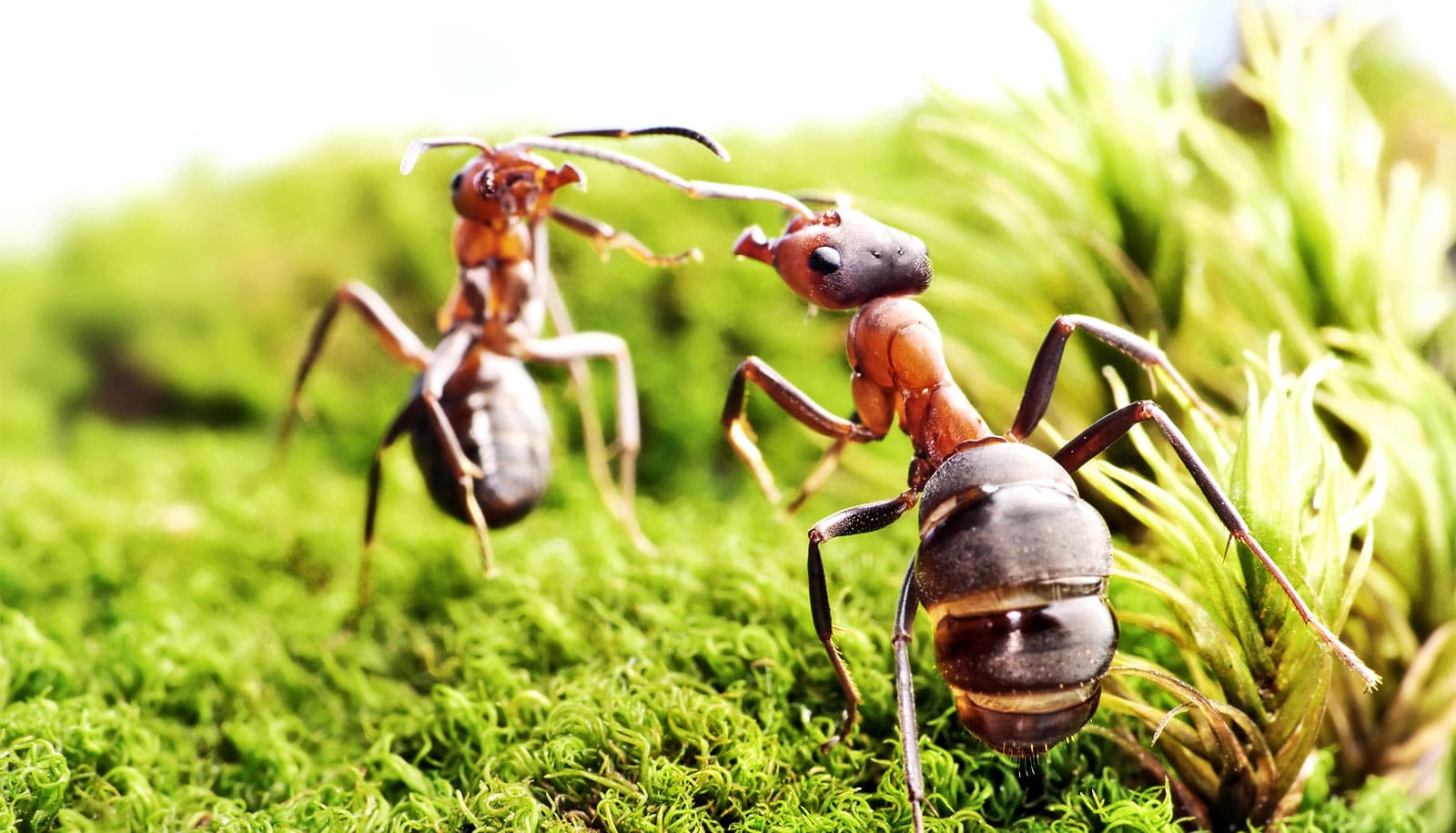
The ants engage in dueling tournaments, striking each other with their antennae in matches that can last more than a month. While most ants quickly return to their usual work during the tournament, the winners become pseudoqueens—also known as gamergates—and acquire new behaviors and roles. Through this transition, their life expectancy dramatically increases (from seven months to four years) and they begin laying eggs, allowing the colony to survive.

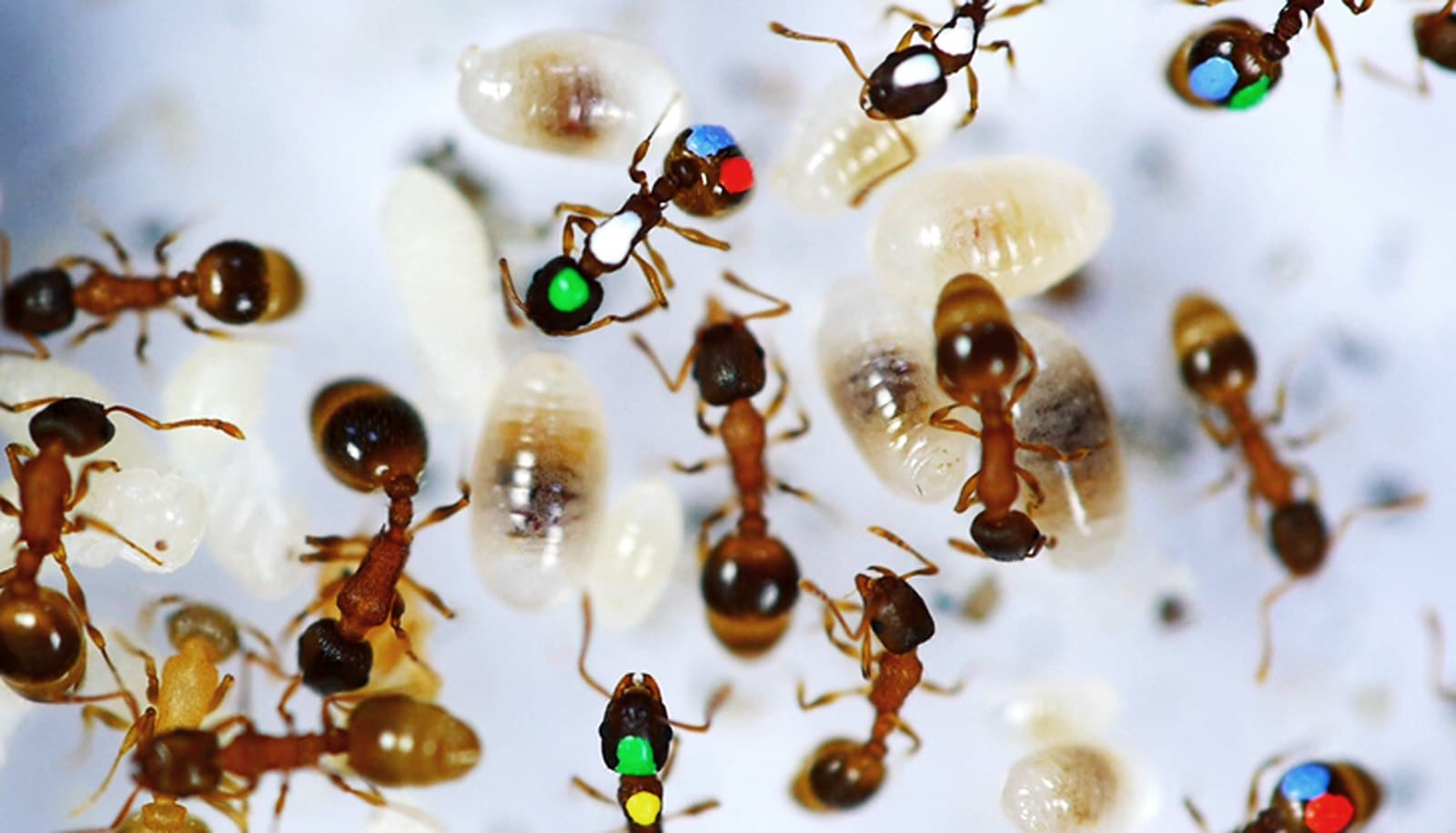
In their study, the researchers explored changes in the Indian jumping ants’ social behavior and accompanying changes in gene expression during the early stages of the worker-to-pseudoqueen transition.

They found that, as early as after three days of dueling, the winners can be accurately predicted solely based on the dueling behavior. The workers who triumphed and became pseudoqueens had much higher levels of dueling—sparring roughly twice as much in the first five days—while the others who remained workers dueled less and went back to performing other tasks such as cleaning and hunting.

“Despite the fact that dueling tournaments last for several weeks, we were able to anticipate which ants would become pseudoqueens in only three days,” says Comzit Opachaloemphan, a doctoral student in the Department of Biochemistry and Molecular Pharmacology at NYU Grossman School of Medicine and one of the study’s lead authors.

Comparing biological samples and gene expression from dueling versus non-dueling ants, the researchers then determined the changes associated with the worker-to-pseudoqueen transition. Molecular analyses revealed that the brain may be driving the dueling and early caste determination in the ants, with other tissues taking cues from the brain.

The researchers found that the first genes to respond to the loss of the queen were in the brain, suggesting that the lack of queen pheromones perceived by the olfactory system affects brain neurohormonal factors. These changes in the brain then lead to altered social behavior and hormone-mediated physiological changes in other parts of the body, including the ovaries.

“Both behavioral and molecular data—especially changes in gene expression in the brain—show us that new pseudoqueens are quickly determined after a colony’s social structure has been disrupted by the loss of the queen,” says study author Danny Reinberg, a professor in the biochemistry and molecular pharmacology department at the Grossman School of Medicine, as well as an investigator for the Howard Hughes Medical Institute.

The research appears in the journal Genes & Development.

Support for the research came from a Howard Hughes Medical Institute Collaborative Innovation Award, the National Institutes of Health, EMBO, and the Human Frontier Science Program.

Source: New York University
Play Video

Overlooked organ turns some ants into giant soldiers

(Credit: Getty Images)

A seemingly unimportant rudimentary organ that only appears briefly during the final stages of larval development may explain why some ants are tiny workers and others are huge soldiers, a new study finds.

The new research answers a question that perplexed Charles Darwin. So much so, that it actually led him to doubt his own theory of evolution.

Darwin wondered, if natural selection works at the level of the individual, fighting for survival and reproduction, how can a single colony produce worker ants that are so dramatically different in size—from the minor workers with their small heads and bodies, to the large-headed soldiers with their huge mandibles—especially if, as in the genus Pheidole, they are sterile?

The answer, according to a paper in Nature, is that the colony itself generates soldiers and regulates the balance between soldiers and minor workers thanks to the seemingly useless organ. This organ appears only briefly during the final stages of larval development and only in some of the ants—the ones that will become soldiers.

“These rudimentary ‘organs’ are not a secondary effect of hormones and nutrition, but are instead responsible for generating the soldiers.”

“It was a completely unexpected finding. People had noticed that during the development of soldiers that a seemingly useless rudimentary ‘organ’ would pop up and then disappear. But they assumed that it was just a secondary effect of the hormones and nutrition that were responsible for turning the larvae into soldiers,” says senior author Ehab Abouheif from McGill University’s biology department.

“What we discovered was that these rudimentary ‘organs’ are not a secondary effect of hormones and nutrition, but are instead responsible for generating the soldiers,” adds first author Rajendhran Rajakumar. “It is their passing presence that regulates the head and body of soldiers to grow at rapid rates, until you get these big-headed soldiers with huge mandibles and big bodies.”

Waiting in the wings

Abouheif has been studying wings in ants for the past twenty-three years. He was curious about the function of the wing imaginal discs which appear, transiently, in the final stages of larval development among the soldier ants—even though the soldier ants never actually develop wings.

He and his team spent nine years in the lab using various techniques (surgical and molecular) to cut away portions of the rudimentary wing discs from the larvae of soldier ants in the widespread and very diverse Pheidole genus. They discovered that by doing so, they affected the growth of the head and the body. Indeed, they found that they were able to scale the size of soldier ants by cutting away differing degrees of the imaginal wing discs, with a corresponding decrease in the size of the heads and bodies of the soldier ants.

It was clear confirmation that the rudimentary wing discs play a crucial role in the development of soldier ants.

Pheromones keep the rank and file

The researchers also discovered that the colony as a whole maintains the balance between soldiers and minor workers by regulating the growth of the rudimentary wing discs in larvae.

Earlier research had shown that the ratio of minor workers to soldiers remains constant in all colonies of the Pheidole genus, with a proportion of minor workers at 90 to 95 percent and soldier ants at 5 to 10 percent. The team has found that the soldier ants maintain this ratio by halting the growth of the rudimentary wing disc with an inhibitory pheromone when there are too many soldiers.

However, the colony is able to ramp up the number of soldier ants very quickly if it is under threat or the numbers of soldiers have dropped for some reason. This is because the rudimentary wing discs that play such a crucial role in regulating the number of soldier ants appear only in the final stages of larval development.

Other overlooked organs?

Based on his team’s discovery in ants, Abouheif proposes that rudimentary organs may play a much larger role in an organism’s development than had previously been imagined.

“Until now, people have assumed that these organs simply offer evidence of evolution and common descent, overlooking any current functions for them. Now that we know the crucial role played in Pheidole ant colonies by the rudimentary wing disc, it means that we will have to go back and look at other rudimentary organs in the same light. Who knows what scientists will discover?”

Konrad Lorenz Institute (KLI) fellowships, the Natural Sciences and Research Council of Canada (NSERC), and a Guggenheim Fellowship funded the research.

Source: McGill University