Archives

Play Video

Swarm of ‘dumb’ robots works together to get stuff done

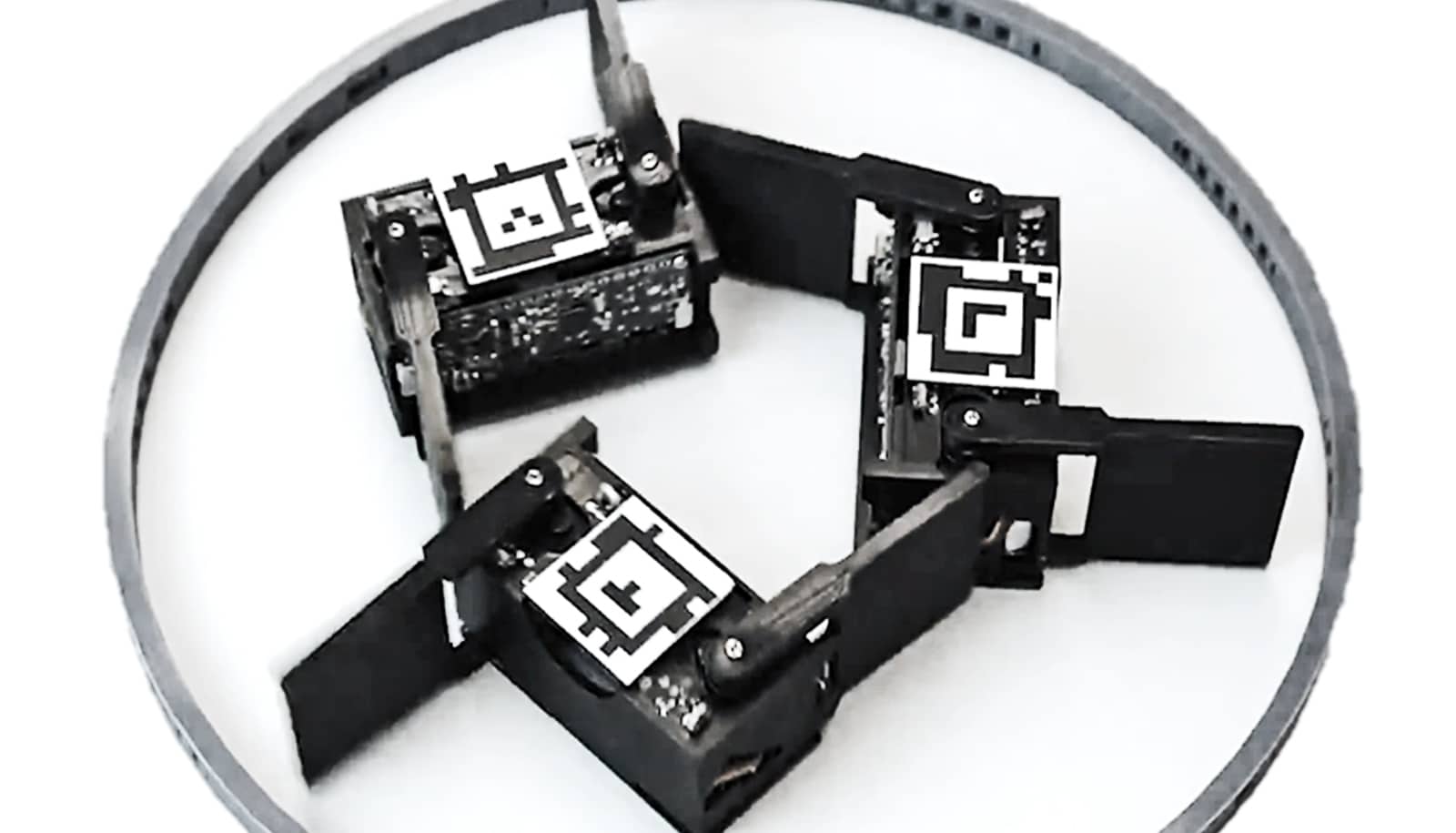
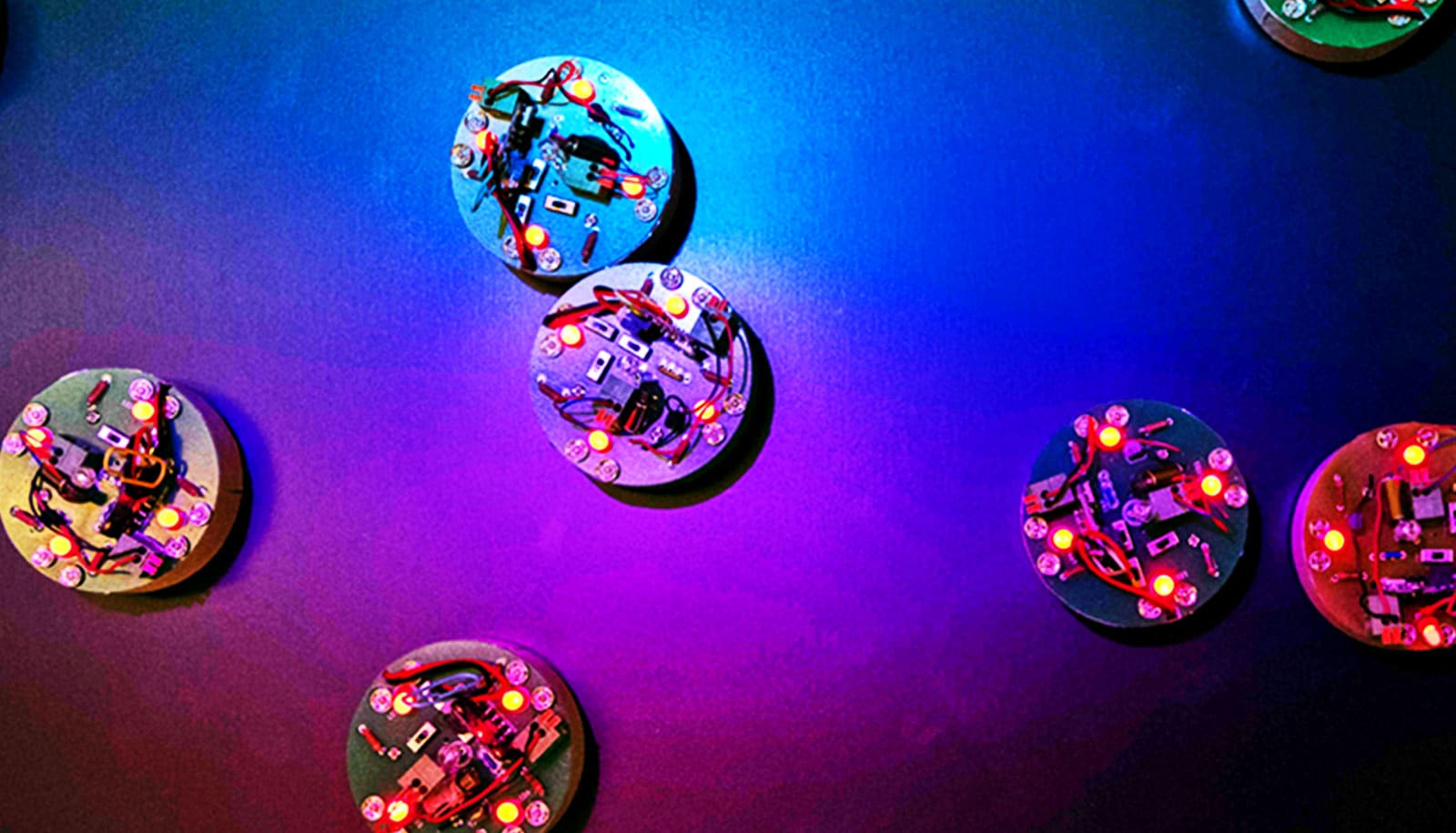
A collection of "BOBbots" in motion (Credit: Shengkai Li/Georgia Tech)

New robot swarm research shows that, as magnetic interactions increase, dispersed “dumb robots” called BOBbots can gather in compact clusters to accomplish complex tasks.

Getting swarms of robots to work collectively can be challenging, unless researchers carefully choreograph their interactions—like planes in formation—using increasingly sophisticated components and algorithms.

But what can be reliably accomplished when the robots on hand are simple, inconsistent, and lack sophisticated programming for coordinated behavior?

Researchers sought to show that even the simplest of robots can still accomplish tasks well beyond the capabilities of one, or even a few, of them.

The goal of accomplishing these tasks with what the team dubbed “dumb robots” (essentially mobile granular particles) exceeded their expectations, and the researchers report being able to remove all sensors, communication, memory, and computation—and instead accomplishing a set of tasks through leveraging the robots’ physical characteristics, a trait that the team terms “task embodiment.”

The team’s BOBbots, or “behaving, organizing, buzzing bots” that were named for granular physics pioneer Bob Behringer, are “about as dumb as they get,” explains Dana Randall, professor of computing at Georgia Institute of Technology. “Their cylindrical chassis have vibrating brushes underneath and loose magnets on their periphery, causing them to spend more time at locations with more neighbors.”

The experimental platform was supplemented by precise computer simulations led by physics student Shengkai Li, as a way to study aspects of the system inconvenient to study in the lab.

Despite the simplicity of the BOBbots, the researchers discovered that, as the robots move and bump into each other, “compact aggregates form that are capable of collectively clearing debris that is too heavy for one alone to move,” according to Daniel Goldman, professor of physics. “While most people build increasingly complex and expensive robots to guarantee coordination, we wanted to see what complex tasks could be accomplished with very simple robots.”

Their work was inspired by a theoretical model of particles moving around on a chessboard. A theoretical abstraction known as a self-organizing particle system was developed to rigorously study a mathematical model of the BOBbots. Using ideas from probability theory, statistical physics, and stochastic algorithms, the researchers were able to prove that the theoretical model undergoes a phase change as the magnetic interactions increase—abruptly changing from dispersed to aggregating in large, compact clusters, similar to phase changes we see in common everyday systems, like water and ice.

“The rigorous analysis not only showed us how to build the BOBbots, but also revealed an inherent robustness of our algorithm that allowed some of the robots to be faulty or unpredictable,” notes Randall, who also serves as a professor of computer science and adjunct professor of mathematics.

The research appears in the journal Science Advances.

The collaboration is based on experiments and simulations also designed by Bahnisikha Dutta, Ram Avinery, and Enes Aydin from Georgia Tech, as well as on theoretical work by Andrea Richa and Joshua Daymude from Arizona State University, and Sarah Cannon from Claremont McKenna College, who is a recent Georgia Tech graduate.

This work is part of a Multidisciplinary University Research Initiative (MURI) funded by the Army Research Office (ARO) to study the foundations of emergent computation and collective intelligence. Funding for the work came from the Department of Defense and National Science Foundation awards.

Source: Georgia Tech
Play Video

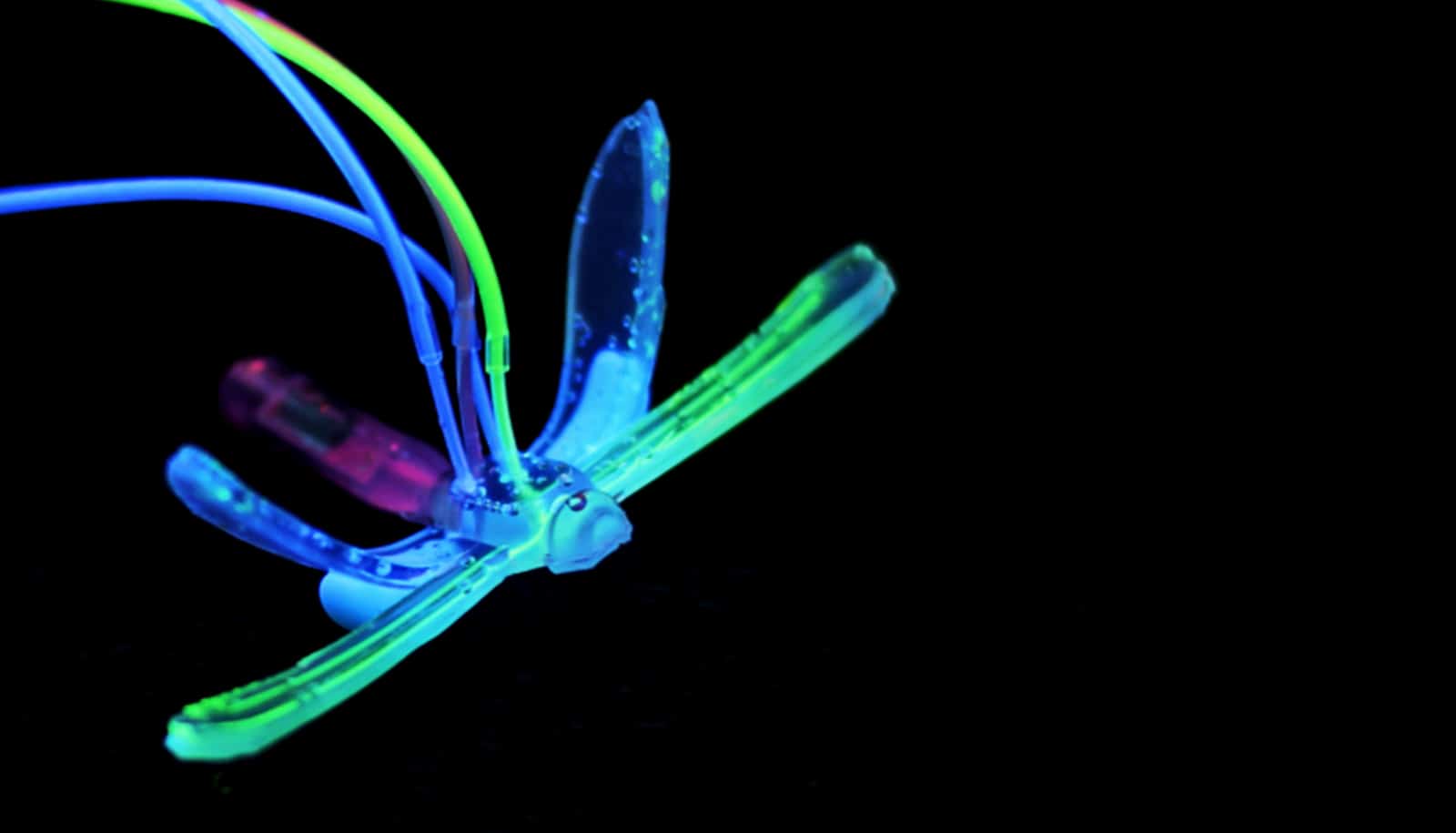
Soft dragonfly robot skims water to spot environmental problems

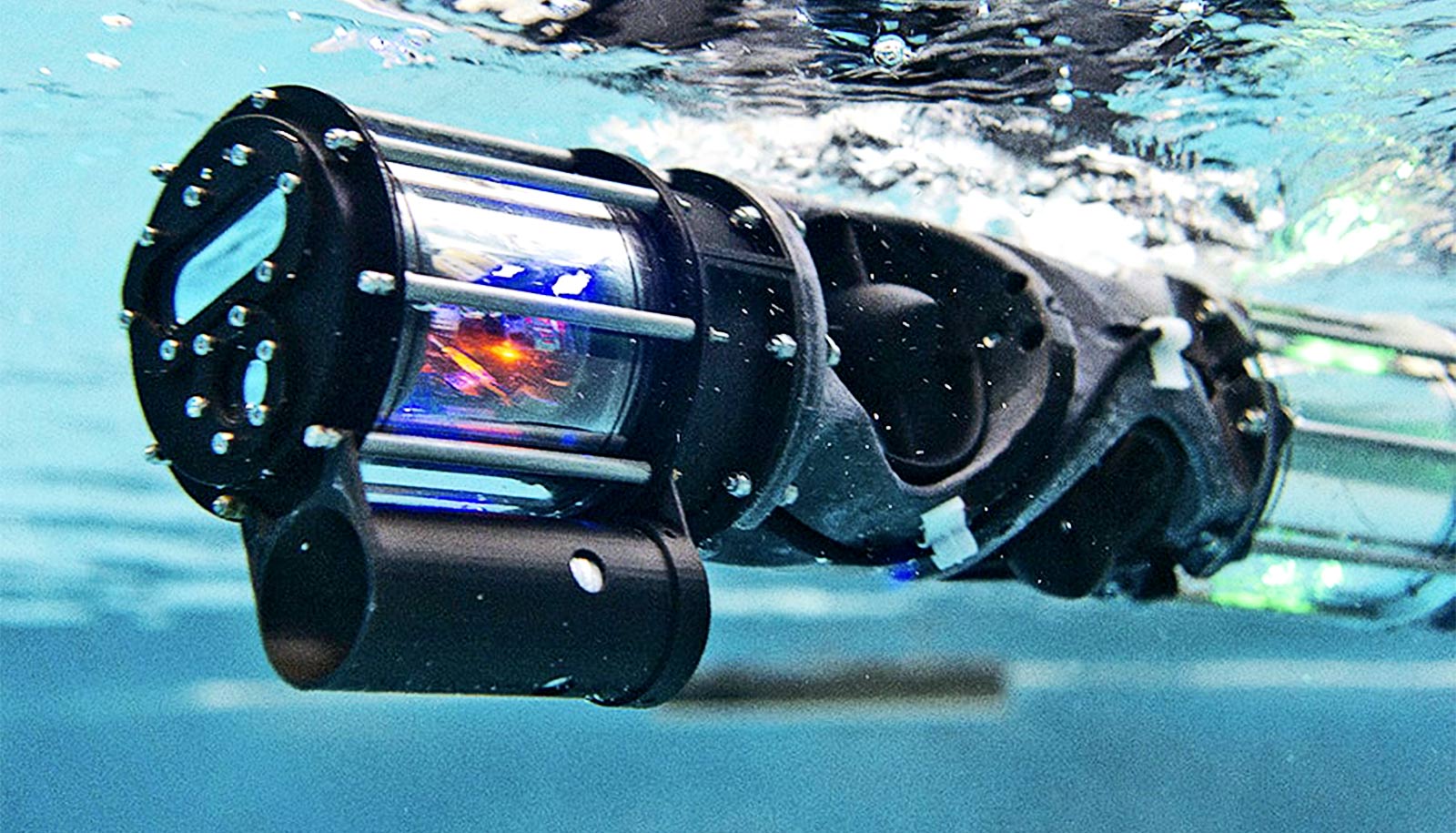
With the ability to sense changes in pH, temperature, and oil, this completely soft robot dubbed "DraBot" could be the prototype for future environmental sentinels. (Credit: Duke)

An electronics-free, entirely soft robot shaped like a dragonfly can skim across water and react to environmental conditions such as pH, temperature, or the presence of oil.

The proof-of-principle demonstration could be the precursor to more advanced, autonomous, long-range environmental sentinels for monitoring a wide range of potential telltale signs of problems.

The soft robot is described in the journal Advanced Intelligent Systems.

Soft robots are a growing trend in the industry due to their versatility. Soft parts can handle delicate objects such as biological tissues that metal or ceramic components would damage. Soft bodies can help robots float or squeeze into tight spaces where rigid frames would get stuck.

The expanding field was on the mind of Shyni Varghese, professor of biomedical engineering, mechanical engineering and materials science, and orthopaedic surgery at Duke University, when inspiration struck.

“I got an email from Shyni from the airport saying she had an idea for a soft robot that uses a self-healing hydrogel that her group has invented in the past to react and move autonomously,” says Vardhman Kumar, a PhD student in Varghese’s laboratory and first author of the paper. “But that was the extent of the email, and I didn’t hear from her again for days. So the idea sort of sat in limbo for a little while until I had enough free time to pursue it, and Shyni said to go for it.”

In 2012, Varghese and her laboratory created a self-healing hydrogel that reacts to changes in pH in a matter of seconds. Whether it be a crack in the hydrogel or two adjoining pieces “painted” with it, a change in acidity causes the hydrogel to form new bonds, which are completely reversible when the pH returns to its original levels.

Varghese’s hastily written idea was to find a way to use this hydrogel on a soft robot that could travel across water and indicate places where the pH changes. Along with a few other innovations to signal changes in its surroundings, she figured her lab could design such a robot as a sort of autonomous environmental sensor.

With the help of Ung Hyun Ko, a postdoctoral fellow also in Varghese’s laboratory, Kumar began designing a soft robot based on a fly. After several iterations, the pair settled on the shape of a dragonfly engineered with a network of interior microchannels that allow it to be controlled with air pressure.

They created the body—about 2.25 inches long with a 1.4-inch wingspan—by pouring silicon into an aluminum mold and baking it. The team used soft lithography to create interior channels and connected with flexible silicon tubing.

DraBot was born.

“Getting DraBot to respond to air pressure controls over long distances using only self-actuators without any electronics was difficult,” says Ko. “That was definitely the most challenging part.”

DraBot works by controlling the air pressure coming into its wings. Microchannels carry the air into the front wings, where it escapes through a series of holes pointed directly into the back wings. If both back wings are down, the airflow is blocked, and DraBot goes nowhere. But if both wings are up, DraBot goes forward.

To add an element of control, the team also designed balloon actuators under each of the back wings close to DraBot’s body. When inflated, the balloons cause the wings to curl upward. By changing which wings are up or down, the researchers tell DraBot where to go.

“We were happy when we were able to control DraBot, but it’s based on living things,” says Kumar. “And living things don’t just move around on their own, they react to their environment.”

That’s where self-healing hydrogel comes in. By painting one set of wings with the hydrogel, the researchers were able to make DraBot responsive to changes in the surrounding water’s pH. If the water becomes acidic, one side’s front wing fuses with the back wing. Instead of traveling in a straight line as instructed, the imbalance causes the robot to spin in a circle. Once the pH returns to a normal level, the hydrogel “un-heals,” the fused wings separate, and DraBot once again becomes fully responsive to commands.

To beef up its environmental awareness, the researchers also leveraged the sponges under the wings and doped the wings with temperature-responsive materials. When DraBot skims over water with oil floating on the surface, the sponges will soak it up and change color to the corresponding color of oil. And when the water becomes overly warm, DraBot’s wings change from red to yellow.

The researchers believe these types of measurements could play an important part in an environmental robotic sensor in the future. Responsiveness to pH can detect freshwater acidification, which is a serious environmental problem affecting several geologically-sensitive regions. The ability to soak up oils makes such long-distance skimming robots an ideal candidate for early detection of oil spills. Changing colors due to temperatures could help spot signs of red tide and the bleaching of coral reefs, which leads to decline in the population of aquatic life.

The team also sees many ways that they could improve on their proof-of-concept. Wireless cameras or solid-state sensors could enhance the capabilities of DraBot. And creating a form of onboard propellant would help similar bots break free of their tubing.

“Instead of using air pressure to control the wings, I could envision using some sort of synthetic biology that generates energy,” says Varghese. “That’s a totally different field than I work in, so we’ll have to have a conversation with some potential collaborators to see what’s possible. But that’s part of the fun of working on an interdisciplinary project like this.”

The researchers mostly performed this work at Shared Materials and Instrumentation facility (SMIF) at Duke University, a core facility supported by the National Science Foundation as part of the National Nanotechnology Coordinated Infrastructure (NNCI).

Source: Duke University

Play Video

Cheetah-inspired soft robot ‘gallops’ with super-speed

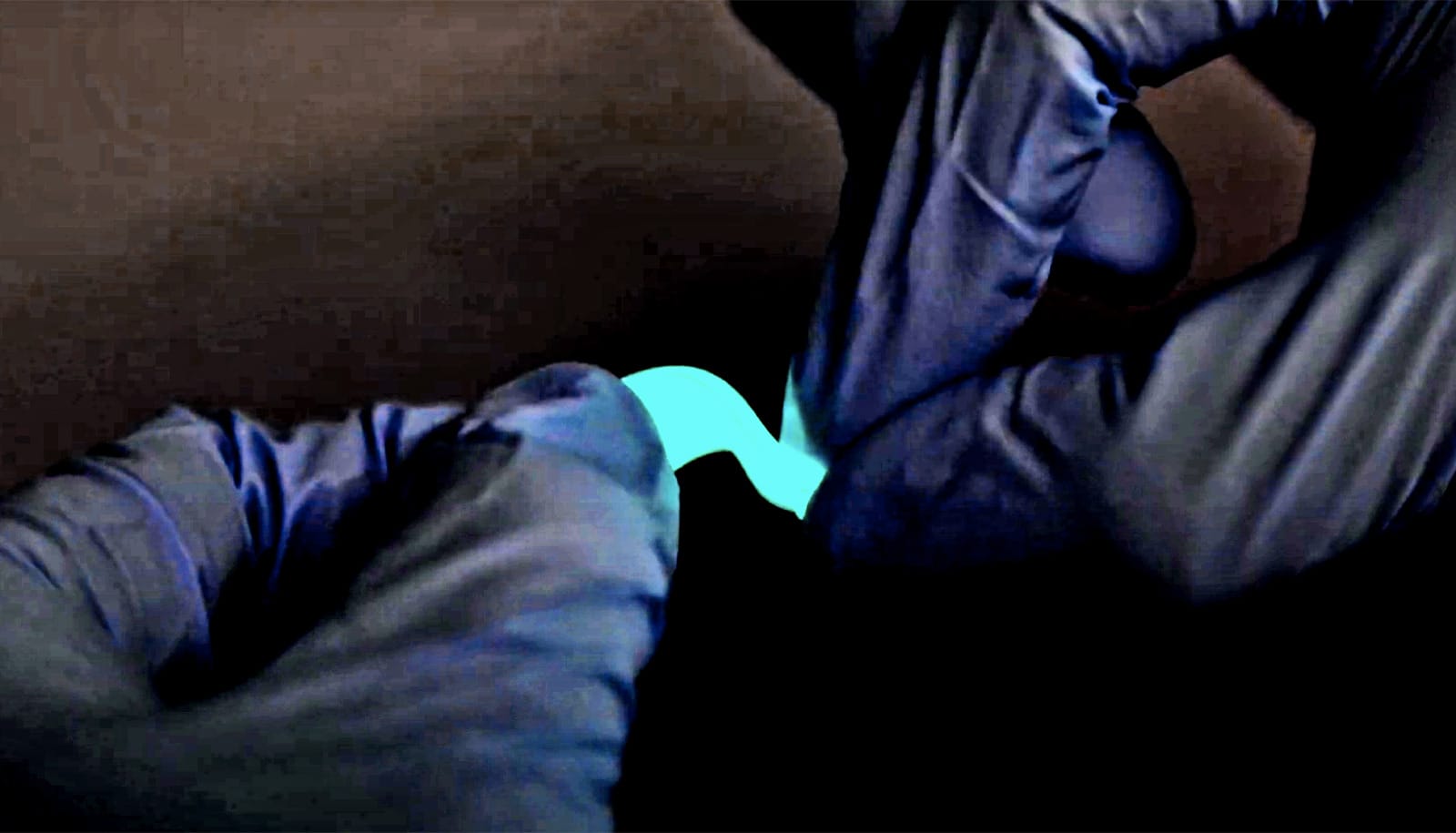
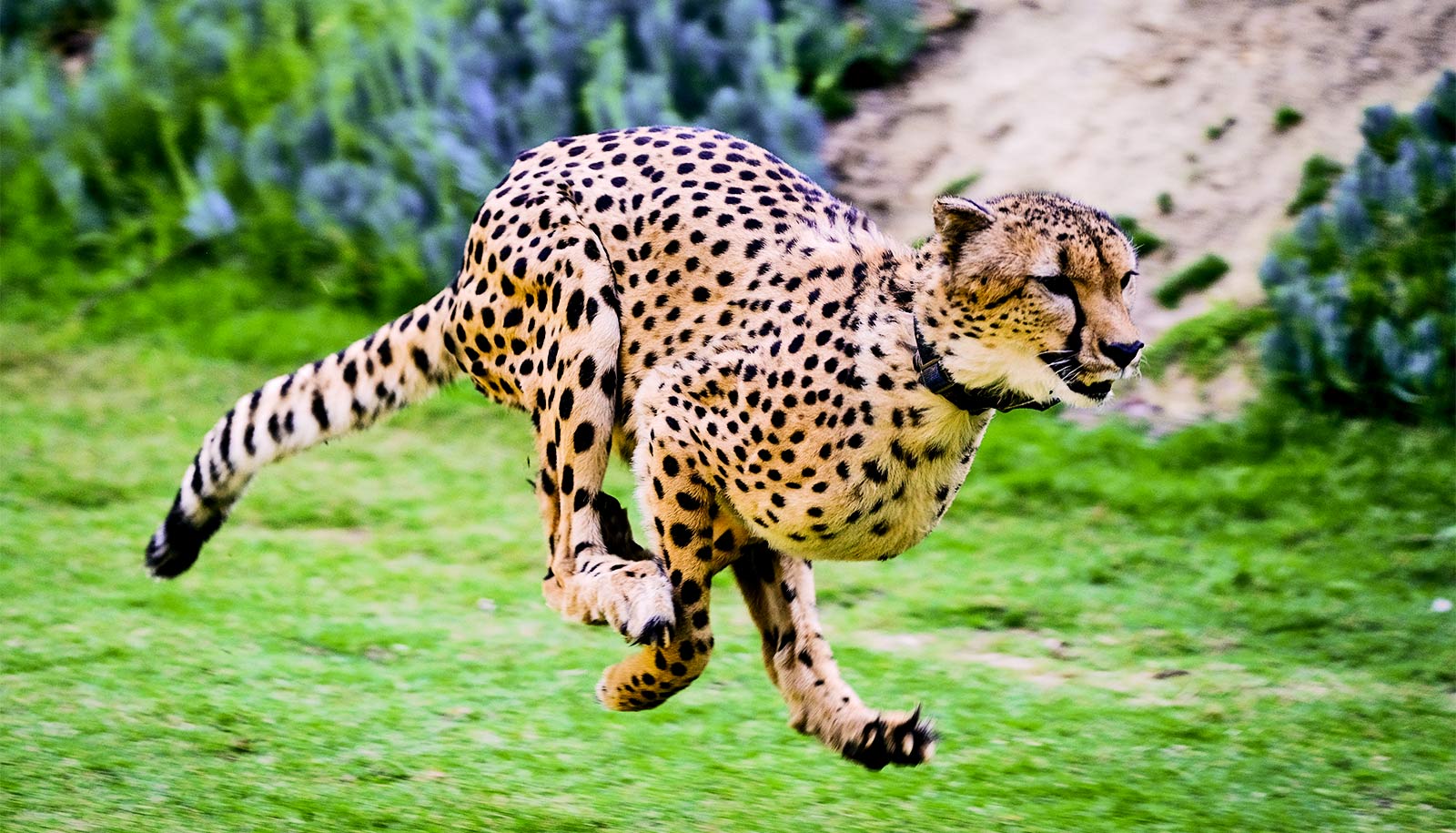
"We were inspired by the cheetah to create a type of soft robot that has a spring-powered, 'bistable' spine, meaning that the robot has two stable states," says Jie Yin. (Credit: Matthew Gilford/Flickr)

A new soft robot that gets its inspiration from the biomechanics of cheetahs.

It moves more quickly on solid surfaces and through water than earlier versions, according to a new study.

The soft robots can also of grab objects delicately—or with sufficient strength to lift heavy objects.

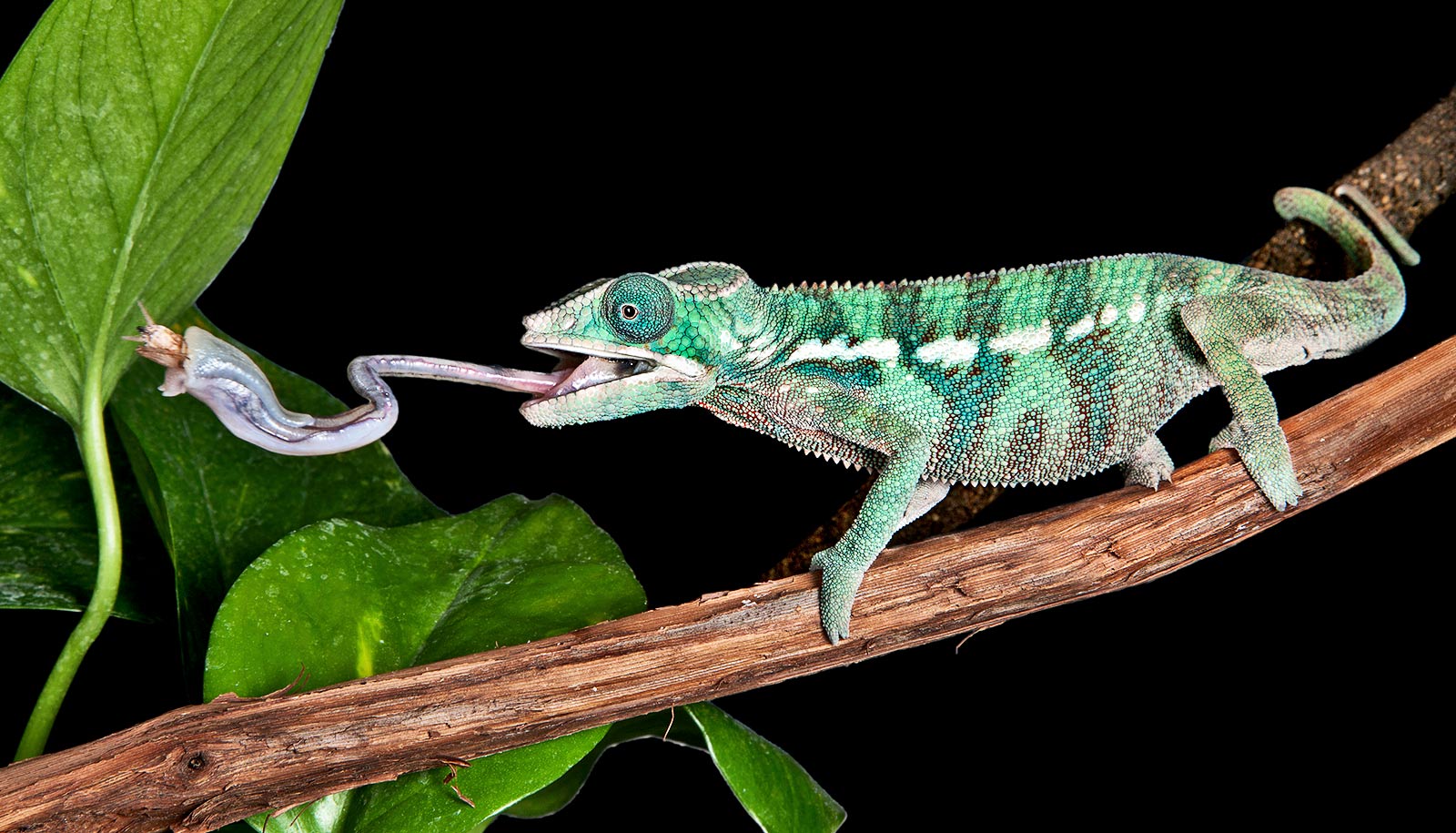
“Cheetahs are the fastest creatures on land, and they derive their speed and power from the flexing of their spines,” says Jie Yin, an assistant professor of mechanical and aerospace engineering at North Carolina State University and corresponding author of the paper in Science Advances.

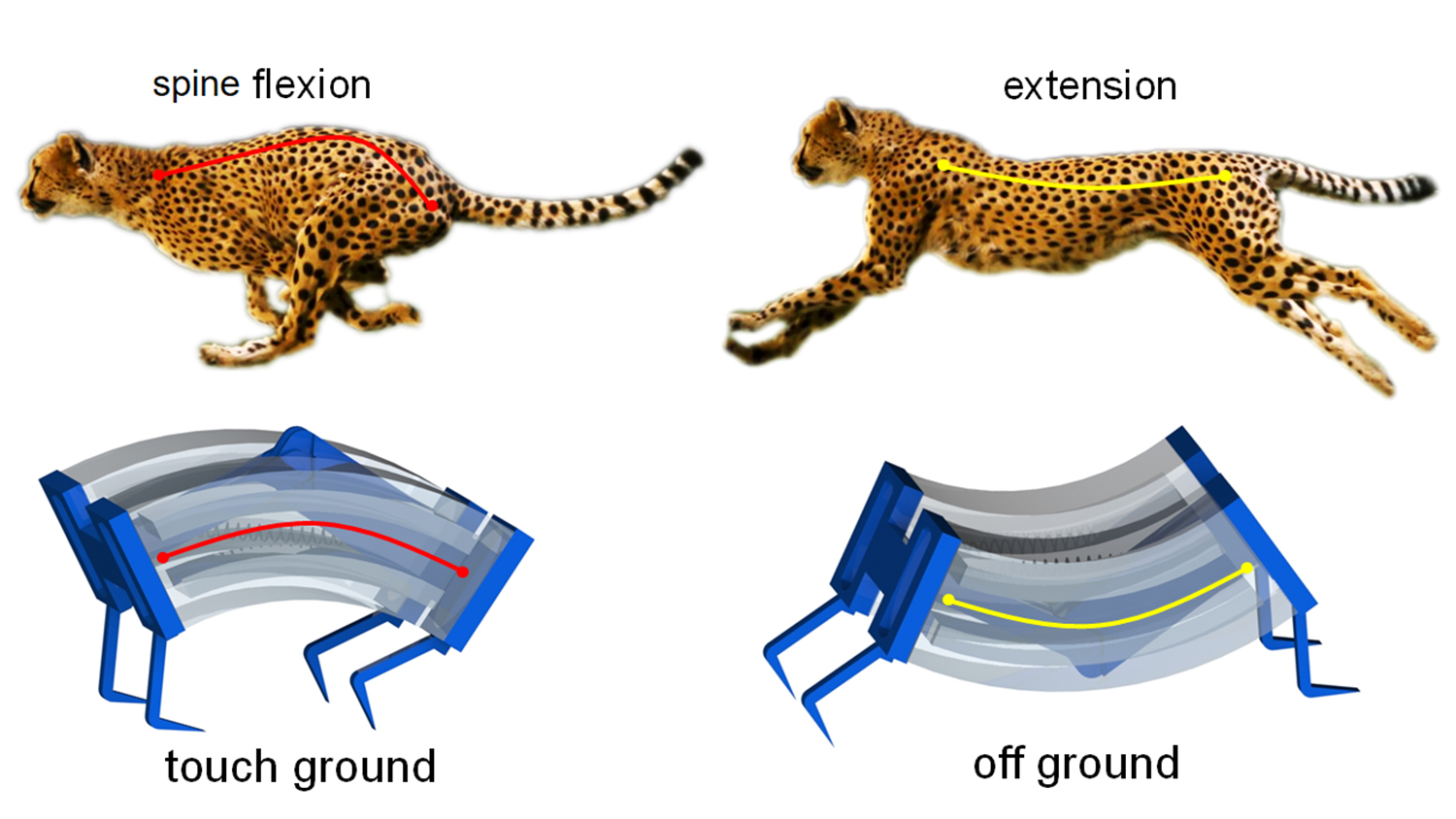
The image compares the running of a cheetah and the robot, both of which flex and then extend their spine as they move
(Credit: NC State)

“We were inspired by the cheetah to create a type of soft robot that has a spring-powered, ‘bistable’ spine, meaning that the robot has two stable states,” Yin says. “We can switch between these stable states rapidly by pumping air into channels that line the soft, silicone robot.

“Switching between the two states releases a significant amount of energy, allowing the robot to quickly exert force against the ground. This enables the robot to gallop across the surface, meaning that its feet leave the ground. Previous soft robots were crawlers, remaining in contact with the ground at all times. This limits their speed.”

The fastest soft robots until now could move at speeds of up to 0.8 body lengths per second on flat, solid surfaces. The new class of soft robots, which are called “Leveraging Elastic instabilities for Amplified Performance” (LEAP), are able to reach speeds of up to 2.7 body lengths per second—more than three times faster—at a low actuation frequency of about 3Hz.

The new robots can also run up steep inclines, challenging or impossible for soft robots that exert less force against the ground. The “galloping” LEAP robots are approximately 7 centimeters (about 2.75 inches) long and weigh about 45 grams (about 0.09 lbs).

The researchers also demonstrated that the LEAP design could improve swimming speeds for soft robots. When they replaced feet with fins, the LEAP robot could swim at a speed of 0.78 body lengths per second, as compared to 0.7 body lengths per second for the previous fastest swimming soft robot.

“We also demonstrated the use of several soft robots working together, like pincers, to grab objects,” Yin says. “By tuning the force exerted by the robots, we were able to lift objects as delicate as an egg, as well as objects weighing 10 kilograms [22 lbs] or more.”

The researchers note that this work serves as a proof of concept and are optimistic that they can modify the design to make the LEAP robots even faster and more powerful.

“Potential applications include search and rescue technologies, where speed is essential, and industrial manufacturing robotics,” Yin says. “For example, imagine production line robotics that are faster, but still capable of handling fragile objects. We’re open to collaborating with the private sector to fine-tune ways they can incorporate this technology into their operations.”

Additional coauthors are from Temple University, Colorado State University, the City University of New York, and NC State. The National Science Foundation supported the work.

Source: NC State