Archives

Play Video

Custom 3D-printed wearables never need to recharge

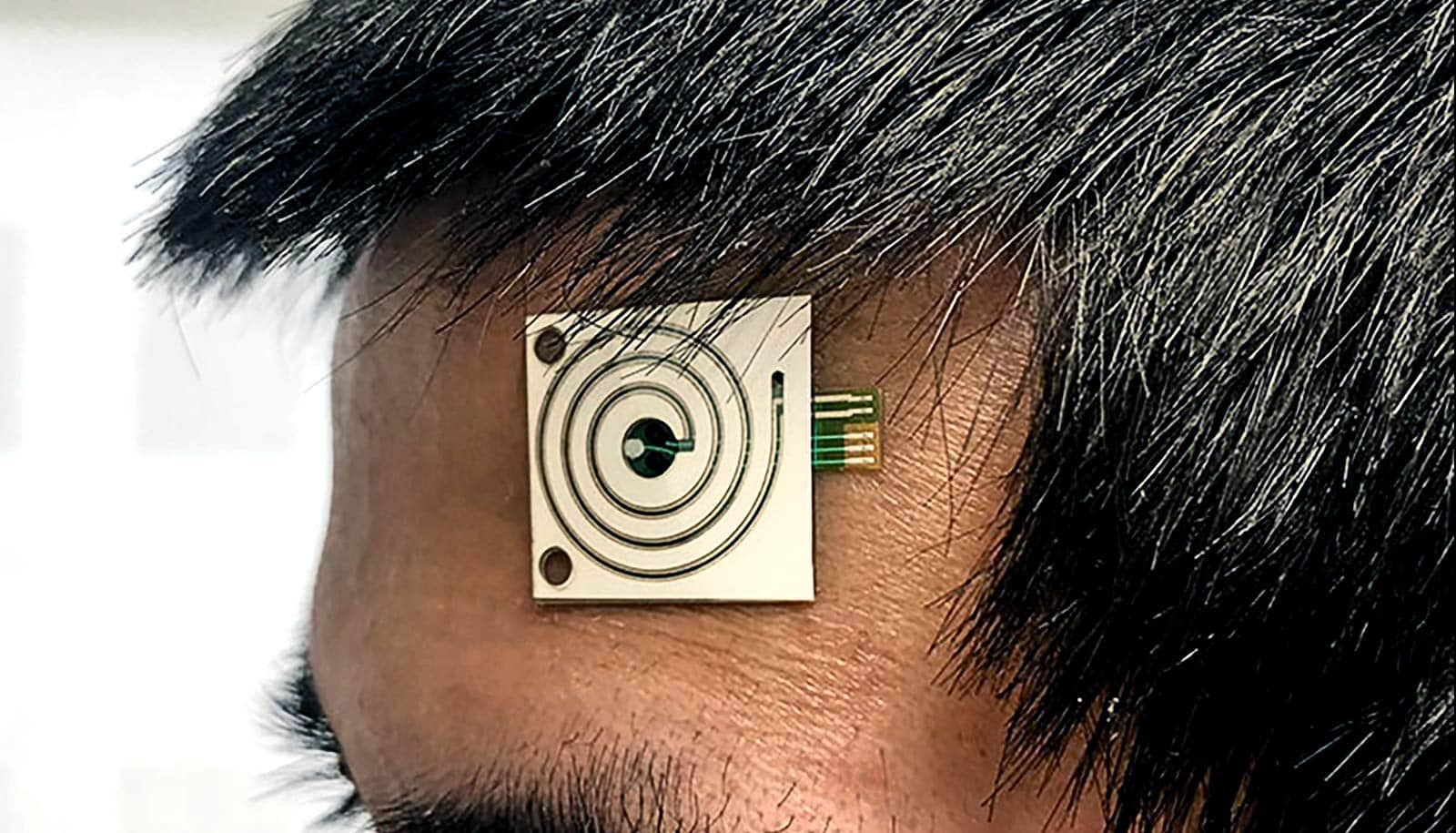
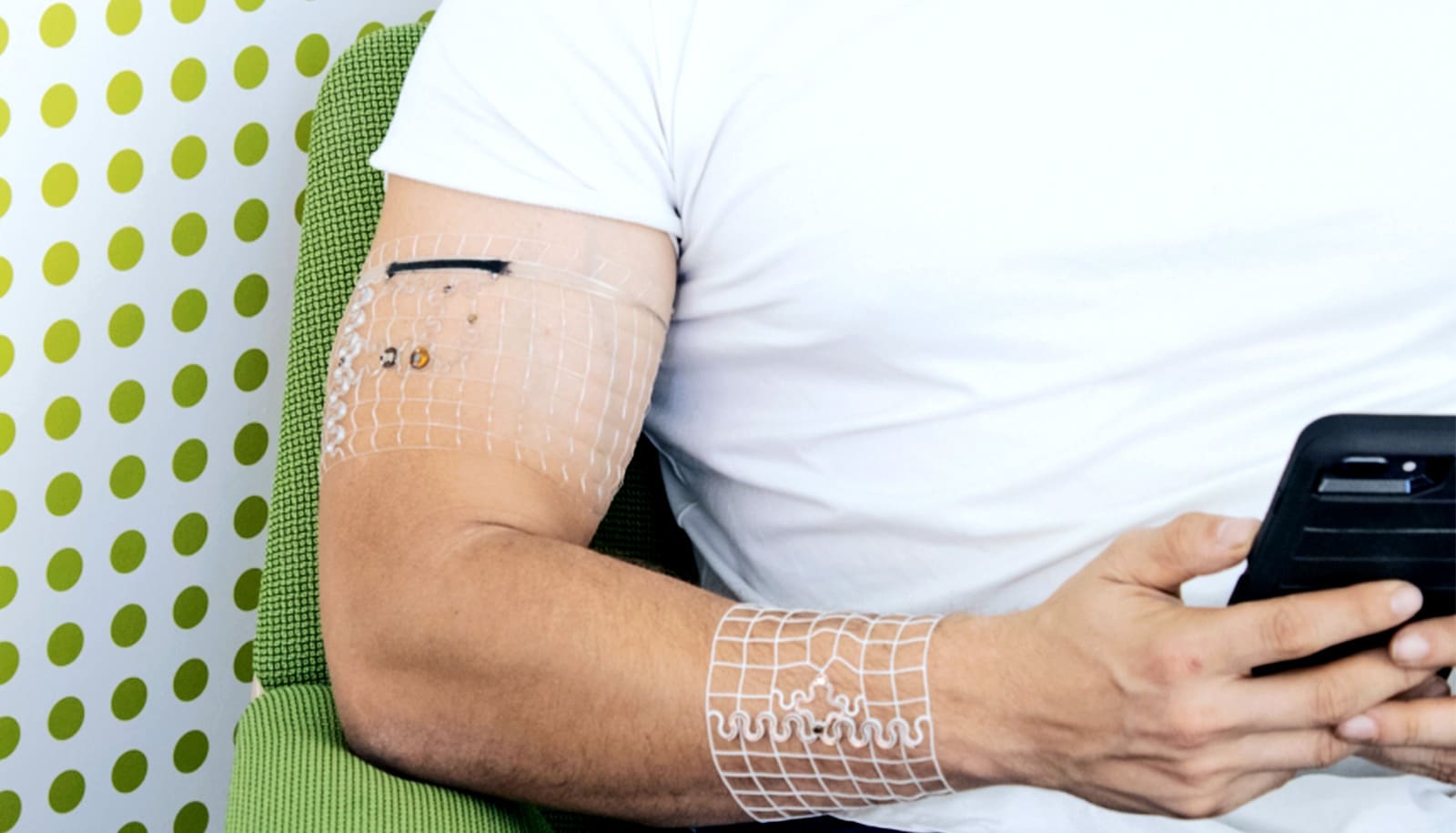
Engineers have developed a way to 3D-print medical-grade wearable devices, such as this one, based on body scans of the wearer. (Credit: Philipp Gutruf/U. Arizona)

Researchers have developed a type of wearable device they call a “biosymbiotic device,” which has several unprecedented benefits.

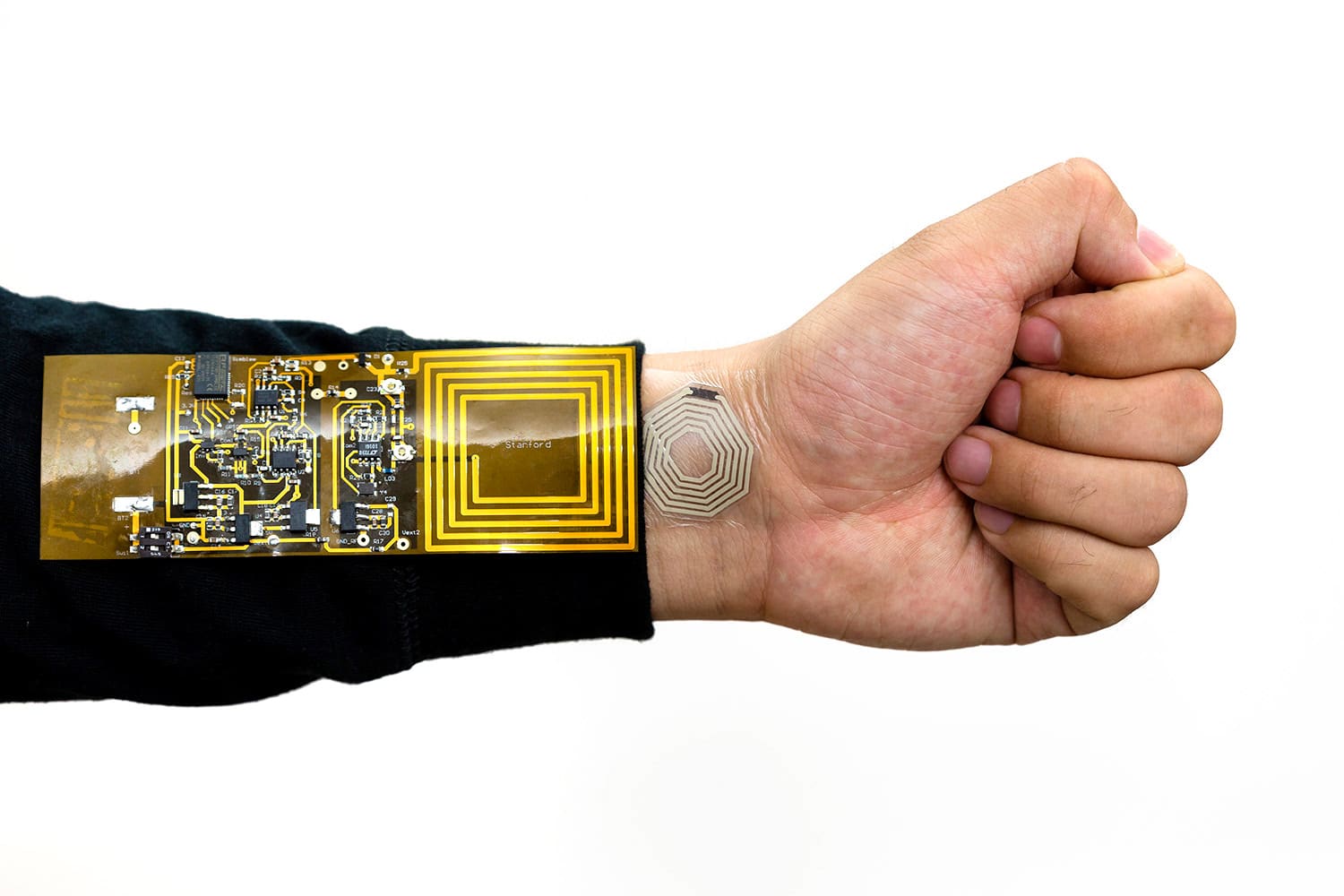
Wearable sensors to monitor everything from step count to heart rate are nearly ubiquitous. But for scenarios such as measuring the onset of frailty in older adults, promptly diagnosing deadly diseases, testing the efficacy of new drugs, or tracking the performance of professional athletes, medical-grade devices are needed.

Not only are the new devices custom 3D-printed and based on body scans of wearers, but they can operate continuously using a combination of wireless power transfer and compact energy storage.

“It’s as simple as putting the device on. Then you forget about it, and it does its job.”

“There’s nothing like this out there,” says Philipp Gutruf, assistant professor of biomedical engineering, faculty fellow in the College of Engineering, and a member of the BIO5 Institute at the University of Arizona. “We introduce a completely new concept of tailoring a device directly to a person and using wireless power casting to allow the device to operate 24/7 without ever needing to recharge.”

Current wearable sensors face various limitations. Smartwatches, for example, need to be charged, and they can only gather limited amounts of data due to their placement on the wrist. By using 3D scans of a wearer’s body, which can be gathered via methods including MRIs, CT scans, and even carefully combined smartphone images, Gutruf and his team can 3D-print custom-fitted devices that wrap around various body parts.

Imagine a virtually unnoticeable, lightweight, breathable, mesh cuff designed specifically for your bicep, calf, or torso. The ability to specialize sensor placement allows researchers to measure physiological parameters they otherwise couldn’t.

“If you want something close to core body temperature continuously, for example, you’d want to place the sensor in the armpit. Or, if you want to measure the way your bicep deforms during exercise, we can place a sensor in the devices that can accomplish that,” says Tucker Stuart, a doctoral student in biomedical engineering and first author on the paper. “Because of the way we fabricate the device and attach it to the body, we’re able to use it to gather data a traditional, wrist-mounted wearable device wouldn’t be able to collect.”

Because these biosymbiotic devices are custom fitted to the wearer, they’re also highly sensitive. Gutruf’s team tested the device’s ability to monitor parameters including temperature and strain while a person jumped, walked on a treadmill, and used a rowing machine. In the rowing machine test, subjects wore multiple devices, tracking exercise intensity and the way muscles deformed with fine detail. The devices were accurate enough to detect body temperature changes induced by walking up a single flight of stairs.

Gutruf and his team aren’t the first to adapt wearables to track health and body function. However, current wearable devices do not have the ability to track metrics continuously, or with enough precision to make medically meaningful conclusions.

Some wearables used by researchers are patches that stick to the skin, but they come off when skin goes through its normal shedding process, or sometimes when a subject sweats. Even highly sophisticated wearable devices used in clinical settings, such as ECG monitors, face these issues. Also, they aren’t wireless, which severely limits mobility. Patients can’t go about their normal daily routines if they’re tethered to bulky external devices.

The biosymbiotic device that Gutruf’s team has introduced uses no adhesive, and it receives its power from a wireless system with a range of several meters. The device also includes a small energy storage unit, so that it will function even if the wearer goes out of the system’s range, including out of the house.

“These devices are designed to require no interaction with the wearer,” Gutruf says. “It’s as simple as putting the device on. Then you forget about it, and it does its job.”

The research appears in the journal Science Advances.

Funding for the research came from the Flinn Foundation Translational Bioscience Seed Grants Pilot Program. The team has also been working with Tech Launch Arizona, the commercialization arm of the university, to protect the intellectual property and launch a startup to bring the technology to market.

Source: University of Arizona
Play Video

Smart clothing monitors the wearer’s heart

(Credit: Getty Images)

New “smart clothing” uses conductive nanotube thread to continuously monitor the heart.

Researchers sewed the fibers into athletic wear to monitor the heart rate and take a continual electrocardiogram (EKG) of the wearer.

The fibers are just as conductive as metal wires, but washable, comfortable, and far less likely to break when a body is in motion.

On the whole, the enhanced shirt was better at gathering data than a standard chest-strap monitor taking live measurements during experiments. When matched with commercial medical electrode monitors, the carbon nanotube shirt gave slightly better EKGs.

“The shirt has to be snug against the chest,” says Lauren Taylor, a graduate student at Rice University and lead author of the study in Nano Letters. “In future studies, we will focus on using denser patches of carbon nanotube threads so there’s more surface area to contact the skin.”


The researchers note the nanotube fibers are soft and flexible, and clothing that incorporates them is machine washable. The fibers can be machine-sewn into fabric just like standard thread. The zigzag stitching pattern allows the fabric to stretch without breaking them.

The fibers provide not only steady electrical contact with the wearer’s skin but also serve as electrodes to connect electronics like Bluetooth transmitters to relay data to a smartphone or connect to a Holter monitor that can be stowed in a user’s pocket, Taylor says.

Zigzag gives nanotube thread its stretch

The lab of Matteo Pasquali, a professor of chemical and biomolecular engineering, of chemistry, and of materials science and nanoengineering, introduced carbon nanotube fiber in 2013.

Since then the fibers, each containing tens of billions of nanotubes, have been studied for use as bridges to repair damaged hearts, as electrical interfaces with the brain, for use in cochlear implants, as flexible antennas, and for automotive and aerospace applications.


A special device that is made of rods and large pieces of wood allow a researcher to weave the nanotubes into thread
Researchers used a custom device that weaves carbon nanotube fibers into larger threads for sewing. (Credit: Jeff Fitlow/Rice)

The original nanotube filaments, at about 22 microns wide, were too thin for a sewing machine to handle. Taylor says the researchers used a rope-maker to create a sewable thread, essentially three bundles of seven filaments each, woven into a size roughly equivalent to regular thread.

“We worked with somebody who sells little machines designed to make ropes for model ships,” says Taylor, who at first tried to weave the thread by hand, with limited success. “He was able to make us a medium-scale device that does the same.”

She says it’s possible to adjust the zigzag pattern to account for how much a shirt or other fabric is likely to stretch. Taylor says the team is working with Mehdi Razavi and his colleagues at the Texas Heart Institute to figure out how to maximize contact with the skin.

A researcher uses a sewing machine to sew the carbon nanotube thread into the shirt
Carbon nanotube thread sewn into clothing is flexible and the apparel is machine washable. (Credit: Jeff Fitlow/Rice)

Better than Kevlar

Fibers woven into fabric can also be used to embed antennas or LEDs, according to the researchers. Minor modifications to the fibers’ geometry and associated electronics could eventually allow clothing to monitor vital signs, force exertion, or respiratory rate.

Taylor notes other potential uses could include human-machine interfaces for automobiles or soft robotics, or as antennas, health monitors, and ballistic protection in military uniforms.

“We demonstrated with a collaborator a few years ago that carbon nanotube fibers are better at dissipating energy on a per-weight basis than Kevlar, and that was without some of the gains that we’ve had since in tensile strength,” she says.

“We see that, after two decades of development in labs worldwide, this material works in more and more applications,” Pasquali says. “Because of the combination of conductivity, good contact with the skin, biocompatibility, and softness, carbon nanotube threads are a natural component for wearables.”

The wearable market, although relatively small, could be an entry point for a new generation of sustainable materials that can be derived from hydrocarbons via direct splitting, a process that also produces clean hydrogen, Pasquali says.

“We’re in the same situation as solar cells were a few decades ago,” Pasquali says. “We need application leaders that can provide a pull for scaling up production and increasing efficiency.”

Additional coauthors are from the University of Pennsylvania and Rice. The US Air Force, the American Heart Association, the Robert A. Welch Foundation, the Department of Energy, the Department of Defense, and a Riki Kobayashi Fellowship from the Rice Department of Chemical and Biomolecular Engineering funded the work.

Source: Rice University

Play Video

Stretchy electronic ‘tattoo’ monitors heart disease

(Credit: Thomas Hawk/Flickr)

A new ‘electronic tattoo’ could make monitoring heart health easier and more accurate than existing methods.

Heart disease is the leading cause of death in the United States, killing approximately 610,000 people yearly. The current method for monitoring the heart is the electrocardiography machine, also called EKG. It’s been the standard for decades.

University of Texas at Austin engineers made the wearable technology from stretchy, lightweight material, which make it possible to comfortably place the tattoo right over the heart for extended periods. The device is smaller than a credit card and thinner than a human hair.

Researchers in the same lab are currently working to make the system wireless and integrate the technology with a smartphone. The team says the device will provide greater insight into heart health and in real-time.

The National Science Foundation funded the research.

Source: National Science Foundation