Archives

Play Video

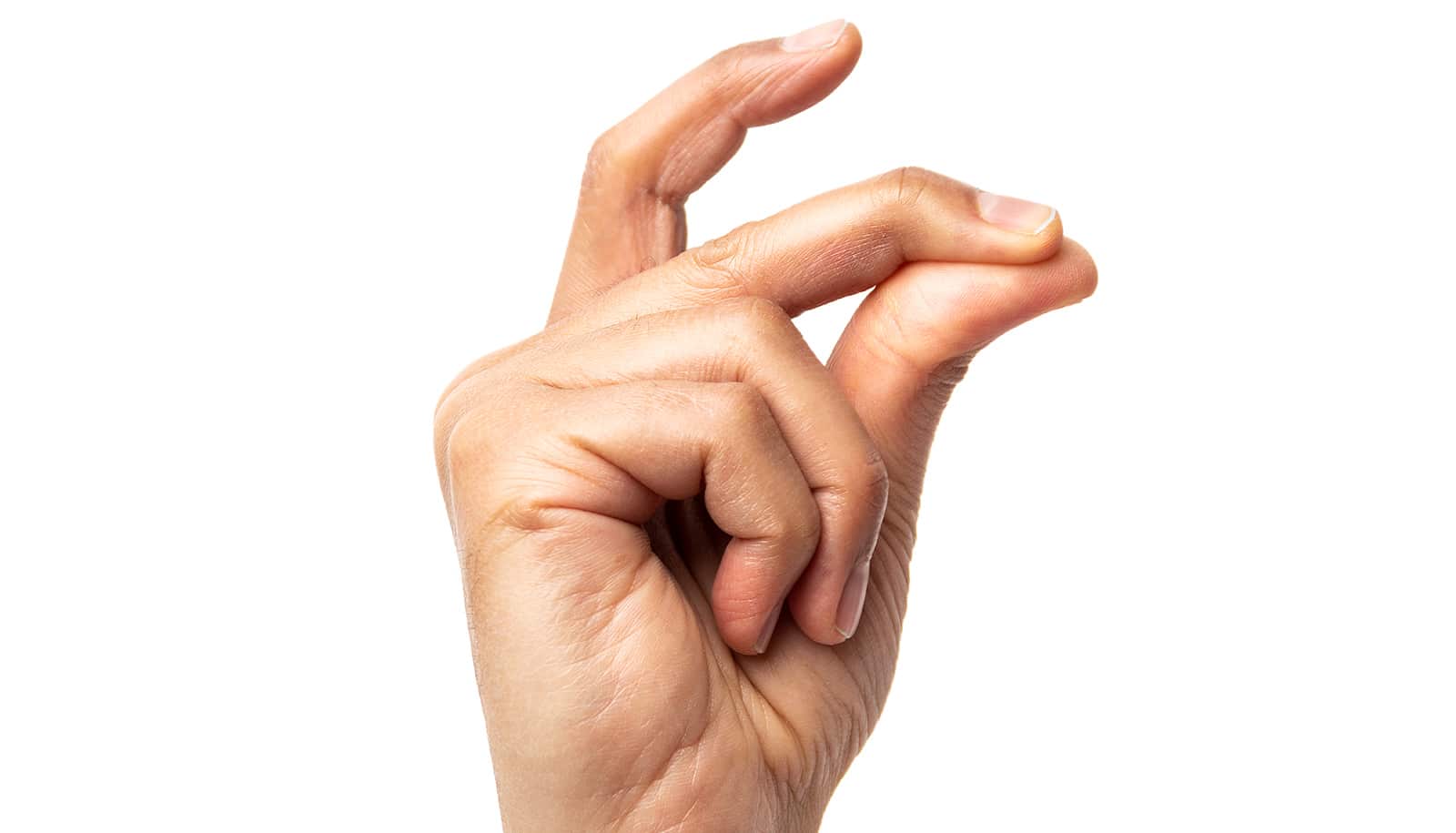
Finger snaps are one of the fastest motions humans can create

(Credit: Getty Images)

Researchers have discovered the finger snap has the highest acceleration the human body produces.

The snapping of a finger was first depicted in ancient Greek art around 300 BCE. Today, that same snap initiates evil forces for the villain Thanos in Marvel’s latest Avengers movie. Both media inspired a group of researchers from the Georgia Institute of Technology to study the physics of a finger snap and determine how friction plays a critical role.

Using an intermediate amount of friction, not too high and not too low, a snap of the finger produces the highest rotational accelerations observed in humans, even faster than the arm of a professional baseball pitcher.

The results appear in the Journal of the Royal Society Interface.

“It’s really an extraordinary physics puzzle right at our fingertips that hasn’t been investigated closely.”

The research was led by Raghav Acharya, an undergraduate student at Georgia Tech, as well as doctoral student Elio Challita, Saad Bhamla, assistant professor in the School of Chemical and Biomolecular Engineering, and Mark Ilton, assistant professor at Harvey Mudd College in Claremont, California.

Their results might one day inform the design of prosthetics meant to imitate the wide-ranging capabilities of the human hand. Bhamla says the project is also a prime example of what he calls curiosity-driven science, where everyday occurrences and biological behaviors can serve as data sources for new discoveries.

Could Thanos have snapped at all?

“For the past few years, I’ve been fascinated with how we can snap our fingers,” Bhamla says. “It’s really an extraordinary physics puzzle right at our fingertips that hasn’t been investigated closely.”

In earlier work, Bhamla, Ilton, and other colleagues had developed a general framework for explaining the surprisingly powerful and ultrafast motions observed in living organisms. The framework seemed to naturally apply to the snap. It posits that organisms depend on the use of a spring and latching mechanism to store up energy, which they can then quickly release.

Acharya and Bhamla felt a particular push to apply this framework to a finger snap after seeing the movie Avengers: Infinity War, released in April 2018 and produced by Marvel Studios. In it, Thanos, a villainous character, seeks to obtain six special stones and place them into his metal gauntlet. After collecting them all, he snaps his fingers and triggers universe-wide consequences.

But would it be possible to snap at all while wearing an armor gauntlet, the researchers asked? In the case of a finger snap, they suspected that skin friction played a more important role compared to other spring and latch systems. With the frictional properties of a metal gauntlet, they imagined it might be impossible.

Using high-speed imaging, automated image processing, and dynamic force sensors, the researchers analyzed a variety of finger snaps. They explored the role of friction by covering fingers with different materials, including metallic thimbles to simulate the effects of trying to snap while wearing a metallic gauntlet, much like Thanos.

“When I first saw the data, I jumped out of my chair.”

For an ordinary snap with bare fingers, the researchers measured maximal rotational velocities of 7,800 degrees per second and rotational accelerations of 1.6 million degrees per second squared. The rotational velocity is less than that measured for the fastest rotational motions observed in humans, which come from the arms of professional baseball players during the act of pitching. However, the snap acceleration is the fastest human angular acceleration yet measured, almost three times faster than the rotational acceleration of a professional baseball pitcher’s arm.

“When I first saw the data, I jumped out of my chair,” says Bhamla, who studies ultrafast motions in a variety of living systems, from single cells to insects. “The finger snap occurs in only seven milliseconds, more than twenty times faster than the blink of an eye, which takes more than 150 milliseconds.”

When the fingertips of the subjects were covered with metal thimbles, their maximal rotational velocities decreased dramatically, confirming the researchers’ intuitions.

“Our results suggest that Thanos could not have snapped because of his metal armored fingers,” says Acharya, first author of the study. “So, it’s probably the Hollywood special effects, rather than actual physics, at play! Sorry for the spoiler.”

Skin counts in a snap

The researchers explained this decrease by considering the diminished contact area that exists between thimble-covered fingers.

“The compression of the skin makes the system a little bit more fault tolerant,” says Challita, a coauthor of the work. “Reducing both the compressibility and friction of the skin make it a lot harder to build up enough force in your fingers to actually snap.”

“This is the only scientific project in my lab in which we could snap our fingers and get data.”

Surprisingly, increasing the friction of the fingertips with rubber coverings also reduced speed and acceleration. The researchers concluded that a Goldilocks zone of friction was necessary—too little friction and not enough energy was stored to power the snap, and too much friction led to energy dissipation as the fingers took longer to slide past each other, wasting the stored energy into heat.

The researchers experimented with a variety of mathematical models of the snapping process to explain their observations. They found that a model including a spring and a soft friction contact-latch could reproduce the qualitative features of their results.

“We included soft frictional contact into our mathematical model, and the results reinforced the central role played by friction in achieving ultrafast motions,” Ilton says. “This model can now help us understand how other animals such as termites and ants snap their mandibles, as well as rationally bioinspired actuators for engineering applications.”

John Long, a program director in the National Science Foundation’s Division of Integrative Organismal Systems, oversees research in the Physiological Mechanisms and Biomechanics Program, which currently funds Bhamla’s investigations into ultrafast behaviors in animals.

“This research is a great example of what we can learn with clever experiments and insightful computational modeling,” he says. “By showing that varying degrees of friction between the fingers alters the elastic performance of a snap, these scientists have opened the door to discovering the principles operating in other organisms, and to putting this mechanism to work in engineered systems such as bioinspired robots.”

The researchers believe that the results open a variety of opportunities for future study, including understanding why humans snap at all, and if humans are the only primates to have evolved this physical ability.

“Based on ancient Greek art from 300 BCE, humans may very well have been snapping their fingers for hundreds of thousands of years before that, yet we are only now beginning to scientifically study it,” Bhamla says. “This is the only scientific project in my lab in which we could snap our fingers and get data.”

Support came from Georgia Tech’s Presidential Undergraduate Research Award and the NSF.

Source: Georgia Tech
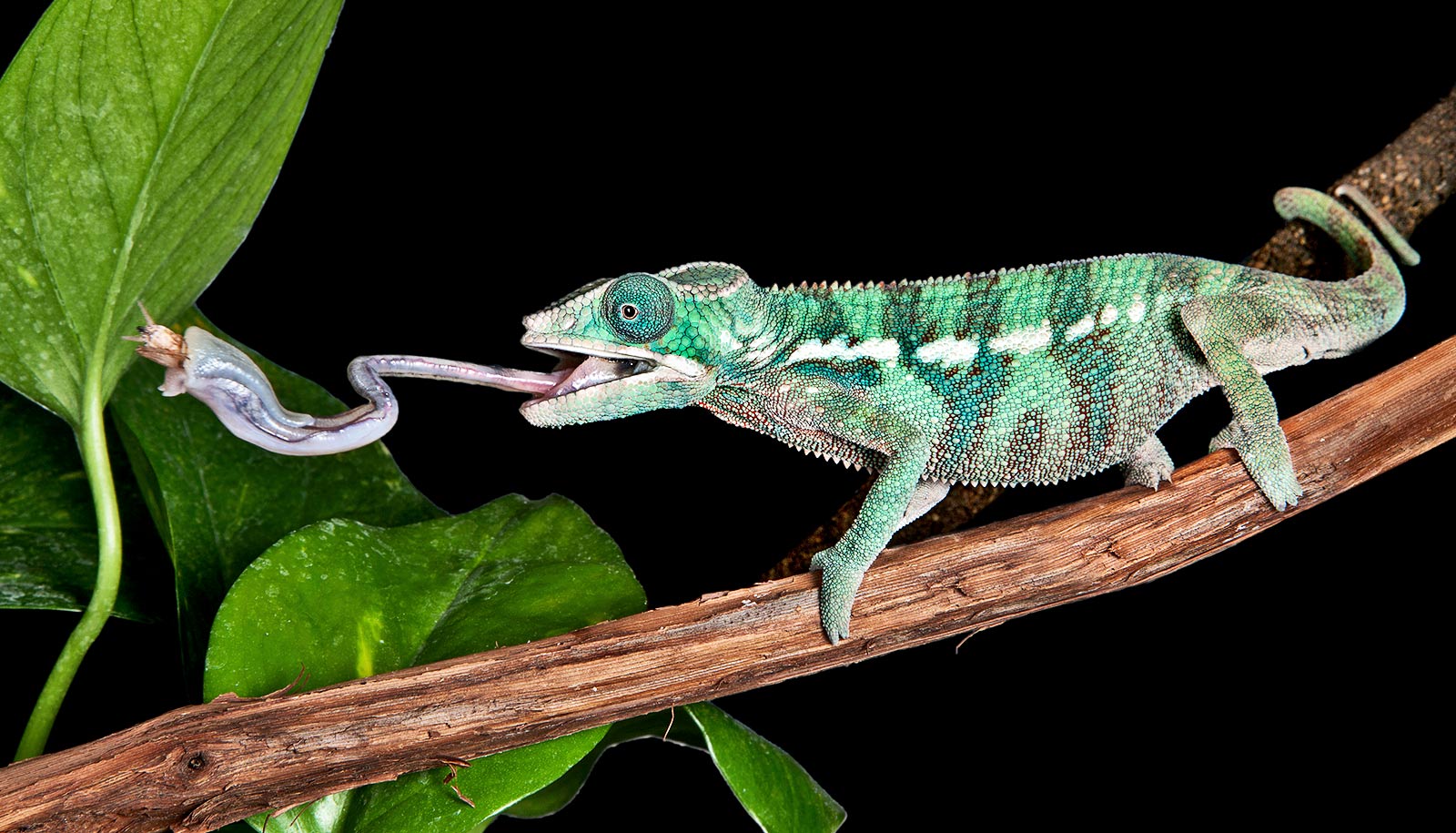
  • ‘Slingshot spiders’ accelerate 100X faster than cheetahs
  • Play Video

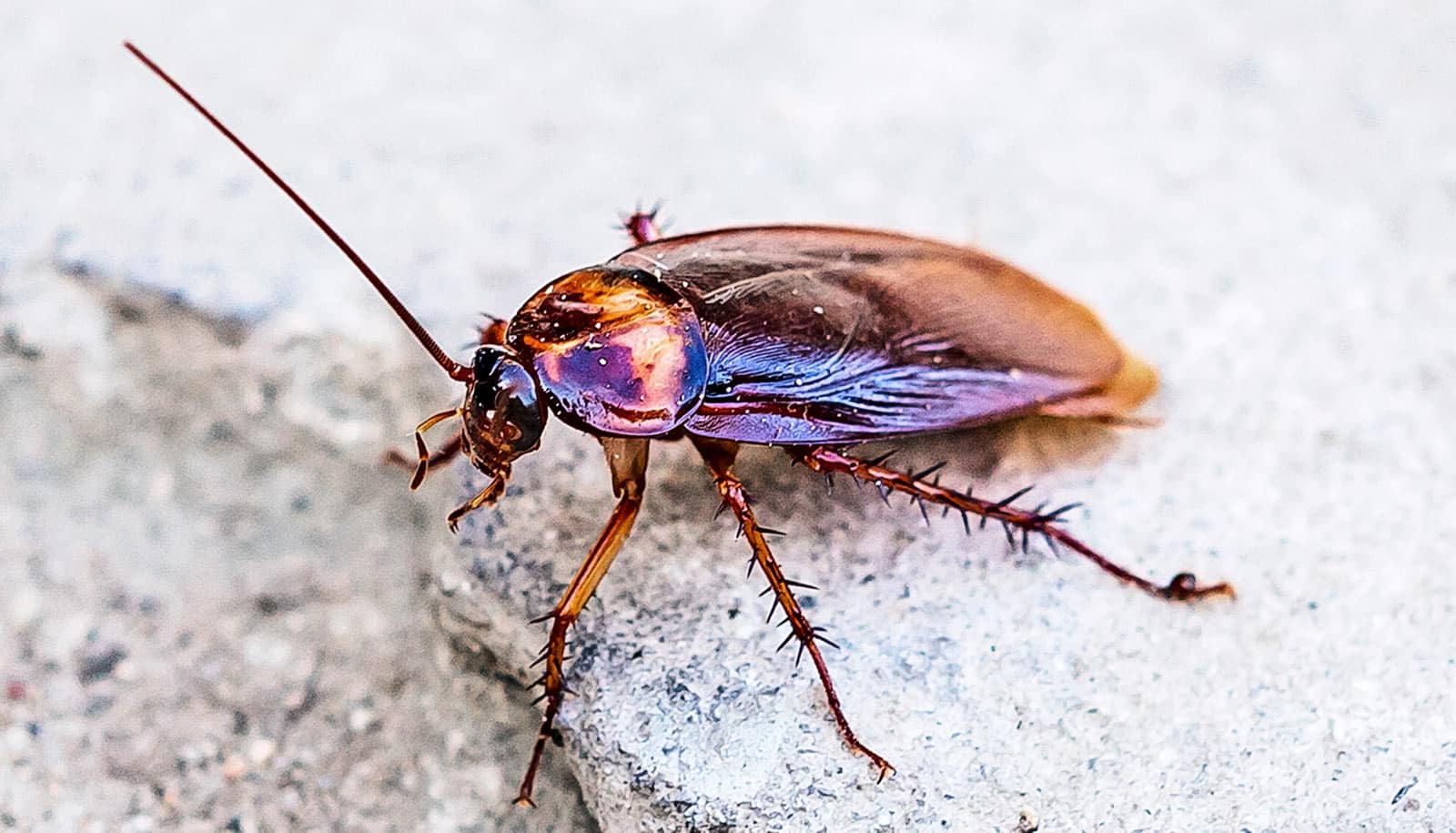
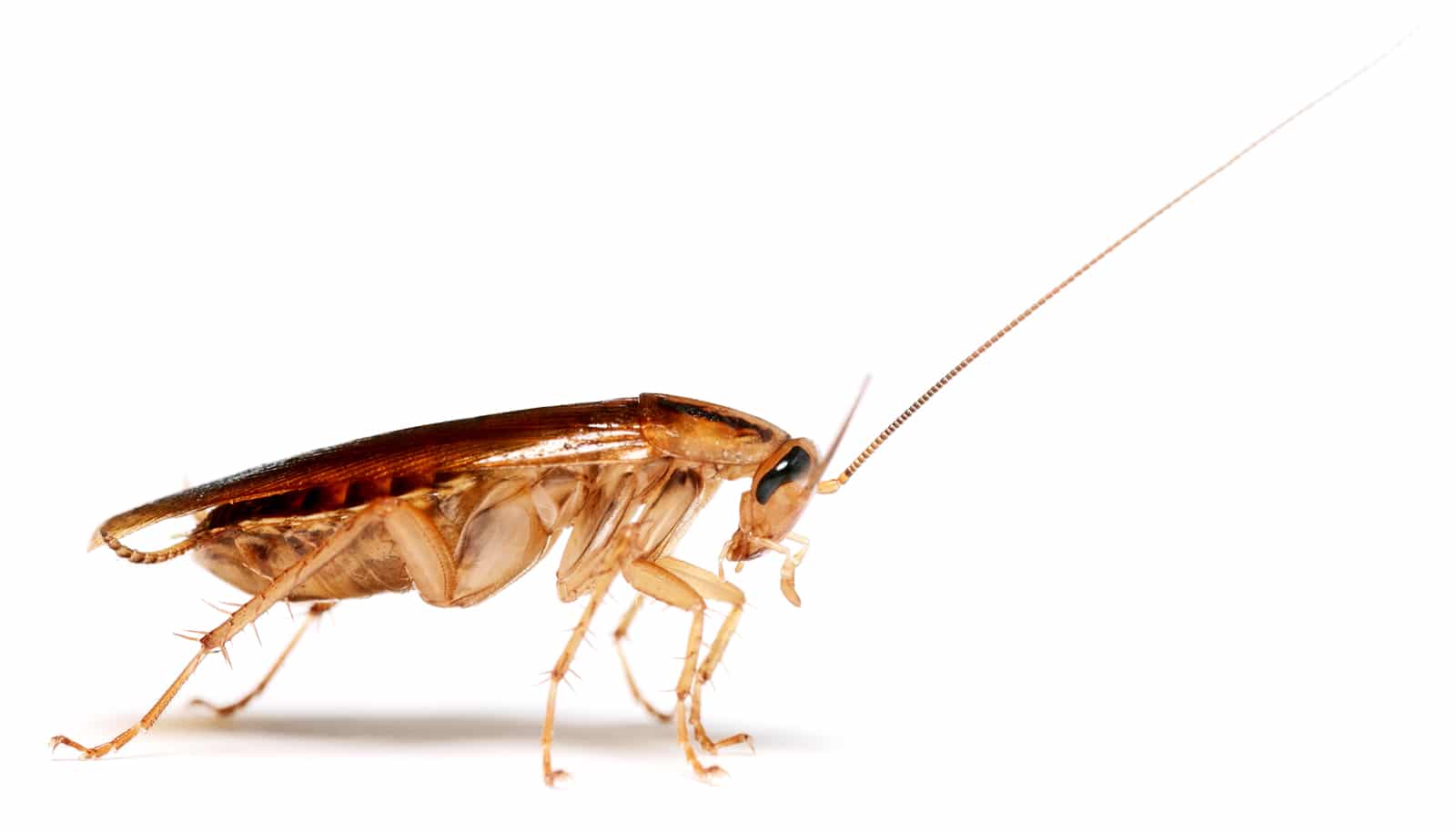
    The way roaches run could teach robots a thing or two

    (Credit: Getty Images)

    A cleverly simple method to assess and improve locomotion in robots gets its inspiration from the superb scurrying skills of cockroaches.

    Normally, understanding how insects’ or robots’ moving parts coordinate smoothly to take them places requires tedious modeling of mechanics, electronics, and information science. But in a new study, biomechanics researchers boiled down the sprints of cockroaches to handy principles and equations they then used to make a test robot amble about better.

    The method told the researchers about how each leg operates on its own, how they all come together as a whole, and the harmony or lack thereof in how they do it. Despite bugs’ and bots’ utterly divergent motion dynamics, the new method worked for both and should work for other robots and animals, too.

    A four-legged robot stands on a outdoor path, with wires coming out of the main body and going into motors on the legs
    The robot researchers used in the experiment was a Minitaur brand machine with legs. (Credit: Izaak Neveln/Georgia Tech)

    The biological robot, the roach, was the far superior runner with neurological signals guiding six impeccably evolved legs. The mechanical robot, a consumer model, had four stubby legs and no nervous system but relied instead for locomotion control on coarse physical forces traveling through its chassis as crude signals to roughly coordinate its clunky gait.

    “The robot was much bulkier and could hardly sense its environment. The cockroach had many senses and can adapt better to rough terrain. Bumps as high as its hips wouldn’t slow it down at all,” says first author Izaak Neveln, who was a postdoctoral researcher in the lab of Simon Sponberg, an assistant professor in the School of Physics and in the School of Biological Sciences at the Georgia Institute of Technology, during the study.

    A universal method

    The method, or “measure,” as the study calls it, transcended these huge differences, which pervade animal-inspired robotics.

    “The measure is general (universal) in the sense that it can be used regardless of whether the signals are neural spiking patterns, kinematics, voltages, or forces and does not depend on the particular relationship between the signals,” the study’s authors write.

    No matter how a bug or a bot functions, the measure’s mathematical inputs and outputs are always in the same units. The measure will not always eliminate the need for modeling, but it stands to shorten and guide modeling and avert anguishing missteps.

    Why stick bugs move so strangely

    Often a bot or an animal sends many walking signals through a central system to harmonize locomotion, but not all signals are centralized. Even in humans, though locomotion strongly depends on signals from the central nervous system, some neural signals are confined to regions of the body; they are localized signals.

    Some insects appear to move with little centralization—such as stick bugs, also known as walking sticks, whose legs prod about nearly independently. Stick bugs are wonky runners.

    “The idea has been that the stick bugs have the more localized control of motion, whereas a cockroach goes very fast and needs to maintain stability, and its motion control is probably more centralized, more clocklike,” Neveln says.

    Strong centralization of signals generally coordinates locomotion better. Centralized signals could be code traveling through an elaborate robot’s wiring, a cockroach’s central neurons synching its legs, or the clunky robot’s chassis tilting away from a leg thumping the ground and putting weight onto an opposing leg.

    Roboticists need to see through the differences and figure out the interplay of a locomotor’s local and central signals.

    Metronomes and cockroaches

    The new “measure” does this by focusing on an overarching phenomenon in the walking legs, which can be seen as pendula moving back and forth. For great locomotion, they need to synch up in what is called phase-coupling oscillations.

    A fun, easy experiment illustrates this physics principle. If a few, say six, metronomes—ticking rhythm pendula that piano teachers use—are swinging out of sync, and you place them all on a platform that freely sways along with the metronomes’ swings, the swings will sync up in unison.

    The phases, or directions, of their oscillations are coupling with each other by centralizing their composite mechanical impulses through the platform. This particular example of phase-coupling is mechanical, but it can also be computational or neurological—like in the roach.

    Its legs would be analogous to the swinging metronomes, and central neuromuscular activity analogous to the free-swaying platform. In the roach, not all six legs swing in the same direction.

    “Their synchronization is not uniform. Three legs are synchronized in phase with each other—the front and back legs of one side with the middle leg of the other side—and those three are synchronized out of phase with the other three,” Neveln says. “It’s an alternating tripod gait. One tripod of three legs alternates with the other tripod of three legs.”

    Better robot movement

    And just like pendula, each leg’s swings can be graphed as a wave. All the legs’ waves can be averaged into an overall roach scurry wave and then developed into more useful math that relates centralization with decentralization and factors like entropy that can throw locomotion control off.

    The resulting principles and math benefited the clunky robot, which has strong decentralized signals in its leg motors that react to leg contact with the ground, and centralized control weaker than that of the stick bug. The researchers graphed out the robot’s movements, too, but they didn’t result in the neatly synced group of waves that the cockroach’s produced.

    The researchers turned with the principles and math to the clunky robot, which initially was out of sorts—bucking or hopping uselessly like a pogo stick. Then the scientists strengthened centralized control by reweighting its chassis to make it move more coherently.

    “The metronomes on the platform are mechanical coupling, and our robot coordinates control that way,” Neveln says. “You can change the mechanical coupling of the robot by repositioning its weights. We were able to predict the changes this would make by using the measure we developed from the cockroach.”

    The researchers also wired up specific roach muscles and neurons to observe their syncopations with the scurry waves. Seventeen cockroaches took 2,982 strides to inform the principles and math, and the bugs also sprung surprises on the researchers.

    One stuck out: The scientists had thought signaling centralized more when the roach sped up, but instead, both central and local signaling strengthened, perhaps doubling down on the message to run.

    The study appears in the journal Nature Communications. The National Science Foundation funded the research. Any findings, conclusions, and recommendations are those of the authors and not necessarily of the NSF.

    Source: Georgia Tech