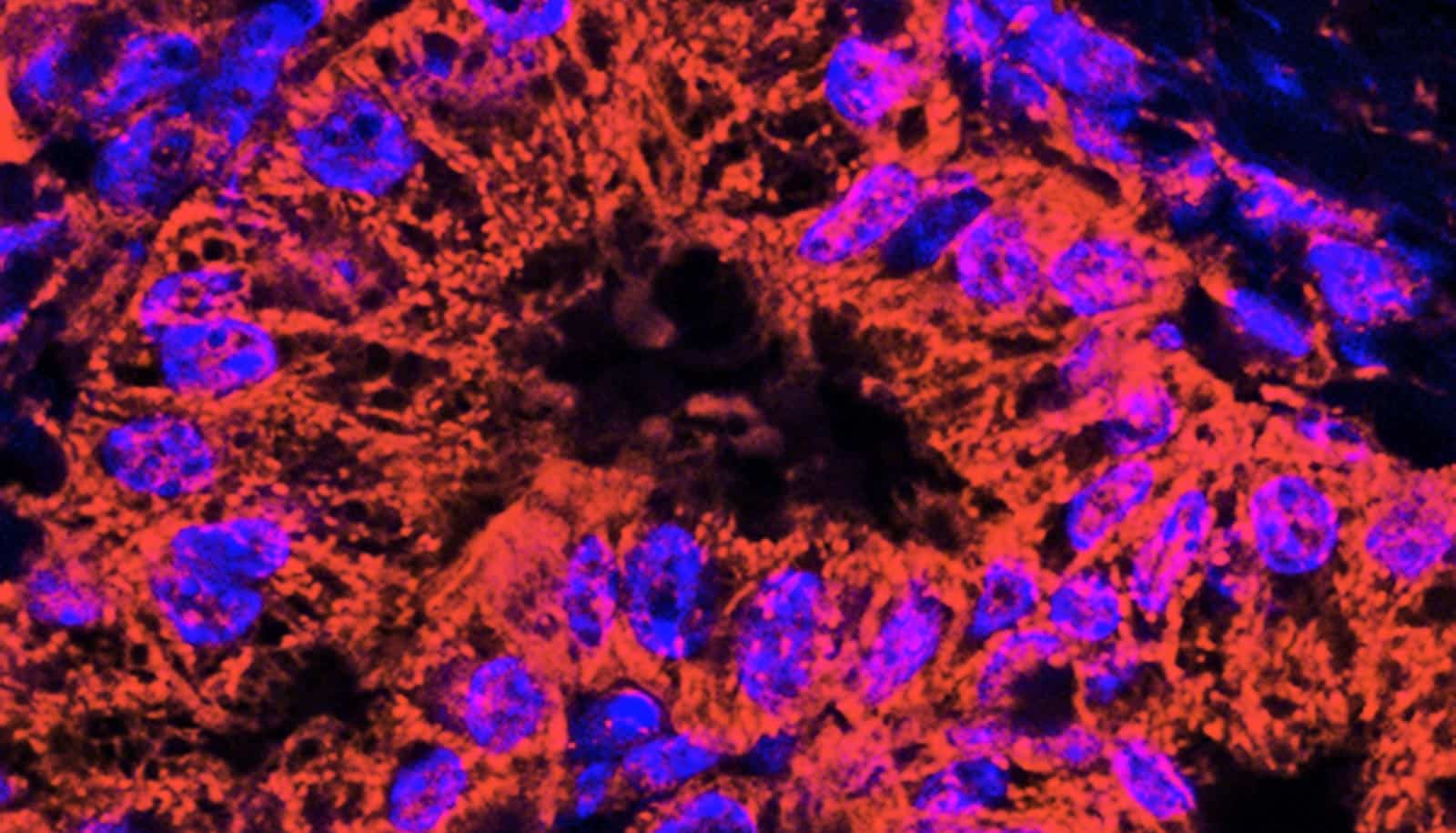
Pancreatic cancer cells are remarkably good at growing, but new research suggests that two tiny molecules already present in the body may help slow them down.
Researchers at the Texas A&M College of Veterinary Medicine and Biomedical Sciences (VMBS) and the College of Education and Human Development found that increasing levels of two microRNAs, known as miR-15a and miR-16, reduced protein synthesis and slowed the growth of pancreatic ductal adenocarcinoma (PDAC) cells.
In a study in Physiological Reports, the researchers also shared that patients with higher levels of the microRNAs in their tumors tended to live longer, further supporting their potential as targets for new pancreatic cancer treatments.
“Cancer cells continually proliferate, or grow and divide,” says James Fluckey, associate dean for research and a professor in the kinesiology and sport management department and the study’s principal investigator. “To do that, the cells need to increase processes like protein synthesis that give them what they need to grow. If you disrupt that protein synthesis, you can slow the rate at which those cells can grow.”
MicroRNAs are short strands of genetic material that help regulate which proteins a cell produces. Rather than providing instructions for making proteins themselves, they can bind to genetic messages and prevent those instructions from being translated into proteins.
That gives microRNAs considerable influence over what happens inside a cell.
Peter Nghiem, an associate professor in the VMBS veterinary integrative biosciences department, compared their role to the brakes on a car.
“Their expression can prevent something very bad from happening—like accelerating to the point where you crash or develop cancer,” he says.
When levels of miR-15a and miR-16 are reduced, as the researchers observed in pancreatic cancer, that braking effect may be diminished, so the team explored what happens when those microRNAs are added back.
“The whole goal with this study was not to repair the brakes but bring the brakes back into the cell to see if we can slow down the progression of these cancer types,” Fluckey says.
To test that idea, the researchers increased miR-15a and miR-16 in cultured PDAC cells. Doing so reduced both protein synthesis and cell proliferation.
The study builds on the team’s previous research into miR-15a and miR-16 by examining how the two microRNAs influence protein production and cell growth in pancreatic cancer.
The team also used computational analysis to identify the biological processes potentially influenced by the two microRNAs, revealing connections to a broad range of genes and pathways involved in cancer, protein metabolism, cell adhesion and other cellular processes.
That broad influence could be particularly important because cancer is rarely driven by a single malfunctioning process.
“We would love to find that magic bullet to say, ‘This is the molecule that causes cancer,’ but we can’t,” Fluckey says. “What we can say is that these microRNAs seem to have a vital role in the protein balance of the cell. When they are in abundance, we can dramatically slow the progression of that cancer.”
The researchers next turned to publicly available patient data to determine whether the patterns they observed in cultured cells were also reflected in people with pancreatic disease.
They found that miR-15a and miR-16 levels were lower in pancreatic tumors than in healthy pancreatic tissue. They also found that microRNAs were also reduced in samples from patients with pancreatitis, an inflammatory condition of the pancreas.
Most notably, pancreatic cancer patients whose tumors had higher miR-15a and miR-16 expression had better survival outcomes than those with lower expression.
Together, the patient data reinforced the researchers’ laboratory findings, showing that the same microRNAs that slowed cancer cell growth in cultured cells were also associated with better outcomes in people with pancreatic cancer.
While the results point toward therapeutic possibilities, turning miR-15a and miR-16 into a treatment will require solving a major challenge: getting them to the right cells.
The researchers’ next goal is to develop a delivery method capable of restoring the microRNAs specifically in cancer cells while leaving healthy cells alone.
“We’re becoming more and more confident that the miR-15a and 16 interventions may truly have therapeutic potential,” Fluckey says. “Now we just have to figure out how to get it to cells in a way that we’re only treating the cells that are cancerous.”
That specificity will be critical, Nghiem says, because microRNAs also perform important regulatory functions in healthy cells.
The researchers also caution that restoring miR-15a and miR-16 is unlikely to become a stand-alone cure for pancreatic cancer; instead, it could eventually provide one component of a combination of treatments targeting the many biological processes involved in the disease.
“It’s just not going to be one treatment for a disease,” Nghiem says. “MicroRNA-15a and 16 can be one important arm of a treatment regimen. As we do research, we’re going to find all of the pieces that come together eventually to effectively treat and hopefully cure patients with these devastating diseases.”
For Fluckey, one of the most promising aspects of the research is that those potential tools already exist naturally within the body.
“The therapeutic intervention that we’re looking at is already in your body,” he says. “We just have to figure out how to get it back in working order.”
Source: Texas A&M University