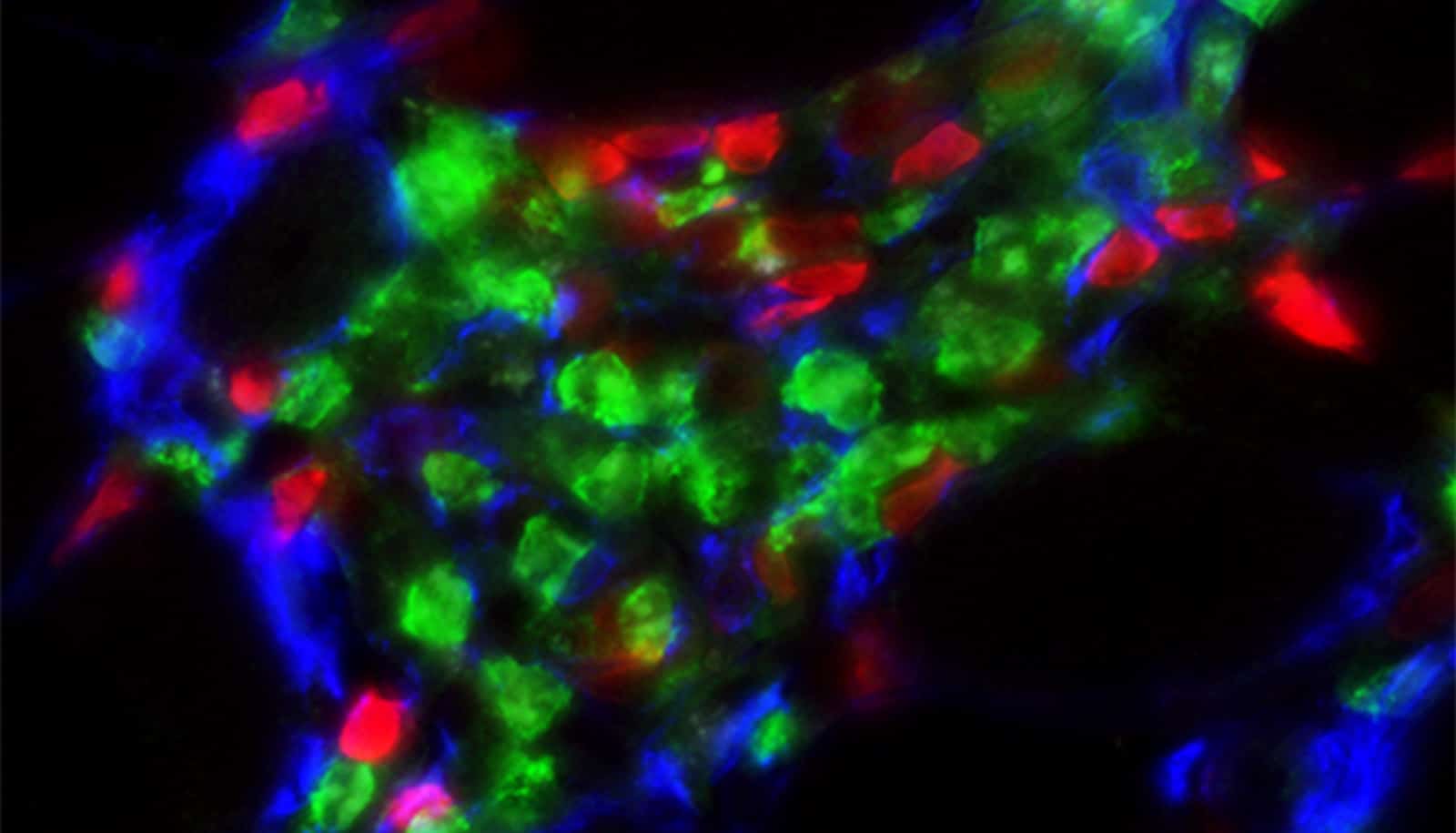
Researchers have identified a potential pathway that could protect heart function in people with Duchenne muscular dystrophy.
Duchenne muscular dystrophy (DMD) is a progressive and fatal genetic disease that weakens the body’s muscles.
“The results are very promising.”
Published in Molecular Therapy, the new study examined the effects of the experimental drug Setanaxib in two preclinical models of DMD.
Researchers found that the treatment preserved cardiac function, limited heart enlargement, and reduced tissue scarring.
The findings also suggest that an enzyme known as NOX4 could serve as a potential target for future treatments for cardiomyopathy, a serious form of heart disease associated with DMD.
The study was led by Da-Zhi Wang, professor in the University of South Florida Health Morsani College of Medicine and director of the Center for Regenerative Medicine at the USF Health Heart Institute. The research team also included USF Health’s John Mably, associate professor, and Gabriela Diniz, assistant professor, as well as outside collaborators.
“Despite great progress in the development of gene replacement therapies, Duchenne muscular dystrophy remains a devastating disease,” Wang says.
“Understanding the causes of DMD progression is urgently needed to advance therapies that alleviate symptoms and improving quality of life.”
DMD primarily affects boys because it is inherited through the X chromosome. The disease is best known for causing progressive weakness in the muscles used to walk and move. But one of the disease’s most serious effects occurs in the heart.
The condition is caused by mutations that prevent the body from producing functional dystrophin, a protein that helps stabilize and protect muscle cells.
Without dystrophin, muscle cells become more vulnerable to damage from repeated contractions. Over time, healthy muscle can be replaced by fat and stiff scar tissue.
The heart is especially vulnerable because it must contract continuously to circulate blood throughout the body. As cardiac damage accumulates, the heart can enlarge and lose its ability to pump effectively, eventually leading to heart failure.
Treatments have helped people with DMD live longer, making the protection of the heart an increasingly important part of managing the disease.
In the new study, researchers evaluated Setanaxib, an experimental drug designed to limit a damaging process known as oxidative stress.
The drug targets NOX1 and NOX4, enzymes that produce highly reactive molecules within cells. At normal levels, these molecules play useful roles in the body; however, when too many are produced, they can contribute to inflammation and fibrosis.
The researchers found that Setanaxib helped preserve the heart’s ability to pump blood while reducing inflammation and fibrosis. It also lowered the activity of genes associated with cardiomyopathy.
The results suggest that blocking this pathway may help slow the progression of DMD-related heart disease.
“The results are very promising,” Mably says.
“The Nox4 inhibitor has already been tested in clinical trials for the treatment of lung fibrosis and kidney and liver disease. We hope it will also be tested soon in clinical trials in DMD patients to slow the progression of heart disease.”
The findings build on more than 15 years of DMD research in Wang’s laboratory. During that time, the team has sought to better understand how the disease progresses and identify biological mechanisms contributing to the development of new therapies.
“Our new study represents an important step forward for the field and for our cardiac and regenerative medicine program,” Diniz says.
“It shows how efforts in basic biomedical sciences are crucial for understanding human disease and health care advancements.”
Source: University of South Florida