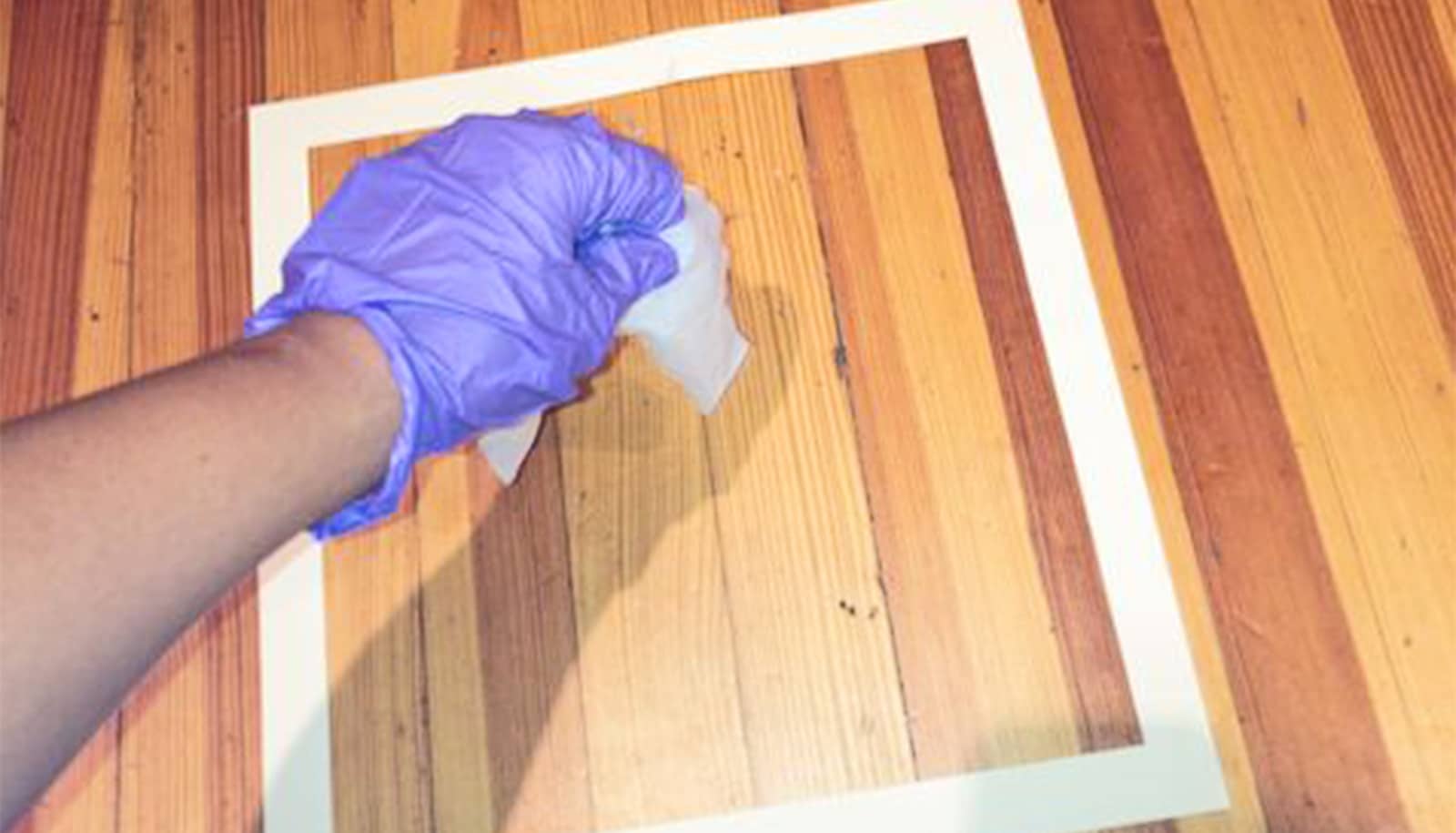
A new study finds that color-changing wipes are a reliable and easy-to-use tool that families can use to quickly determine whether they are exposed to hazardous lead in their homes.
Knowing whether lead is present in homes is crucial because of the danger the toxic metal poses to families, particularly those with children.
Even in small amounts, lead exposure can contribute to serious neurological and behavioral issues, such as learning disabilities and developmental delays.
To determine whether lead is present in homes, US housing authorities recommend professional inspections using an expensive X-ray fluorescence (XRF) device, which are typically conducted only after a confirmed case of child lead poisoning and can take several weeks for results to be shared with families.
The new study led by University of Washington School of Public Health (UWSPH) and Boston University School of Public Health has validated a much faster method to screen for lead in homes from paint or a “take-home exposure.” These are instances in which individuals who work in hazardous conditions unknowingly transfer lead from their workplace to their home through clothing, shoes, and other items, consequently exposing other household members.
Colorimetric wipes, which change to a red or orange color when they detect lead on surfaces or skin, are an effective tool that families can use to immediately know whether lead is in their homes, according to the study in the Journal of Exposure Science & Environmental Epidemiology.
The analysis assessed the performance of these wipes in the homes and vehicles of Boston-based construction workers with at least one child living in the home.
Developed by the National Institute for Occupational Safety and Health, the wipes detected lead on nearly 60% of home surfaces and 71% of vehicles. The samples were able to correctly identify the majority of contaminated and uncontaminated surfaces, with a low rate of false negatives and similar results from a subsequent laboratory analysis.
Although colorimetric wipes are sold commercially, federal guidelines only recommend their use in occupational settings, due to a lack of data on how they perform in residences. But the new findings show that these wipes, which cost about $2-$10 per sample (compared to $60-$160+ for lab tests), are a reliable and low-cost screening tool that can be used in cases of suspected residential lead exposure, enabling affected families to take protective action as quickly as possible.
“Because colorimetric wipes are much less expensive than standard approaches for lead investigations in homes, they can be used more often and in more places,” says study coauthor Jonathan Levy, chair and professor of environmental health at BUSPH. “Knowing which surfaces have elevated lead can allow for targeted remediation and effective exposure reduction strategies.”
For the study, a team led by Diana Ceballos, assistant professor of environmental & occupational health sciences at UWSPH (and former assistant professor of environmental health at BUSPH), collected 104 colorimetric wipes to assess lead levels on surfaces from nine homes and seven vehicles belonging to lead-exposed construction workers living with children in Boston. In the presence of lead, the wipes changed to a light orange, orange, or red color to indicate a low, medium, or high level of lead, respectively.
In both homes and cars, the wipes were able to swiftly identify lead on surfaces and items such as floors, shoes, laundry room appliances, and trunks, as well as lead on painted home surfaces, such as windowsills. Although lead-based paint was banned for residential use in the US in the 1970s, it is common in older homes, and Boston has one of the oldest housing markets in the country. Old residential lead paint can become hazardous once it starts chipping or cracking, creating invisible dust in the air and on objects that people in the household can inhale or ingest.
“Children are more likely to have elevated exposures to lead on surfaces in homes, given hand-to-mouth behavior and time spent at home,” Levy says, noting the possible neurological and behavioral effects that can result from this exposure can be significant because their brains are still developing.
The colorimetric wipe samples indicated that kitchens had the highest lead levels, followed by entrances, living rooms, bedrooms, and laundry rooms. In cars, the highest lead levels were in the trunk, followed by back seats and front seats.
“Validating these wipes for use in workers’ homes helps provide under-resourced health departments with practical tools for lead investigations,” says Ceballos, who has used the wipes in health hazard evaluations for more than 15 years.
Due to the variability and limited number of the samples, the researchers were unable to determine exactly how much the take-home exposures or lead paint each contributed to the high lead measurements.
“In many of the homes we studied, kitchens were located near the main entrance,” Ceballos says. “This made it more difficult to distinguish between sources of lead, especially because we often tested floors and other surfaces in areas where people frequently walk and touch.”
But neither source seemed to dominate the other, either, and the high percentage of lead observed in homes and vehicles indicate that both lead-based paint and occupational take-home pathways can expose families to lead at home.
Construction workers, particularly those involved in renovation, demolition, and metalwork, are especially susceptible to lead exposure because their jobs are mobile by nature, changing tasks or job sites frequently. Ceballos and coauthor M. Pilar Botana Martinez, a research scientist in the environmental health department, developed a training guide that provides instructions on how to use the colorimetric wipes at home.
In a previous study, the research team shared changes that workers can make to reduce their chances of transferring lead dust to their homes, such as storing PPE at work, changing clothes and shoes before getting into their cars, washing clothes at work (or separately from other household members’ clothing), and storing work clothes and items separately from personal items and in designated spaces in their home and vehicle.
The researchers say that future studies should expand the colorimetric wipe analysis to more homes and areas within homes, including households without workers in lead-exposed jobs.
“There are also opportunities to evaluate the performance of these wipes alongside other newly available commercial colorimetric kits, which could help inform best practices for regulatory approval,” says Ceballos.
The study was funded by the US Department of Housing and Urban Development.
Source: Boston University