Researchers are exploring how artificial intelligence could help detect melanoma—the most dangerous form of skin cancer—by evaluating images of suspicious skin abnormalities
Designed as a decision-support tool rather than a replacement for medical expertise, the technology could help dermatologists more quickly identify cases that may require closer attention.
“The goal is not for AI to replace doctors and other experts, but AI can help patients with limited access to dermatologists,” Kamlendra Singh, an associate research professor in the University of Missouri’s College of Veterinary Medicine who led the study, says.
“Because earlier detection leads to earlier treatment, our research can one day play a big role in improving health outcomes.”
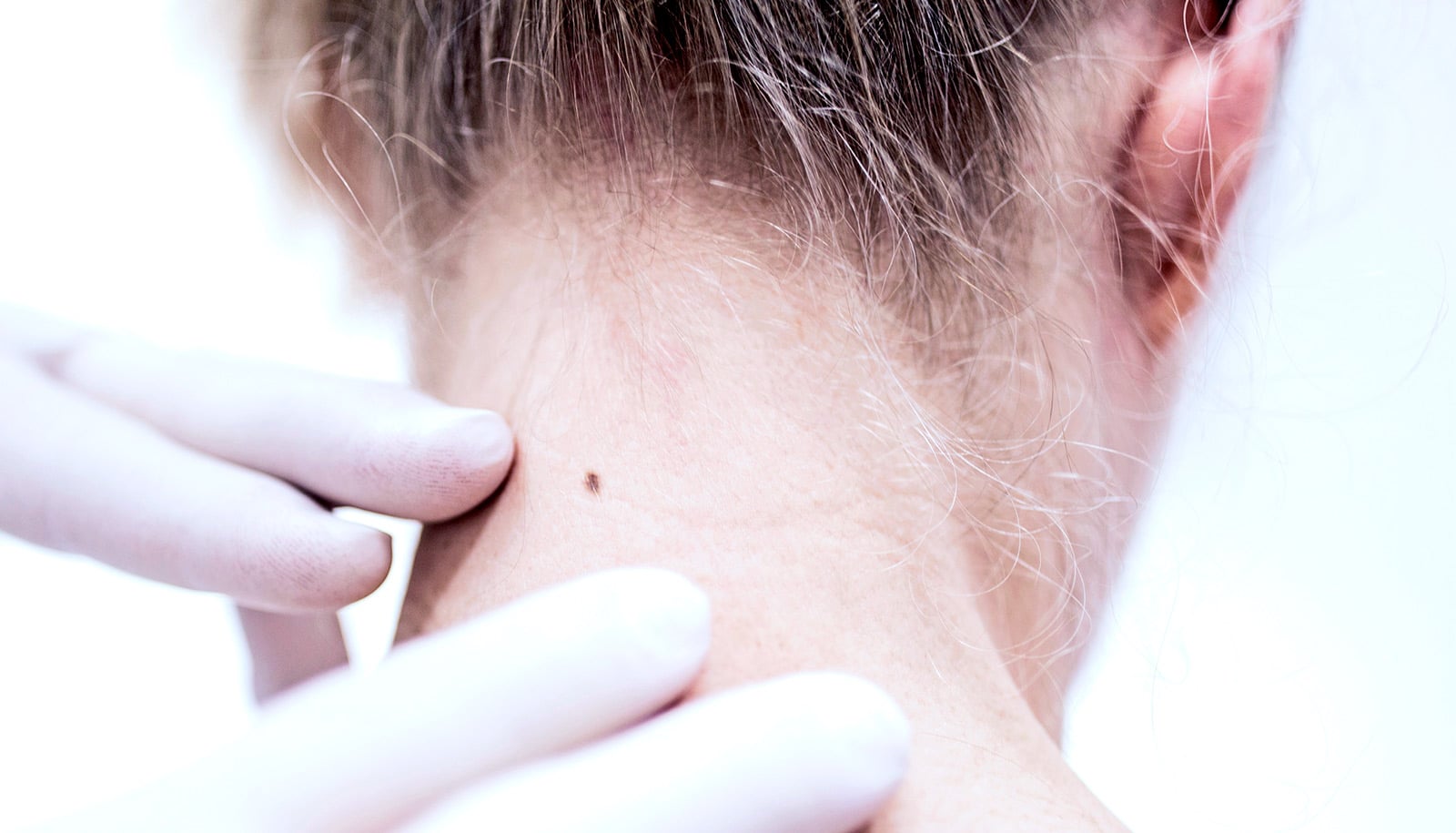
To move closer to that future, Mizzou researchers are developing highly accurate AI models that can examine images of patients’ skin and evaluate subtle visual patterns—including the size, shape, color, density and sharpness of moles or suspicious spots—that may indicate melanoma.
In the study, Singh and his team trained and tested AI models using a database of 400,000 images of skin abnormalities, including confirmed cases of melanoma. The images were captured using 3D total body photography, advanced technology that creates a high-resolution, three-dimensional digital map of a patient’s skin—allowing researchers to analyze subtle visual details across the entire body.
Singh was curious which of three existing AI models would be most accurate when distinguishing melanoma from benign skin conditions. Individually, each model achieved up to 88% accuracy. But when Singh combined the three models, performance improved significantly, with accuracy exceeding 92%.
As a principal investigator in the Bond Life Sciences Center, Singh is especially interested in the role AI can play in expanding access to health care, particularly in areas where patients lack access to highly specialized medical professionals and equipment. As AI models continue to be trained on larger datasets—including images representing different skin tones, lighting conditions, and camera angles—their ability to make accurate predictions will continue to improve.
“It will be some time before this can be used as a tool by doctors in a health care setting, but this research is a promising proof of concept,” Singh says.
“As researchers, if we can get better at explaining why and how AI comes to the conclusions it makes, more health care professionals will trust that it can be a helpful tool to ultimately support clinical decision-making and improve patient outcomes.”
The study appears in Biosensors and Bioelectronics: X.
Source: University of Missouri