Earth & Environment
Earth & Environment, Health & Medicine - Oct 26, 2009 12:07 - 0 Comments

Zebrafish do it. Why can’t we?
U. MICHIGAN (US)—Biologists long have marveled at the ability of some animals to re-grow lost body parts—newts regrow legs and zebrafish re-grow fins—and even repair damaged heart and eye tissue. Now researchers have discovered that some of the same genes underlie the process in different types of tissues. (more…)
Earth & Environment - Oct 23, 2009 17:25 - 3 Comments

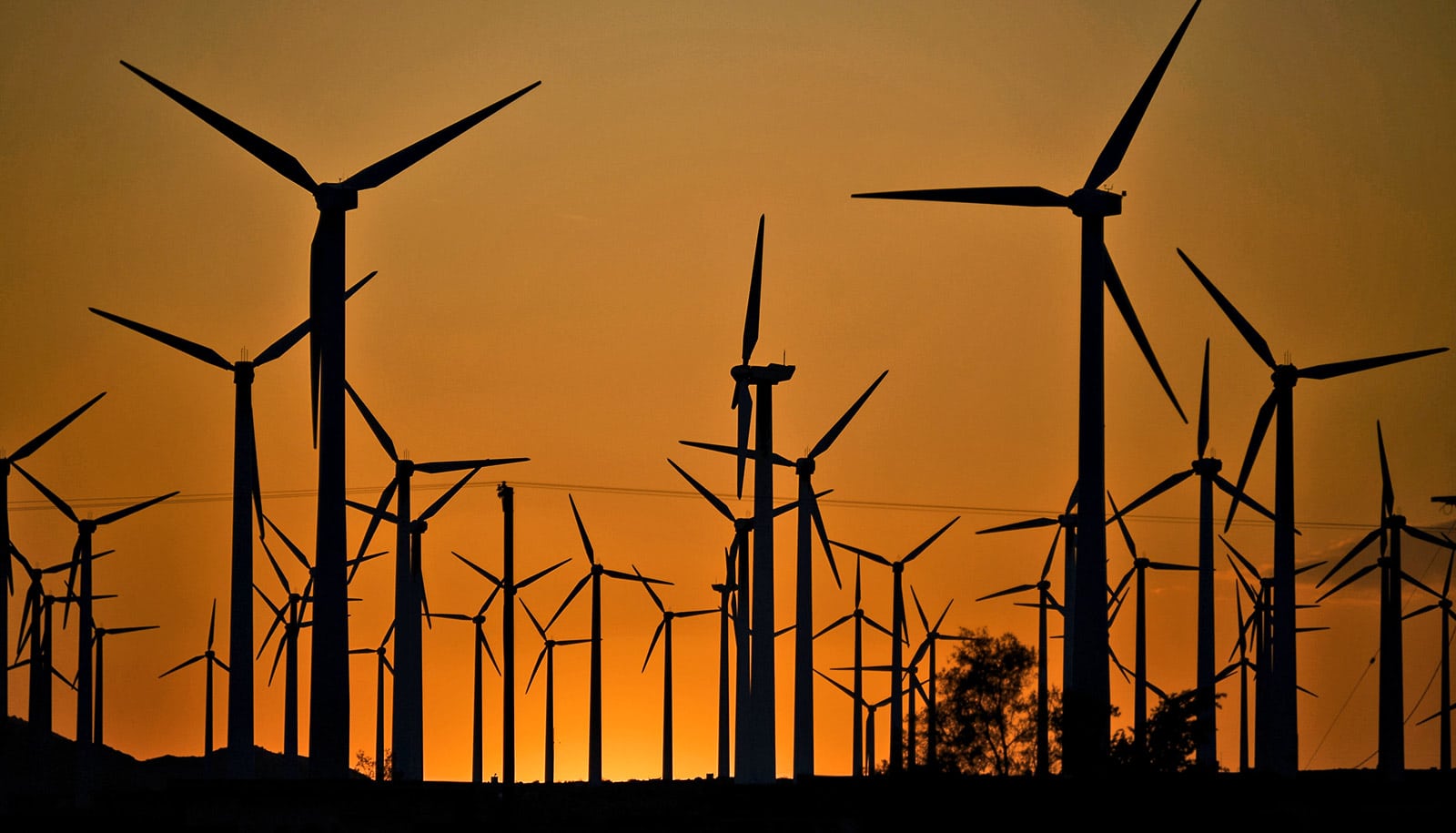
Totally clean and green by 2030?
STANFORD (US)—Most of the technology needed to shift the world from fossil fuel to clean, renewable energy already exists. A new report suggests that implementing that technology requires overcoming obstacles in planning and politics, but doing so could result in a 30 percent decrease in global power demand. (more…)
Earth & Environment - Oct 23, 2009 15:33 - 2 Comments

‘Fixable’ error undercuts climate laws
PRINCETON (US)—A group of scientists has issued a report identifying a critical—but correctable—accounting error affecting climate legislation that could undermine efforts to reduce greenhouse gas emissions by encouraging deforestation. (more…)
Earth & Environment - Oct 23, 2009 11:41 - 0 Comments

Predicting power outages before the storm
JOHNS HOPKINS/TEXAS A&M (US)—Using data from Hurricane Katrina and four other storms, researchers have created new computer models to help utilities better forecast hurricane-caused power outages in advance. (more…)
Earth & Environment, Science & Technology - Oct 22, 2009 16:43 - 0 Comments

New clues in quest for liquid methane
UNC-CHAPEL HILL/U. WASHINGTON (US)—Researchers have taken an important step in converting methane gas to a liquid, potentially making it more useful as a fuel and as a source for making other chemicals. (more…)
Earth & Environment - Oct 20, 2009 11:32 - 0 Comments

Arctic cores signal ‘unique’ climate shift
U. COLORADO (US)—An analysis of sediment cores indicates that biological and chemical changes occurring at a remote Arctic lake are unprecedented over the past 200,000 years and likely are the result of human-caused climate change. (more…)
Earth & Environment - Oct 14, 2009 16:47 - 0 Comments

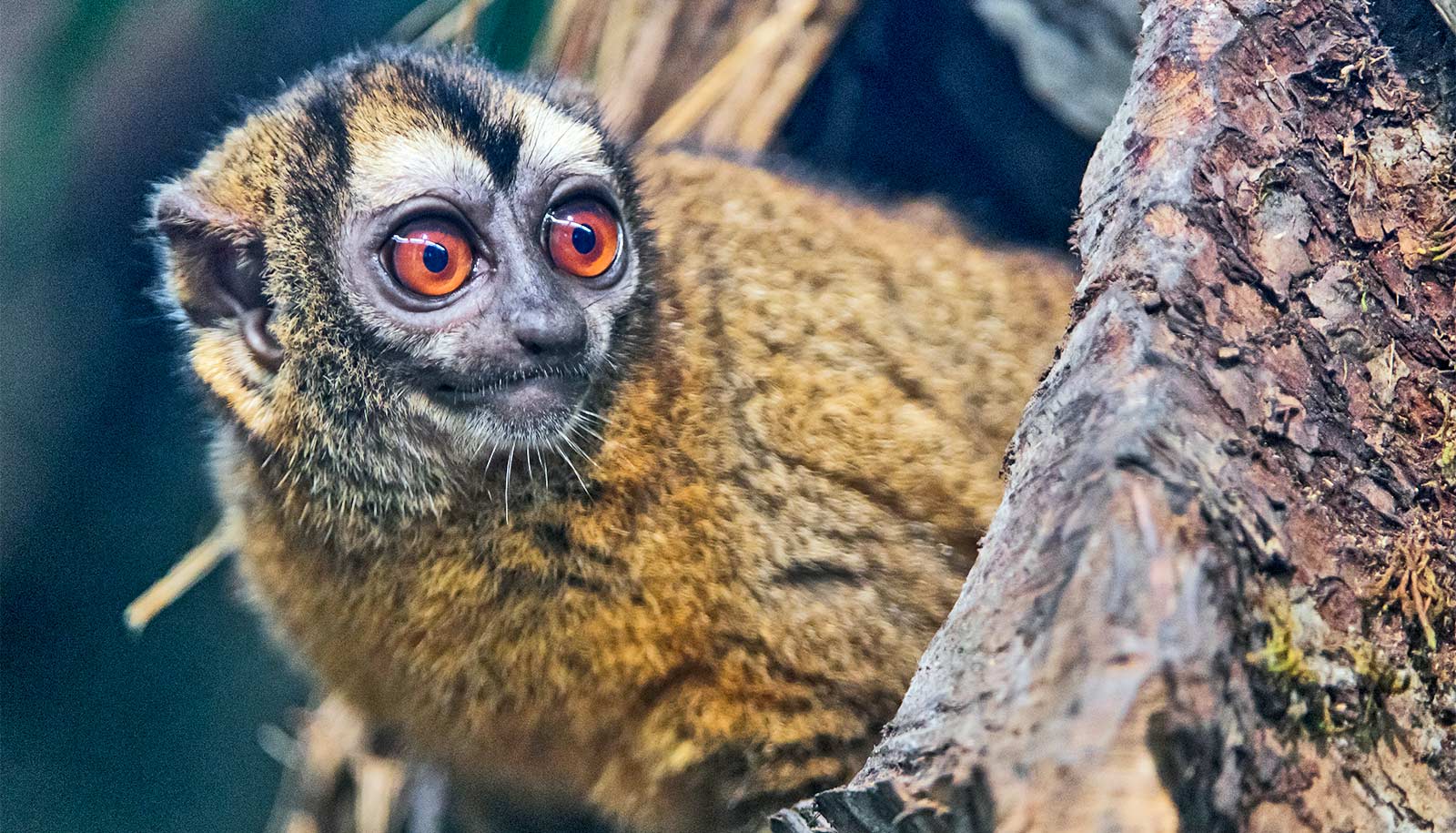
Uncanny replicas faze monkeys, too
PRINCETON (US)—Researchers have come up with a new twist on the mysterious visual phenomenon experienced by humans known as the “uncanny valley.” Monkeys also sense it. (more…)
Earth & Environment - Oct 14, 2009 12:58 - 0 Comments

Blending in can be brutal—for wasps
U. MICHIGAN (US)—Standing out in a crowd is better than blending in, at least if you’re a paper wasp in a colony where fights between nest-mates determine social status. (more…)
Earth & Environment - Oct 13, 2009 18:46 - 0 Comments

Cuckolds with evolutionary know-how
YALE (US)—Evolutionary biology theory predicts that males usually won’t invest a lot of time raising offspring when there is a good chance they are not the fathers. Researchers have found a notable exception—a male fish in the Mediterranean that is more likely to be paternal when there is grave doubt about the offsprings’ parentage. (more…)
Earth & Environment - Oct 13, 2009 18:15 - 1 Comment

Stable proteins may yield ‘sweet’ biofuels
NYU (US)—Scientists report they have developed a novel method of stabilizing proteins, including important enzymes used to produce certain artificial sweeteners and bioethanol. (more…)
Earth & Environment - Oct 9, 2009 17:28 - 0 Comments

Twig by twig, climbing Earth’s ‘Tree of Life’
VANDERBILT (US)—Antonis Rokas is a member of a small cadre of scientists applying the growing power of genomics to untangle and correctly arrange the branches of the Tree of Life. (more…)
Earth & Environment - Oct 8, 2009 17:44 - 0 Comments

Dinosaurs reacted fast to avoid slip-ups
U. MICHIGAN (US)—Early dinosaurs made on-the-fly adjustments to their movements to cope with slippery and sloping terrain, according to a new investigation of a fossilized tracksite in southern Africa. (more…)
Earth & Environment - Oct 8, 2009 16:42 - 0 Comments

Big job for oceans’ tiny ammonia eaters
U. WASHINGTON (US)—It’s not every day you find clues to the planet’s inner workings in aquarium scum. But that’s what happened when researchers cultured a tiny organism from the bottom of a Seattle Aquarium tank and found it can digest ammonia. (more…)
Earth & Environment - Oct 7, 2009 10:52 - 5 Comments

Arctic sea ice’s downward trend continues
U. COLORADO (US)—Despite a slight recovery in 2009—from record-setting low years in 2007 and 2008—the summer Arctic sea ice extent remains significantly below previous years, continuing a trend toward ice-free Arctic summers. (more…)
Earth & Environment - Oct 6, 2009 15:49 - 1 Comment

Pollution-haze mix may affect world’s weather
TEXAS A&M (US)—“Blue haze,” a common occurrence in mountain ranges and forests around the world, is formed by natural emissions of chemicals, but a recent study suggests human activities can worsen it to the point of affecting weather worldwide, potentially causing climate problems. (more…)
Earth & Environment - Oct 5, 2009 19:08 - 0 Comments

Alfalfa sprouts recreate meandering stream
UC BERKELEY (US)—Researchers report the first experimental creation of meanders in a flume—a scaled-down model of a natural channel using alfalfa sprouts to represent vegetated stream banks. The experiments reveal some of the necessary conditions to form meanders on Earth and throughout the solar system. (more…)
Earth & Environment - Oct 5, 2009 11:30 - 0 Comments

Bioengineer a better hydrocarbon?
IOWA STATE (US)—Researchers are looking to plants and algae as a source of green, renewable hydrocarbons—and second-generation biofuels. (more…)
Earth & Environment - Oct 1, 2009 11:44 - 1 Comment

Electric fish come equipped with dimmer
TEXAS-AUSTIN (US)—Electric fish communicate by quickly plugging special channels into their cells to generate electrical impulses, according to new research. And, like all good consumers, they conserve energy by turning their electrical signals up and down. (more…)