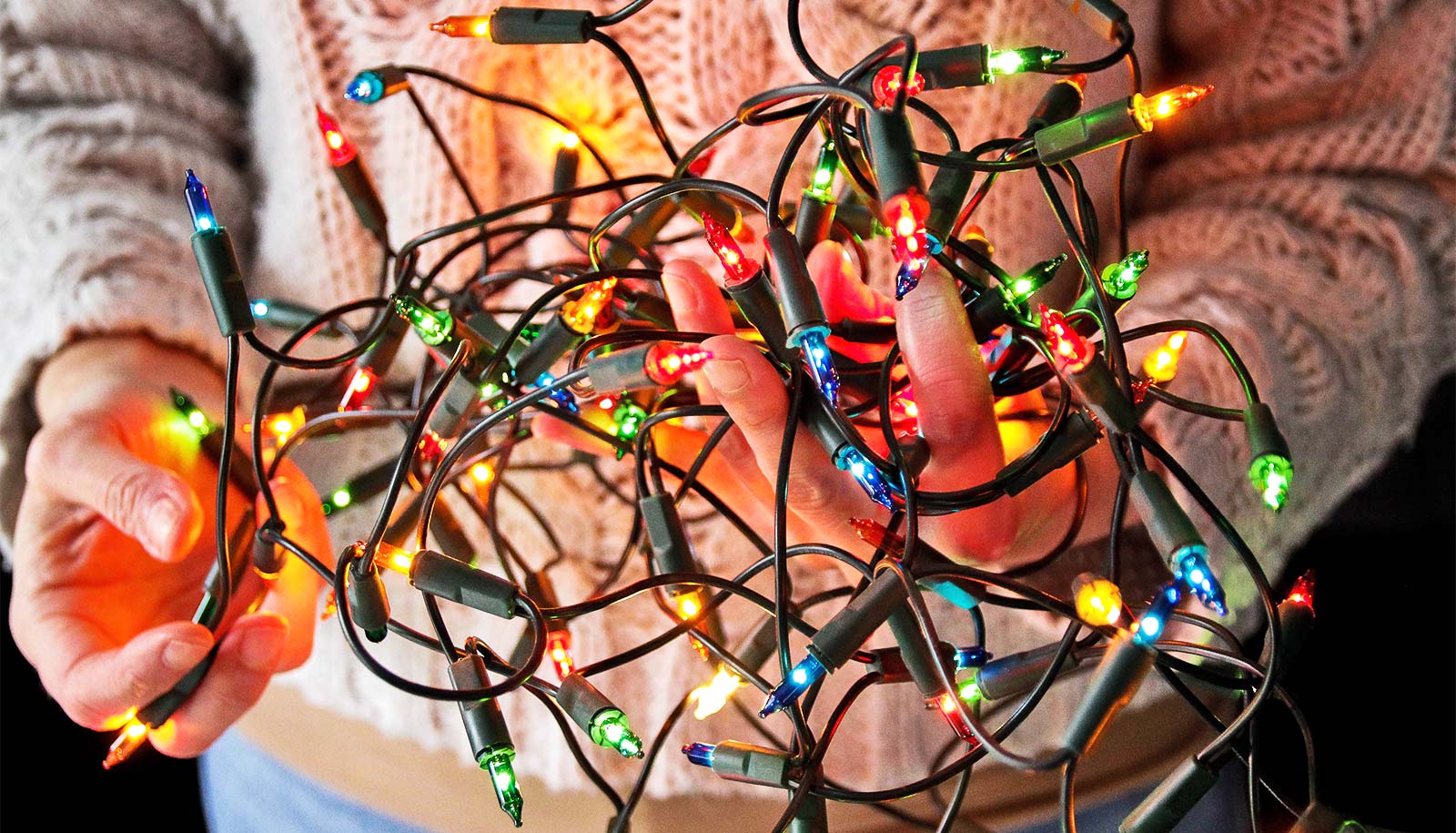
An energy efficiency expert has holiday lighting recommendations that can help you save money and energy.
Whether they’re hanging a single string of fairy lights or enough blinking bulbs to be visible from the North Pole, two-thirds of Americans decorate their homes with holiday lights. It’s festive, yes—but even a modest display can add to soaring electricity bills.
So what does an electrical engineer who’s an expert in energy efficiency recommend for saving energy and money this holiday season?
“I love to create a fun holiday light display at my home,” says Scott Dunning, a professor in Virginia Tech’s Bradley electrical and computer engineering department and a certified energy manager.
“Each year at this time, I find myself considering the options and weighing upfront costs, energy costs, connection requirements, and more.”
Here’s Dunning’s advice:
Swap incandescents for LEDs
“A typical strand of 100 incandescent lights costs about $3, compared to $6 for a strand of 100 LED mini-lights. But to keep them lit for six hours a night for six weeks, you’ll pay $84 for the season for incandescents, but only $10.50 for LEDs. The LED lights will also last 16 times longer, making them much better for the environment.”
“If I use LED lights, they could theoretically last my lifetime—especially if you store them properly and protect them from damage,” Dunning says.
Another bonus: Dunning explained that you can safely connect 42 strings of LED lights together, compared to only five strands of incandescents, making Clark Griswold–style displays easier.
Consider solar
Solar-powered holiday lights are growing in popularity, says Dunning. “People may prefer them because they don’t add to your electric bill, they don’t require extension cords or electrical receptacles, they use renewable energy, and they are typically quite durable.”
He explained that they are a good option if your home gets plenty of direct sunlight—just remember to regularly clean the solar panels.
Watch for other holiday energy hogs
Holiday lights aren’t the only culprits for high holiday electric bills.
“Remember that our days are shorter and colder, so we are running all of our lights and heat pumps longer,” Dunning says. “If we are hosting guests, we’re likely running kitchen appliances longer, too.”
Then there are outdoor inflatables, whose 250-watt motors use as much energy as 50 strands of LED lights. Dunning says to set them on a timer to keep bills down.
What’s Dunning doing at his own home?
He hopes to install programmable LED lights along the roofline, so he can change the colors for different holidays. They’re energy efficient but have an even bigger benefit:
“I can install them once, leave them up, and not have to worry about holiday lights for years,” he says.
Source: Virginia Tech