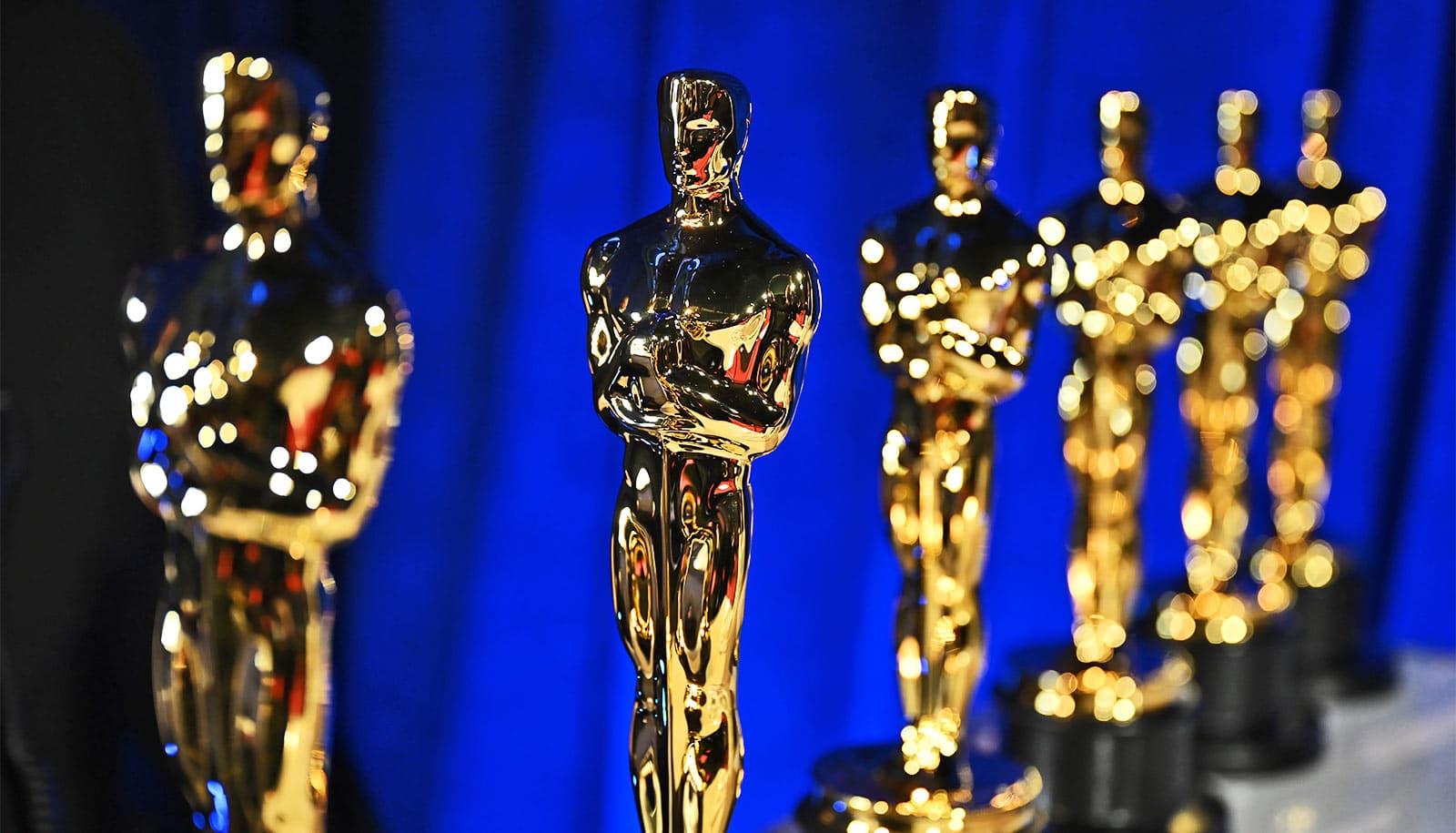
A film professor has answers for you about the enduring influence of the Oscars.
“And the Oscar goes to…”
Those are the words many will tune in to hear on March 15 for the 98th Academy Awards. But the number of people viewing the broadcast is far below the peak—55 million watched in 1998 when Titanic won best picture. Last year the ceremony drew 18 million viewers.
Still, the Academy Awards haven’t lost their hold on us.
Below, David Tarleton, professor of film and chair of the film and media arts department in the College of Visual and Performing Arts at Syracuse University, breaks down the Oscars’ enduring influence and changes happening within the Academy to draw in viewers.
Still the pinnacle
Tarleton says the Oscars’ cultural influence starts with what the awards do for the people who win them.
“It makes people’s careers,” he says. “There are lots of cases of people where the Oscar is central to why an actor or filmmaker had the career they did. Frankly, even being nominated for an Oscar makes an enormous difference in terms of box office. That’s been true throughout the history of motion pictures, and it’s certainly true even today.”
An Oscar win can mean doubling your salary or more on your next project, he says.
“In the entertainment industry, it’s still enormously important and significant,” Tarleton says. “It’s still very much the pinnacle of awards.”
Tarleton says there have always been movies very few people see, until they win an Academy Award. The 2022 film Everything Everywhere All At Once, which started as a small project might have come and gone quietly, he says. Instead, it became an indie hit and took home seven Oscars.
“It was in the context of the Oscars that it became as big as it did,” he says.
More than movies
There’s no question the way people engage with the Oscars has evolved with the media landscape, Tarleton says. There are viewers who only tune in for the elements around the event—the ecosystem around the red carpet and the fashion or memes or highlights the next day.
“There’s all these other components to it,” he says. “The movies themselves are only part of it.”
There also is a generational divide for viewers that Tarleton says rivals the cultural age split seen in the 1960s.
“There’s this enormous difference between younger people and older people in terms of media consumption and who is famous to you?” he says. “Your average 50-year-old probably doesn’t know who Mr. Beast is, but your average 14-year-old certainly does. The opposite is also true—to what extent are movie stars important celebrities to younger people?”
The divide is part of a broader shift for the film industry that goes beyond the Oscars, he says. Theatrical attendance has been declining across all demographics for years, and the rise of streaming has fundamentally changed how people relate to movies.
“While I still personally appreciate watching movies in the theater, when you have a 75-inch TV and a decent sound system at home—with no need to pay for parking, a babysitter, or $18 popcorn—the case for leaving the house gets harder to make,” Tarleton says.
Yet, the Oscars still require a theatrical release as a condition for eligibility. Tarleton says he doesn’t see the Motion Picture Academy changing the requirement any time soon, since it’s part of how it maintains the allure of the Oscars’ exclusivity.
“I see the Academy more likely wanting to limit eligibility to theatrically released films more, to make it a little bit harder probably, rather than easier,” Tarleton says.
“Whether or not that works for them, we’ll have to see in the long term. Because the challenge is, if people aren’t going to the movie theater, are not seeing these movies in that way as much, does that make the Oscars even less relevant? That’s the danger.”
Evolving carefully
Tarleton says it’s clear the Academy knows it has work to do. Starting in 2029, the awards show will be exclusively streamed on YouTube. New categories have been added, and there’s awareness around pacing and creating moments during the ceremony that translate to social media.
The Oscars have also become more international, with non-English language films appearing more regularly—a shift Tarleton says reflects real changes in Academy membership and voting.
The Oscars are a measure of what members of the Academy thought best during any given year. Because of how the Academy typically admits new members—Oscar nominees can automatically join, or by being sponsored by existing members, not application—the average age of its membership is generally older. Which means the tastes tend to be more artistically conservative.
“Very young people aren’t usually represented at all, because generally it’s people who have gotten to a certain point in their careers, doing the kind of work that’s getting nominated, in order to be invited to join the Academy,” Tarleton says.
But recent movements, like the #OscarsSoWhite campaign, also brought in new members.
“There’s been a number of things that have opened up the Academy to a more diverse group of people, and that really helps in terms of the kind of work that’s being seen,” Tarleton says.
Whether the work the Academy is doing is enough to bring in new, younger audiences, remains to be seen.
“There’s no question that viewership is less in terms of real numbers, but it doesn’t mean that it’s not still significant in terms of cultural prestige or the aura around it,” Tarleton says. “Hollywood is very good at selling glamour.”
Source: Syracuse University