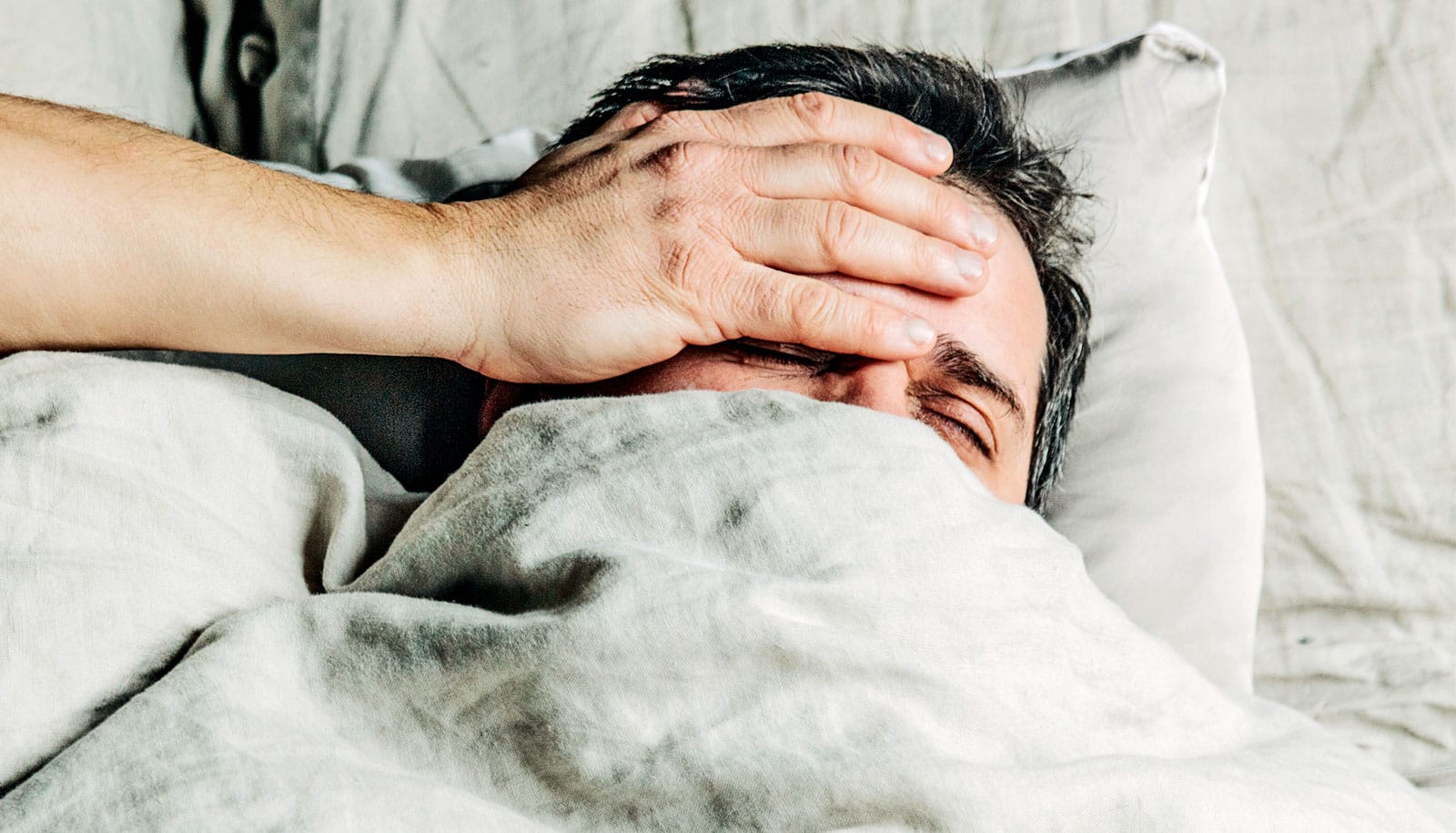
New research shows that financial worries shape bedtime behaviors and sleep quality.
Although not the focus of this specific study, when poor sleep turns into daytime fatigue, it could possibly create a vicious cycle: Stress from work keeps people up at night, and a lack of quality sleep makes the next workday even harder to face.
“Stress before bed captures a type of cognitive and emotional activation at bedtime that prevents people from unwinding and obtaining good-quality sleep,” says study author Rebecca Brossoit, assistant professor of psychological sciences at Rice University.
Published in the Journal of Business and Psychology, the study identifies “stress-before-bed behaviors” as a key mechanism linking financial worry and job insecurity to declining sleep quality. These behaviors can include lying awake feeling tense, replaying work problems, or mentally planning tomorrow—habits that quietly erode sleep long before the workday begins.
As part of a larger Department of Defense (DoD) funded study, the research team collected data from full-time Army and Air National Guard service members across nine months. Participants reported their financial stress at the start of the study, their bedtime stress behaviors four months later and their sleep health five months after that. The team collected both self-reported sleep data and objective sleep measurements using wrist-worn actigraph devices. They found a clear sequence: Economic stress predicted elevated stress at bedtime, which in turn predicted more insomnia symptoms, lower sleep satisfaction, and greater sleep-related daytime impairments.
“Economic stress is pervasive and it is prevalent, and it’s happening at the same time that our society isn’t getting enough sleep or good-quality sleep,” Brossoit says.
The study also highlights how financial stress affects people across income levels. While income matters, the internal experience of financial vulnerability—worrying about affording basic needs, job security, or relying heavily on a paycheck—can disrupt sleep even among workers who appear financially stable. At the same time, other research has shown that inadequate sleep affects attention, memory, and mood, which can influence workplace performance.
As economic uncertainty continues to affect households nationwide, including lingering strain from the recent government shutdown, Brossoit says the findings offer guidance for workplaces, policymakers, and individuals. She notes that organizations directly shape many of the stressors employees face.
“Organizations have a responsibility to mitigate or target some of those stressors,” she says. Competitive pay, benefits, supervisor support, career development opportunities, financial planning resources, and schedule flexibility are among the strategies that can help reduce financial strain and support employee well-being.
She adds that broader policies—including paid leave, access to affordable food and health care, stable housing, and public education campaigns focused on financial literacy and sleep hygiene—can lessen the economic pressures that show up at bedtime.
For individuals, Brossoit emphasizes that small steps can help break the stress-sleep cycle.
“Practicing healthy sleep hygiene behaviors can help people unwind and obtain good-quality sleep,” she says. Creating consistent sleep routines, keeping phones out of reach at night, limiting screen time before bed, and building a relaxing evening wind-down process can all support better rest.
For graduate student Destiny Castro, the project marked her first publication and her first opportunity to lead major data analysis. “Working on this project helped me understand how research can directly improve people’s lives,” she says. “Sleep affects every part of our health.”
Brossoit says collaborating with Castro was one of the most rewarding parts of the study and she hopes the research encourages a wider understanding of how economic stress influences health.
“If we want people to thrive—at work, at home and in their communities—supporting both economic stability and healthy sleep is essential,” she says.
Additional coauthors on the paper are from Portland State University and Oregon Health & Science University.
Support for the research came from the DoD.
The content in this press release is solely the responsibility of the authors and does not necessarily represent the official views of funding organizations and institutions.
Source: Rice University