Researchers have uncovered a backup defense system in the gut.
The immune system in our gut encounters a surge of foreign substances every day, whether it’s the food we consume or the microbes that find their way in.
To keep things in check, specialized antibodies—known as immunoglobulin A (IgA)—form a protective mucosal barrier in the gut that traps and neutralizes pathogens, preventing them from sticking to the intestinal walls.
Despite its important role, the pathway that produces IgA is not well understood. But in the new study published recently in Immunity, Yale scientists uncovered two unique pathways that lead to IgA production when the immune system is triggered.
During a typical immune response, immune cells known as B cells activate and begin to proliferate. As they increase in number, some of the naïve versions of these B cells (called immunoglobulin M, or IgM) form a structure called the germinal center where they mature and switch into one of three specialized classes: IgG, which fights bacteria and viruses; IgE, involved in allergic reactions; or IgA, which protects mucosal layers and is the most abundant type in the gut.
These antibodies can adhere strongly to the antigens of foreign substances and form a long-lasting immunity. This “class-switching” process, in which IgM cells undergo a single switch to a new class, was thought to apply across all B cells. But new evidence suggests otherwise.
“When researchers started looking at the gut, they noticed that it actually looks very different from everything else,” says lead author Emily Siniscalco, a PhD student in the lab of Joseph Craft, professor of medicine (rheumatology) at Yale School of Medicine, and co-senior author of the study. Siniscalco is comentored by Stephanie Eisenbarth, co-senior author of the study and former faculty member at YSM, now at Northwestern Feinberg School of Medicine.
To better understand how this process works in the gut, Siniscalco and her colleagues traced B cell production in mice after they were immunized. They found that in the first three weeks after immunization, most of the IgA produced surprisingly did not originate from the germinal center. Germinal center IgA only became detectable in the third through sixth weeks.
This origin matters, say the researchers. When within the germinal center, B cells undergo mutations that give them a high affinity to specific antigens. B cells produced outside of the germinal center—typical during a rapid or acute immune response—do not usually undergo such mutations and they therefore lack the durable immunity of their counterparts.
Yet, in their study, the researchers found that both germinal center and non-germinal center IgA had similar antigen-specificity.
“What we were very surprised about is that these non-germinal center-derived cells had about equal numbers of mutations to those derived from the germinal centers,” Siniscalco says.
It is still unclear why and how these non-germinal center cells undergo mutations, she adds, which will be the subject of future investigation. But the researchers did uncover a clue.
The scientists were able to construct the evolutionary relationship between, in this case, the different gut B cells responding to immunization.
“We saw very, very frequently that IgA and IgG shared extremely close recent ancestors and that those ancestors did not seem to be IgM as expected,” Sinscalco says. Instead, the close ancestors were IgG1 cells, a subtype of IgG.
Rather than the typical IgM-to-IgA switch, the finding suggests that the gut may support B cells switching from IgM to IgG and then from IgG to IgA, which has never been reported before. Further, the scientists detected IgG1 sequences in IgA B cells, showing that these cells were descended from IgG.
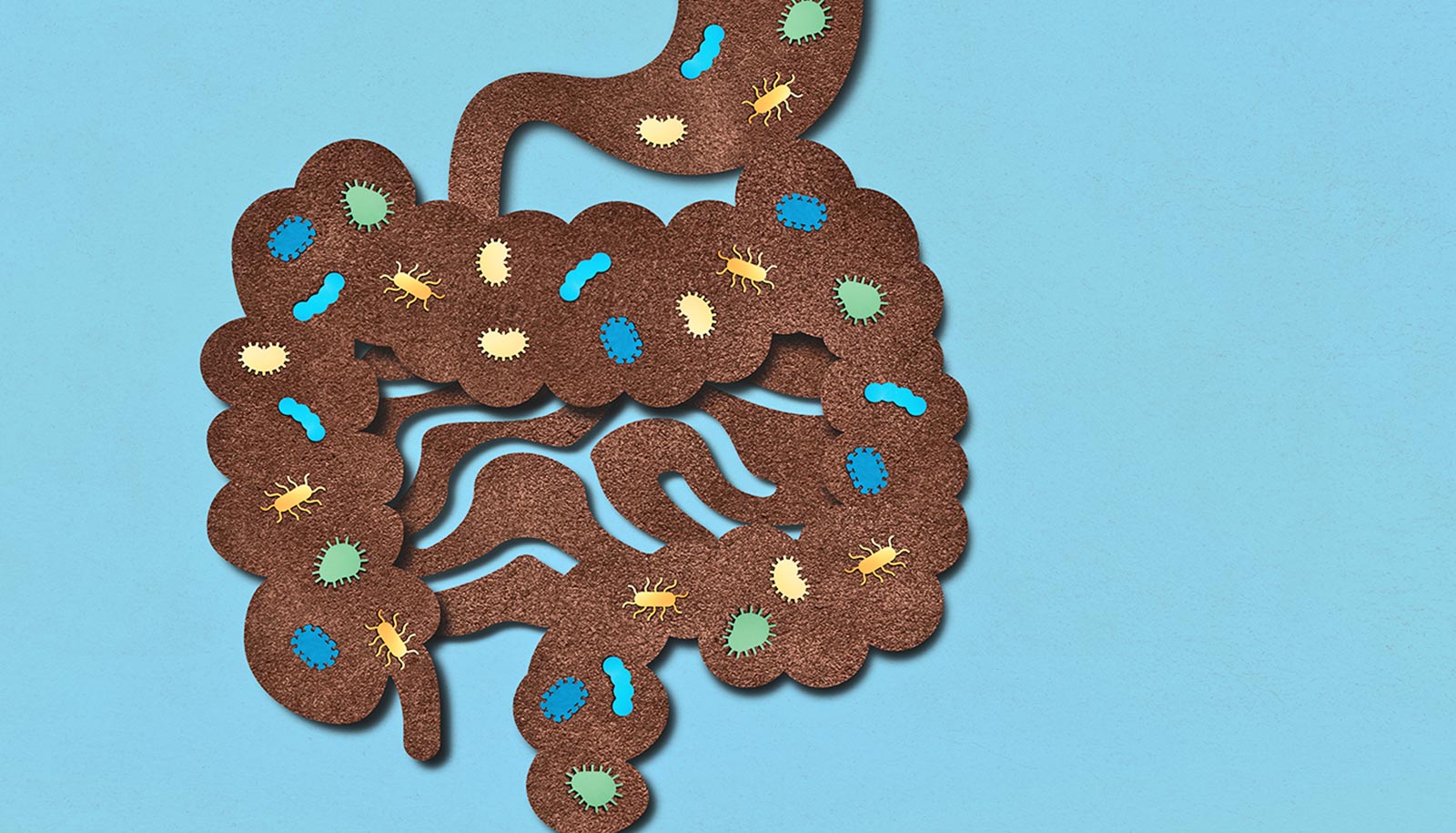
The scientists also found that IgG1 occupies an area in the small intestine where the molecules needed for IgA class-switching reside, suggesting that IgG1 switches into IgA at this site, called Peyer’s patches (pictured above). And this may extend to humans, as the researchers found that the evolutionary patterns of the immunoglobulin subtypes were consistent in mice and humans.
“We think that this is a way that the immune system has evolved to protect itself on multiple fronts, using the modular nature of antibodies to be the most efficient that it can be,” Siniscalco says. In other words, the findings suggest the gut has a redundancy, a backup system of sorts, to ensure IgA can always be produced.
Understanding how the antibodies are produced in the gut could help scientists design better mucosal vaccines. This can be applied to intestinal pathogens like norovirus and rotavirus, as well as respiratory pathogens like influenza and SARS-CoV-2, says Siniscalco.
Support for this research came from the National Institutes of Health and Yale University. The content is solely the responsibility of the authors and does not necessarily represent the official views of the National Institutes of Health. Additional support was provided by the Food Allergy Science Initiative, Colton Center for Autoimmunity at Yale, Richard K. Gershon Research Fellowship, Collaborative Center for Human Immunology, A.P. Giannini Foundation, and Burroughs Wellcome Fund.
Source: Yale
=