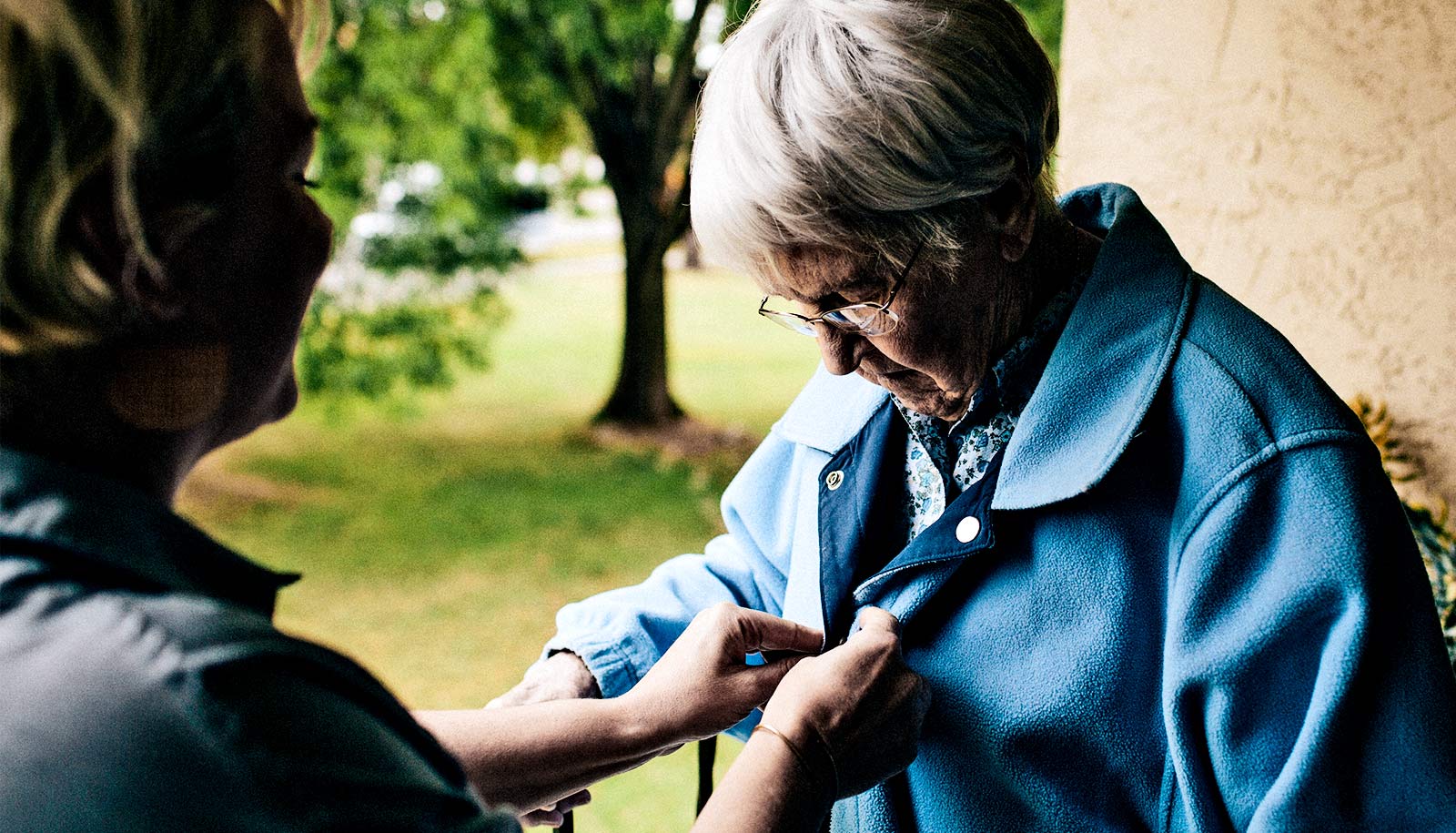
Staying connected through the internet can help older adults who care for their family or friends feel less lonely and cope better with the stress of caregiving, according to a new study.
The research appears in the journal JMIR Aging.
In the United States, 59 million people care for aging adults or those with complex medical conditions. For informal caregivers, who might be caring for a spouse or other family member, this unpaid work can be both physically and emotionally challenging.
“Caregiving can really take a toll on a person’s body and mind, from chronic stress and anxiety to aches and pains from lifting or helping the person they care for,” explained Xiang Qi, assistant professor at the NYU Rory Meyers College of Nursing and the study’s lead author.
“In fact, a lot of caregivers end up neglecting their own health because they’re so focused on someone else’s needs.”
Caregiving can also be isolating, curbing one’s ability to go out and maintain social connections. Fostering connection using technology—for instance, joining a virtual support group, reading a caregiving forum, or FaceTiming with a friend—offers alternatives to in-person interactions. While there’s a growing consensus that technology is driving isolation among young people, Qi and his colleagues wanted to explore whether internet use could be beneficial for older caregivers, who tend to already have limitations on their time and mobility.
In their study, the researchers analyzed data from the 2019‐2020 California Health Interview Survey, the largest statewide health survey in the United States. They focused on 3,957 participants ages 65 and older who provided unpaid care for a family member or friend.
About 12% of older caregivers reported physical or mental health problems because of their caregiving duties. The researchers found that those who had these health issues tended to feel lonelier—”This makes sense, because caregiving can be tough,” notes Qi.
But importantly, caregivers who used the internet more often felt less lonely overall. In fact, going online frequently seemed to act like a buffer: it reduced the extra loneliness that caregivers with health problems would otherwise experience.
While the study looked at how often caregivers use the internet, it did not capture what they do online. Qi hopes that future research will dig into specific types of online activities and which have the greatest benefit for caregivers’ wellbeing.
“I think the type of internet activity could matter—for example, playing games online might help a caregiver relax and pass the time, but joining a virtual support group or video chatting with friends could do more to ease loneliness because you’re actually interacting with people,” he says.
“My hunch is that activities which involve social interaction or getting support would provide more benefit against loneliness than just passive activities, but we need studies to confirm that.”
Given their findings, the researchers encourage older caregivers to embrace the internet as a tool in their daily lives, one that could help them to stay in touch with others, find support, learn new online skills, and access reliable health information.
“Using the internet to connect with friends, family, or fellow caregivers can really lighten the emotional load of caregiving because it reminds you that you’re not alone,” adds Qi. “Think of it like a bridge that can connect you to people and information, even when you can’t leave home.”
Additional study authors are from NYU and the University of Texas at Austin. Support for the research came, in part, from the National Institutes of Health.
Source: NYU