As people in the United States are coping with historic drought conditions, the country’s wildlife is also facing problems because of the extreme aridity.
Herbivores, omnivores, and carnivores in the southwestern US have all seen the extent of their suitable habitat shrink due to drought, according to a new study.
“The take-home message is that the effects of drought are huge and widespread. These results aren’t just from one small study system,” says Kirby Mills, a lead author of the new study in the journal Communications Earth and Environment.
Mills, now with the Institute for Wildlife Studies in California, helped lead the work as a postdoctoral researcher at the University of Michigan Institute for Global Change Biology.
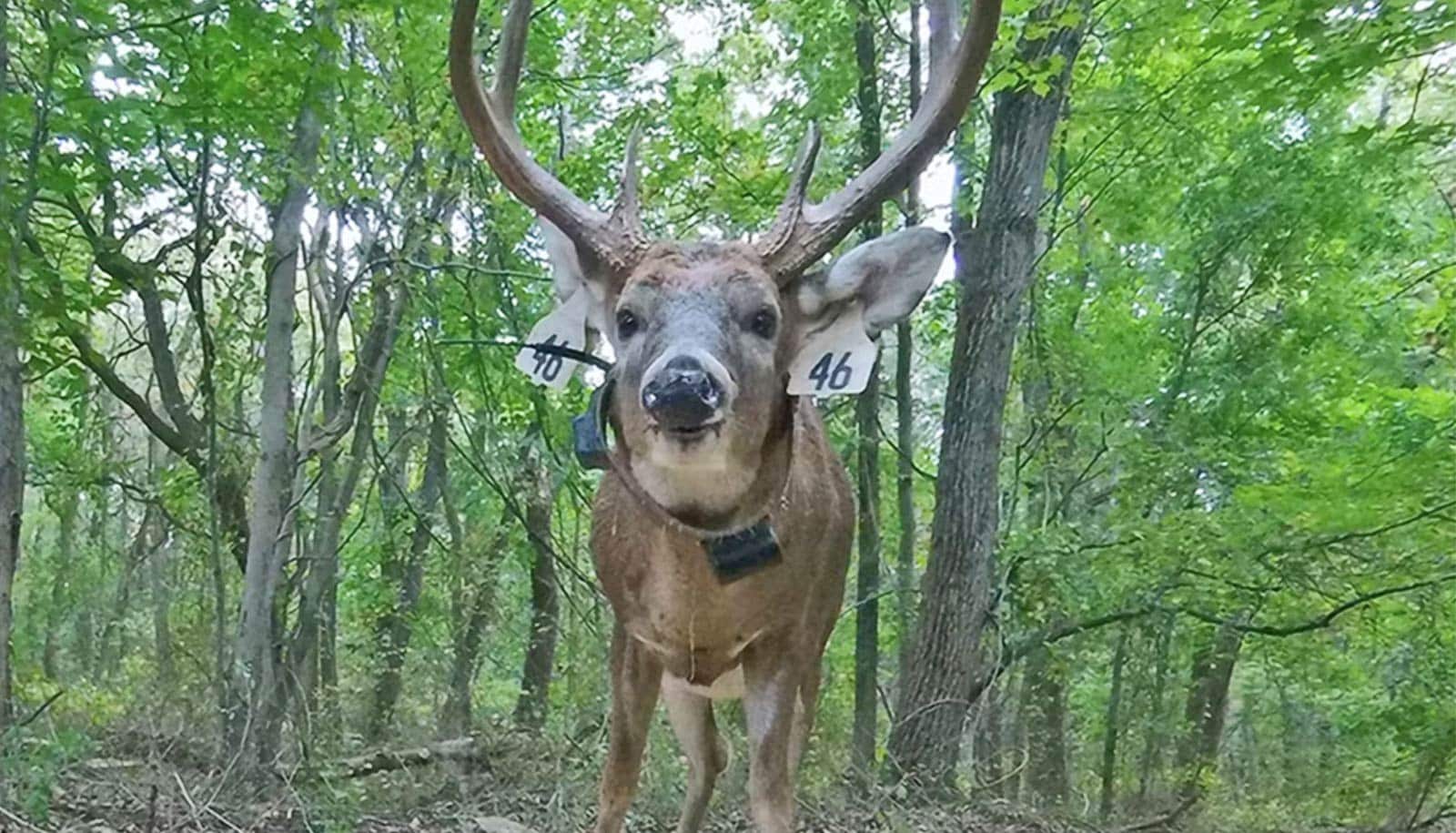
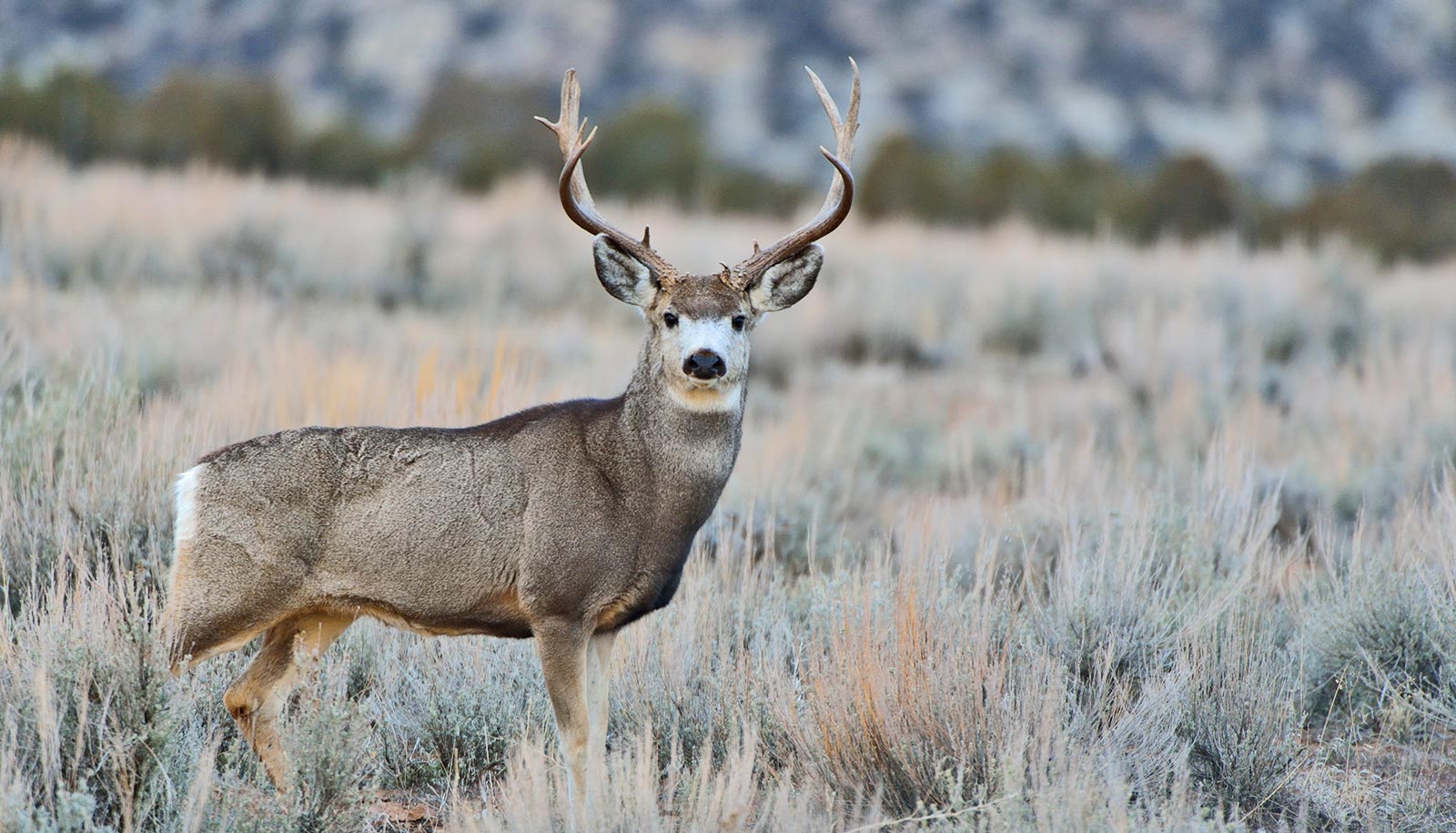
The study analyzed 12 years worth of data collected by GPS collars worn by mule deer, black bears, and cougars—herbivores, omnivores, and carnivores, respectively—in Nevada and Utah (currently, Utah is one of nine states completely covered by some level of drought). During severe drought conditions, each species saw at least a 10% reduction in the area of highly selected, or highly suitable, habitat.
“We found that drought was negatively impacting life across Utah and Nevada statewide for species that have very different ecologies,” Mills says.
“We just looked at these three large mammals, but drought is probably affecting all the wildlife living in this region and could threaten their persistence into the future if droughts get worse.”
The study, which was supported by federal funding from NASA, also showed that, under extreme drought, the number of new fawn mule deer per doe can decline by more than 30%.
“What we’re seeing is that drought is having a major impact not just on habitat suitability, but also on fitness, on the survival of wildlife,” says Martin Leclerc, who co-led the study as a postdoctoral researcher at the UM School for Environment and Sustainability, or SEAS. Leclerc is now an assistant professor at the University of Quebec at Chicoutimi.
In quantifying the impact of drought conditions in the southwest, which are becoming more intense and frequent on a warming planet, the study underscores how entwined climate and conservation are, the authors say.
“The study highlights the growing intersection of climate patterns, including drought and wildfire, with landscape planning and management, natural resource management, vegetation dynamics, wildlife behavior, and management—all of these things that are often looked at separately,” says Neil Carter, associate professor at SEAS and a senior author of the study.
“Now we’re finding that they’re enmeshed so tightly and that demands different management strategies moving forward.”
The team’s analysis included information from more than 3,000 animals across a nearly 200,000-square-mile range between 2010 and 2022, resulting in what Leclerc described as a “painfully massive” amount of data.
The team credited David Stoner, another senior author and associate professor at Utah State University, for knowing where to look and who to contact to collect the data from many separate sources. In bringing all that information together, the researchers could dig into how much area each species inhabited as drought conditions changed over time and space.
“The study really shows the value and importance of long-term datasets, especially for big questions related to climate change,” Leclerc says.
The team’s analysis revealed that, when it came to habitat reduction, the impact of drought amplified from prey to predators. In severe drought, mule deer saw reductions of 10% in their highly selected habitat, compared with 14% for black bears and 18% for cougars.
Initially, the numbers were surprising. As drought conditions kill vegetation, the researchers anticipated that could have had the greatest impact on the herbivorous deer. But the team does have an explanation for how the opposite is true.
“Cougars can’t just go and chomp on whatever they find that’s green like deer can,” Mills says. “That means cougars have to work harder for their food and they’re more limited in their opportunities to find food, so their populations can be more sensitive to perturbations.”
Furthermore, population densities tend to decrease as you move up the food web—for example, the study included more than 2,800 mule deer and 105 cougars. So cougars may not only be more sensitive to the impacts of drought, but impacts on individual cougars are going to be felt more at a community level. While this amplification makes cougars and other predators more vulnerable than one might expect, it could also create new opportunities in conservation.
“People are typically managing deer populations, not deer and cougar simultaneously, so I think there will start to be more conversation and communication around that,” Carter says.
And such broader conversations could benefit wildlife writ large.
“There’s pretty robust planning going on for mitigating human vulnerability to climate change, but we don’t have the same level of planning for mitigating wildlife vulnerability,” Carter says.
“I certainly think there are opportunities to bring those together.”
Source: University of Michigan