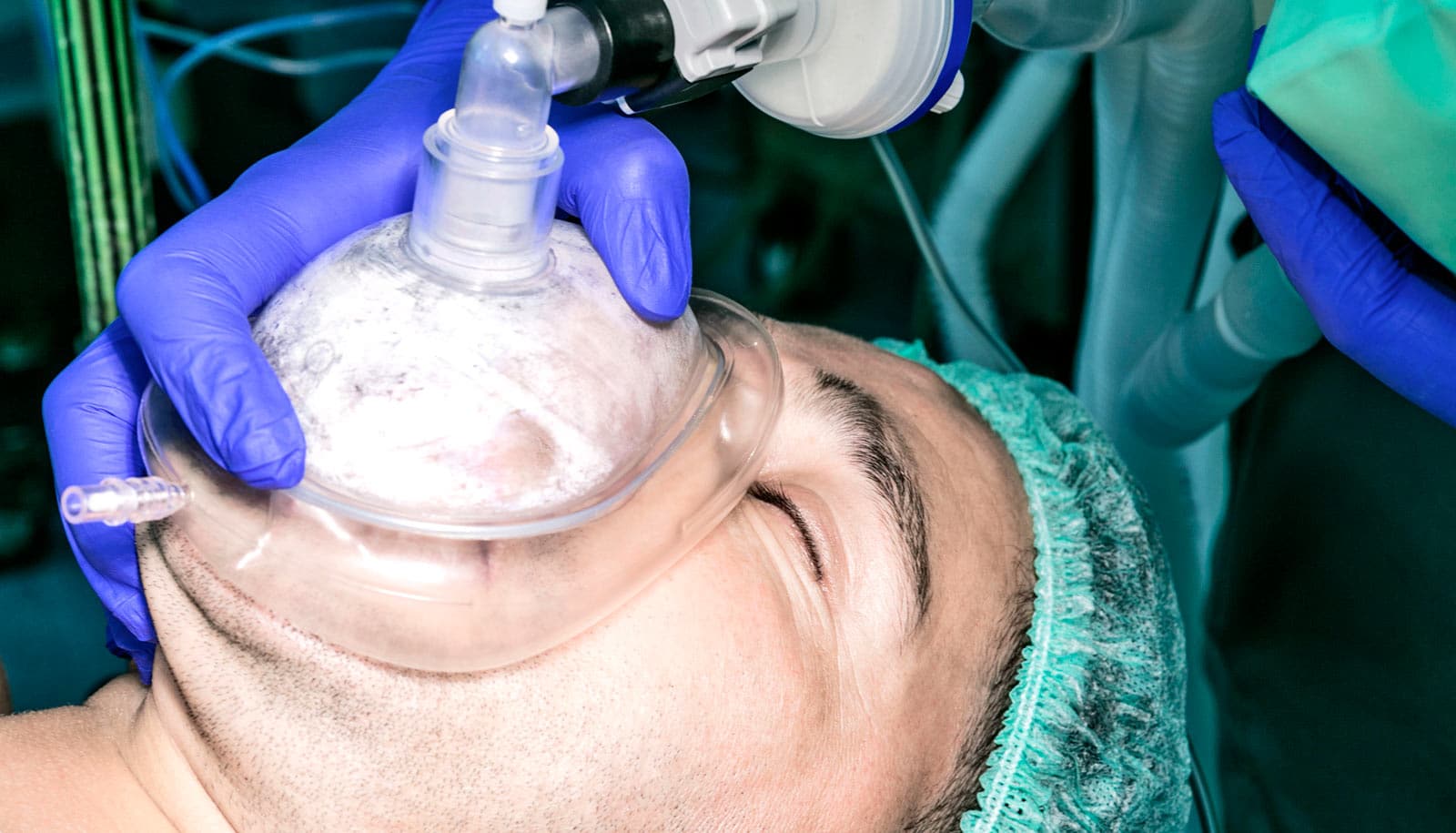
A new study sheds light on what anesthesia does to the brain and how closely it resembles sleep versus a coma.
People often describe anesthesia as something that puts a patient in a “deep sleep.” An anesthesiologist enters the operating room, and part of their mission is to ensure that the patient is completely unaware of what is happening around them until they wake up, often several hours later.
Scientists and doctors have long debated what happens to the brain under anesthetic drugs during a surgical procedure.
A new study by Yale School of Medicine’s anesthesiology and neurology departments in Proceedings of the National Academy of Sciences uncovers new insights which may change the way we describe being under anesthesia.
The study reveals that being anesthetized may be more than simply being “put to sleep.” It can potentially carry more similarities to being in a coma than we originally thought.
Janna Helfrich is an assistant professor of anesthesiology and the study’s lead author. Her team explored how anesthesia and pain control can be redesigned to limit long-term effects on cognition and behavior after medical procedures like surgery.
The brain plays an important role in keeping patients safe and comfortable during surgery, but it isn’t commonly monitored when one is under anesthesia. Most surgeries today happen without brain monitoring, because there hadn’t traditionally been an efficient way to track that part of the body.
“Surprisingly, we’ve been doing anesthesia for more than 150 years now, but we only recently started to measure the brain,” says Helfrich, when asked what inspired this research.
“Before that, [we measured] blood pressure, heart rate, oxygen levels, maybe we would look into the pupils of our patients. But [measuring] the brain, even today, is not the standard of care. Which, I think is really strange, because that’s actually the effect site of all the drugs the patient is getting, whether it is a painkiller or the anesthetics themselves.”
The researchers studied brain wave recordings from patients sedated with propofol, a common type of anesthetic used in surgeries. They used a method called electroencephalography (EEG), which involves placing electrodes on the scalp. These discs record brain activity while under anesthesia.
The study team then compared these recordings against recorded brain activity from patients in several different states of consciousness, including deep sleep, REM sleep, coma, and normal wakefulness.
“Instead of limiting it to just the front of the head, which is what is normally done, we did a full head EEG, using 20 electrodes,” says Helfrich. “So, we had information from the front, the sides, and from the back of the head.”
The findings from this study challenge the widespread belief that anesthesia is simply a deep sleep. The reality is more complex, as the anesthetized brain can enter several states. Some states resemble sleep, while others are more like a coma. Anesthesia produces a pattern of brain activity that is unlike any other state of consciousness.
Helfrich and her team aim to uncover the nuances of anesthesia and how it affects the brain during surgery.
“The old dichotomy that it’s either sleep or coma is not true. It’s actually both sleep and coma, and can be similar to both states at the same time, depending on where you look,” says Helfrich. “And yet, there is also an element which is just anesthesia uniquely.”
When doctors place someone under deep anesthesia, that patient may have problems after surgery, which is more common in older adults and those with preexisting medical conditions. These can affect cognitive functions and cause memory deficits post-surgery.
This research highlights the need for a carefully tailored anesthesia dose that does not put the patient into a coma-like state. The goal for clinicians is to help the anesthetized patient get as close to a natural, sleep-like state as possible.
Looking ahead, Helfrich and team hope this study will help improve how clinicians monitor the brain and overall health under anesthesia. Future research could help clinicians guide the anesthetized brain toward a sleep-like state, rather than a coma-like one.
“As we know, sleep has a plethora of benefits,” says Helfrich. “It cognitively replenishes you, helps with your immune system, and helps you with metabolism. So, I imagine that there will be a way to tweak anesthesia a bit away from a coma, more in direction of sleep, so we could alleviate some of the side effects.”
The patient’s overall health before, during, and after surgery remains the top priority for every clinician. Monitoring the brain will help anesthesiologists tailor care for each patient and will allow for more sleep-related benefits during surgery.
The research reported in this article was supported by the German Research Foundation, the Medical Faculty of the University of Tübingen, and the Jung Foundation for Research and Science.
Source: Yale