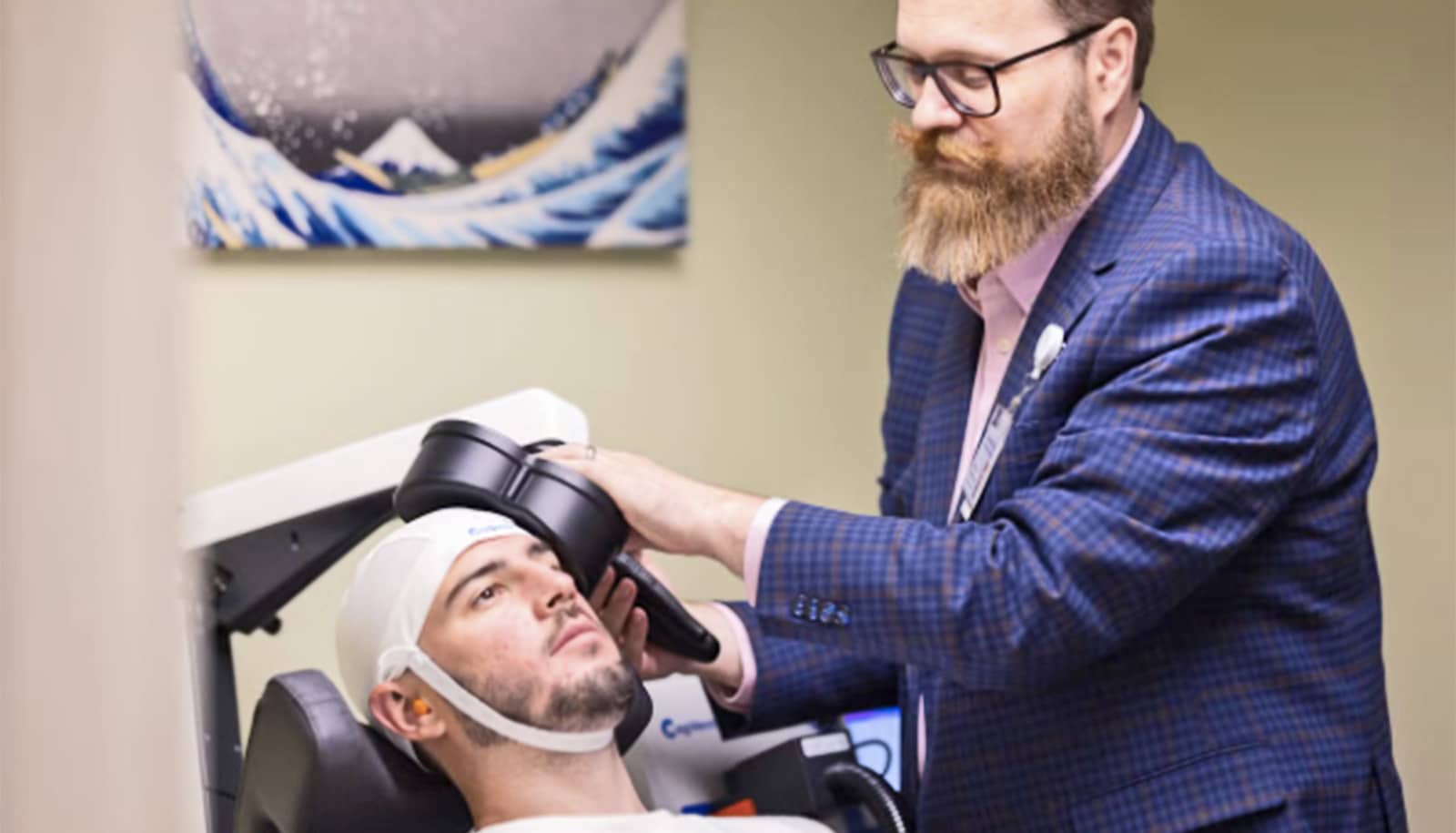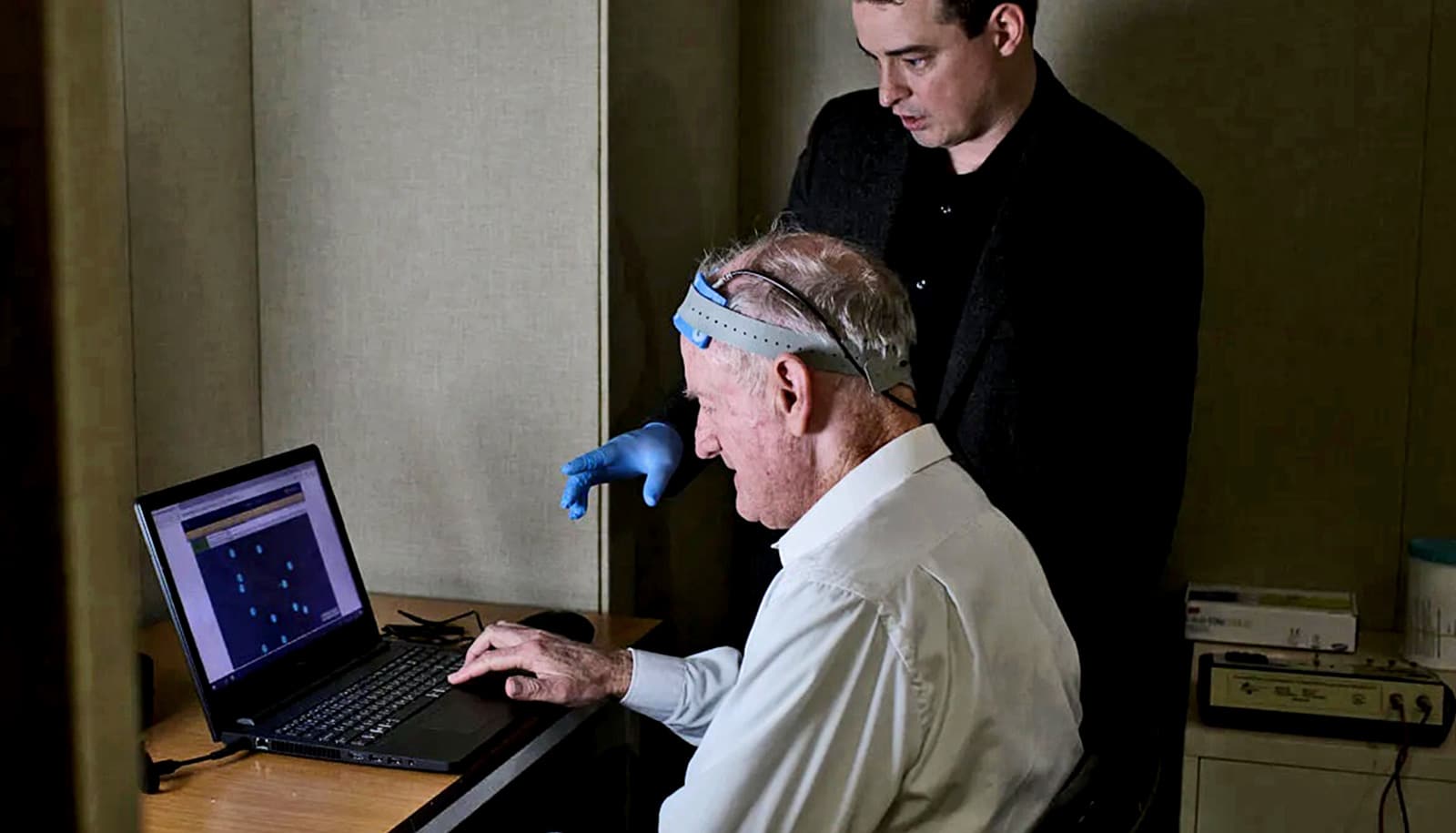
A study finds a targeted form of non-invasive brain stimulation can calm the brain’s fear center and significantly improve symptoms of post-traumatic stress disorder, with benefits lasting months after treatment.
Transcranial magnetic stimulation (TMS) is an FDA-approved treatment for several conditions including depression, though not for post-traumatic stress disorder (PTSD). It uses magnetic pulses to influence activity in specific brain regions.
PTSD has been linked to heightened activity in the amygdala, the brain region involved in processing fear.
In this clinical trial, investigators in the Emory University psychiatry and behavioral sciences department examined whether two weeks of low-frequency TMS could reduce amygdala reactivity to threat and improve PTSD symptoms. They used MRI scans to precisely identify where on the head to apply stimulation, allowing the treatment to be personalized for each participant.
Fifty adults with PTSD symptoms enrolled in the study, and 47 completed it. Most participants were recruited through the Grady Trauma Project, a large-scale clinical research program studying civilian trauma based at Grady Health System and the Emory University School of Medicine. Participants were randomly assigned to receive either active TMS or a placebo treatment in a blinded design so they would not know which treatment they received. MRI scans measured amygdala responses to threat before and after treatment.
The researchers found that active TMS reduced right amygdala reactivity to threat. Participants who received active TMS showed significant improvement in PTSD symptoms. Clinical benefit was observed after just two weeks of treatment and lasting at least six months, the full period examined in the study.
Seventy-four percent of individuals in the active TMS group experienced clinically meaningful symptom reduction.
“This study shows that we can directly target the brain circuits involved in PTSD and produce measurable changes in both brain function and symptoms,” says principal investigator Sanne van Rooij, PhD, associate professor of Psychiatry and Behavioral Sciences, Emory University School of Medicine.
“By using MRI to guide stimulation, we are moving toward more precise, individualized treatments that address the biology of the disorder.”
Unlike traditional talk therapy, TMS treatment does not require patients to recount traumatic experiences, which may reduce a barrier to care for some people. Participants reported changes in how they emotionally experienced their trauma, including improved management of nightmares. Some described the treatment as “life changing,” saying it “gave me back my life.”
According to the researchers, this is the first study to use MRI scans to individualize TMS for PTSD. By demonstrating a specific change in the amygdala, a region known to function differently in PTSD, they say the findings advance understanding of the neurobiology of recovery and suggest a new direction for treatment of PTSD locally, nationally, and internationally.
The findings appear in The American Journal of Psychiatry.
Additional contributors to the study are from Emory, Harvard Medical School, Wayne State University, and Dartmouth College and the National Center for PTSD.
The study was funded by the National Institutes of Health and the Brain and Behavior Research Foundation.
Source: Emory University