New research digs into how Indigenous people living at high altitude in the Andean highlands have adapted to one of the most extreme environments ever inhabited by humans.
DNA sequencing technology makes it possible to explore the genome to learn how humans adapted to live in a wide range of environments.
Research has shown, for instance, that Tibetans living at high altitude in the Himalayas have a unique variant of a gene that expands the oxygen-carrying capacity of their blood.
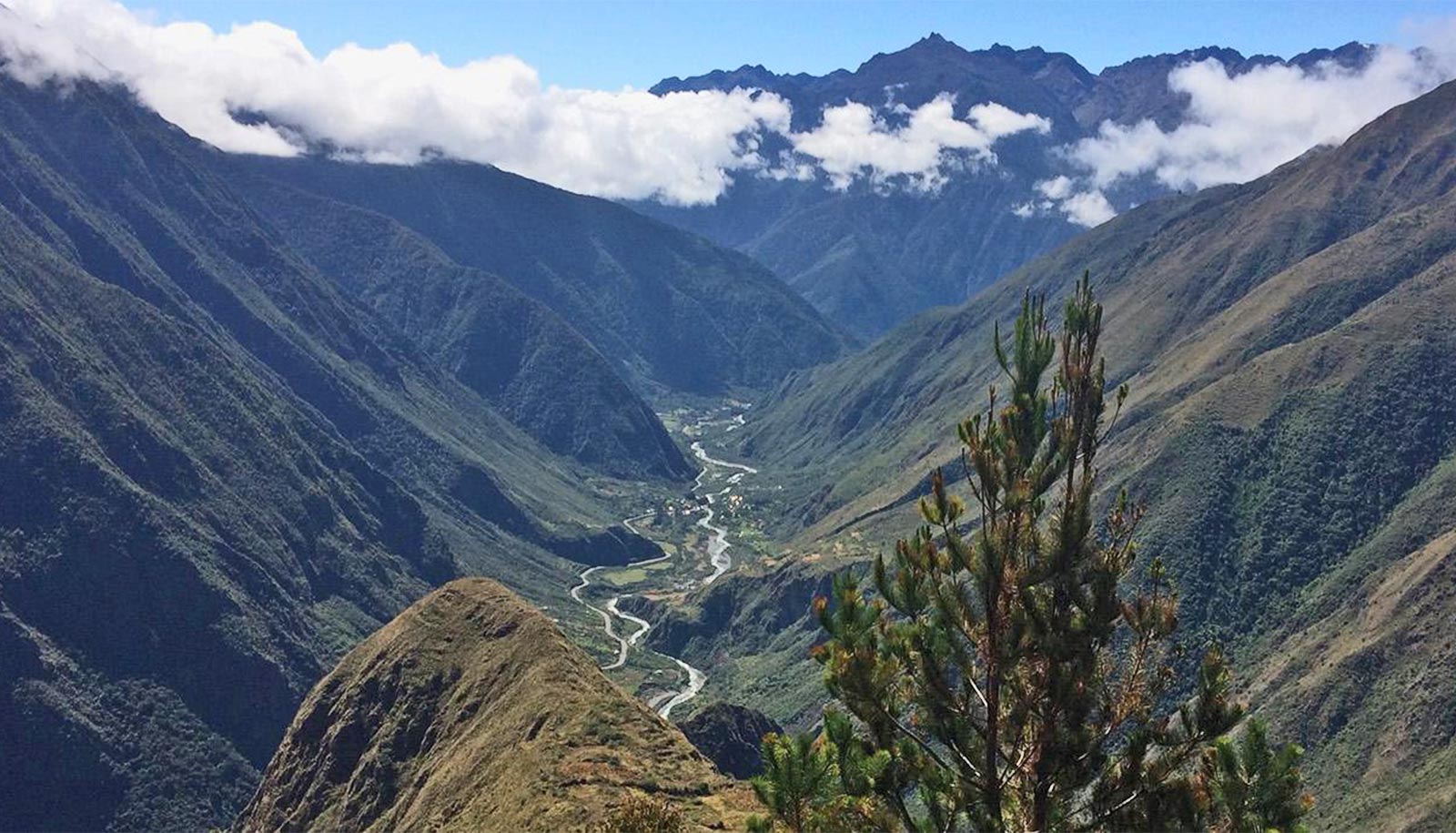
Scientists, however, have not found a strong signal for this “high-altitude gene” in the genomes of Indigenous people living in the Andes Mountains of South America. It’s been less clear how people adapted to the altitudes greater than 2,500 meters in the Andean highlands, where low-oxygen levels, frigid temperatures, and intense ultraviolet radiation make life challenging in the extreme.
A study led by anthropologists at Emory University took a new approach to explore this Andean mystery.
Rather than scan the whole genome of Indigenous people to look for alterations in the genetic code, the researchers scanned the entire methylome. The methylome reveals what are called “epigenetic” changes in the genome—how genes are expressed in response to the environment through a chemical process known as DNA methylation.
The journal Environmental Epigenetics published the research, which adds to the evidence that epigenetics may play a bigger role in adaptation than previously realized.
The researchers compared the methylomes of 39 individuals from two modern-day Indigenous populations: the Kichwa from the Andean highlands of Ecuador and the Ashaninka from the lowland Amazon Basin along the Peruvian border of Ecuador.
“This is the first whole methylome data on these two populations,” says Yemko Pryor, first author of the study, who led the project as an Emory PhD student.
“Unlike many methylome studies that focus on just a few hundred thousand sites throughout the genome, we looked at all three million base pairs to see what we would find.”
The results identified strong differences in DNA methylation between the low- and high-altitude populations for the PSMA8 gene, associated with regulation of the vascular system, and for the FST gene, associated with regulating muscles in the heart.
The second strongest signal detected in the high-altitude population compared to the low-altitude population was for genes within the P13K/AKT pathway, which is associated with muscle growth and the creation of new blood vessels.
The researchers hypothesize that the interplay between these epigenetic differences may help explain the increased muscularization of small arteries and higher blood viscosity that has been found in high-altitude Andean populations. These differences, they explain, may represent a unique vascular adaptation to a low-oxygen environment distinct from those found in Tibetan populations.
And the researchers note that the P13K/AKT pathway has been implicated in arteriole wall thickening under low-oxygen conditions in rats, as well as in human cells.
“Arteriole wall thickening in humans has been linked to the development of pulmonary hypertension, which is more common in Andean highlanders compared to other highland populations,” they write.
The current study also identified strong differences between the two populations in the methylation of 39 pigmentation-related genes, which may help explain adaptation by the high-altitude population to strong ultraviolet radiation.
“The findings are particularly interesting because we’re not seeing these strong signals in the genome but when we look at the methylome, we are seeing these changes,” says John Lindo, Emory associate professor of anthropology and senior author of the study.
Gene selection theory holds that a gene that helps a population to adapt over time needs to be reliably inherited and therefore would show up in the genetic code of the genome. An epigenetic change, however, represents a more flexible response to an environmental influence, which would not necessarily be passed down to offspring.
“The Kichwa population that participated in our study did not just arrive in the Andean highlands—their ancestors had been living there for nearly 10,000 years,” Lindo says. “Our findings suggest that epigenetics can contribute to adaptation in a longstanding way.”
Coauthors of the current paper include scientists from Central University of Ecuador; the Institute of Medicine and Forensic Sciences in Lima, Peru; the State University of Rio de Janeiro; and the University of Pavia in Pavia, Italy.
Source: Emory University