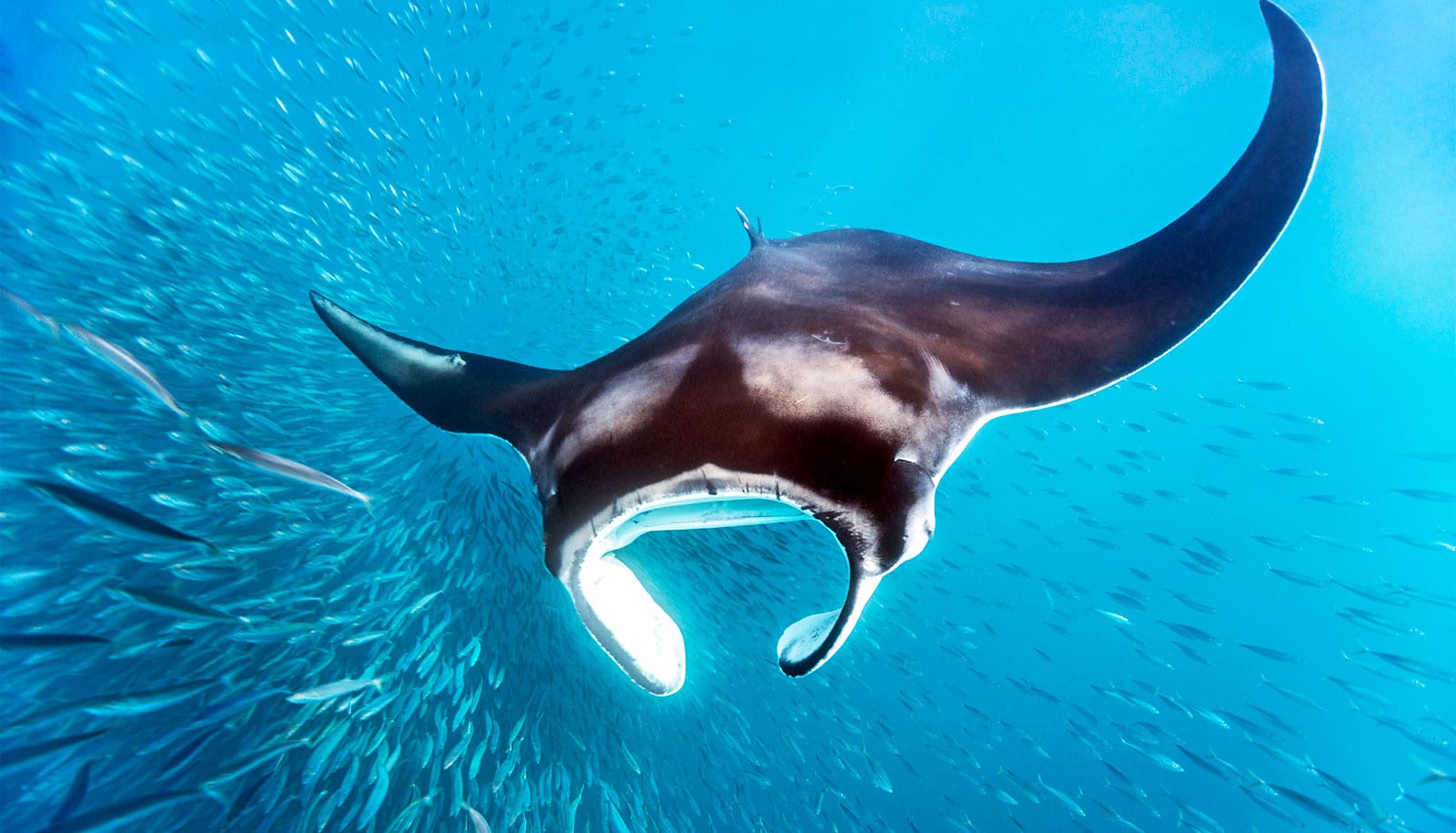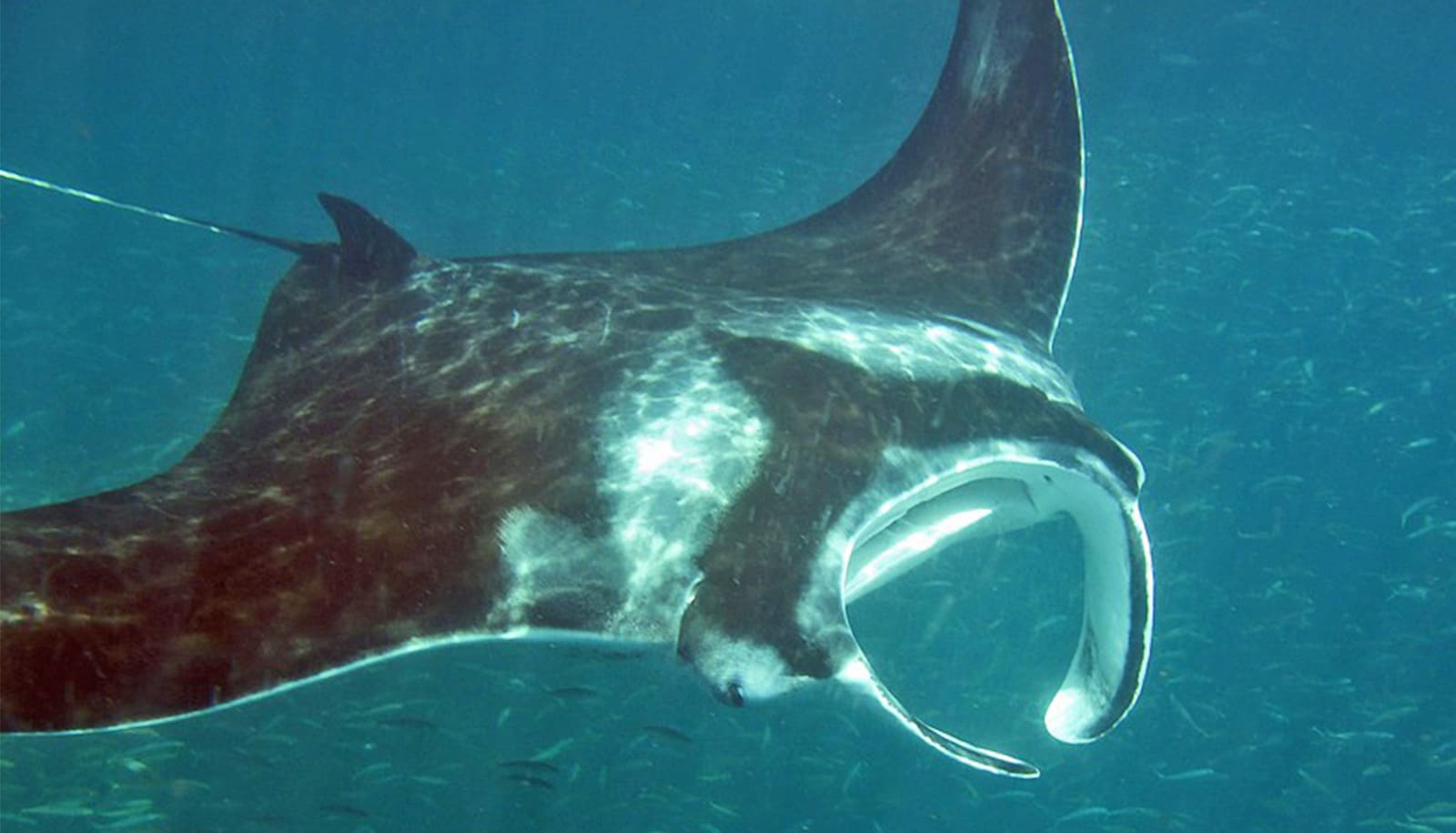
A new study finds that young Caribbean manta rays (Mobula yarae) often swim with groups of other fish, creating small, moving ecosystems that support a variety of marine species.
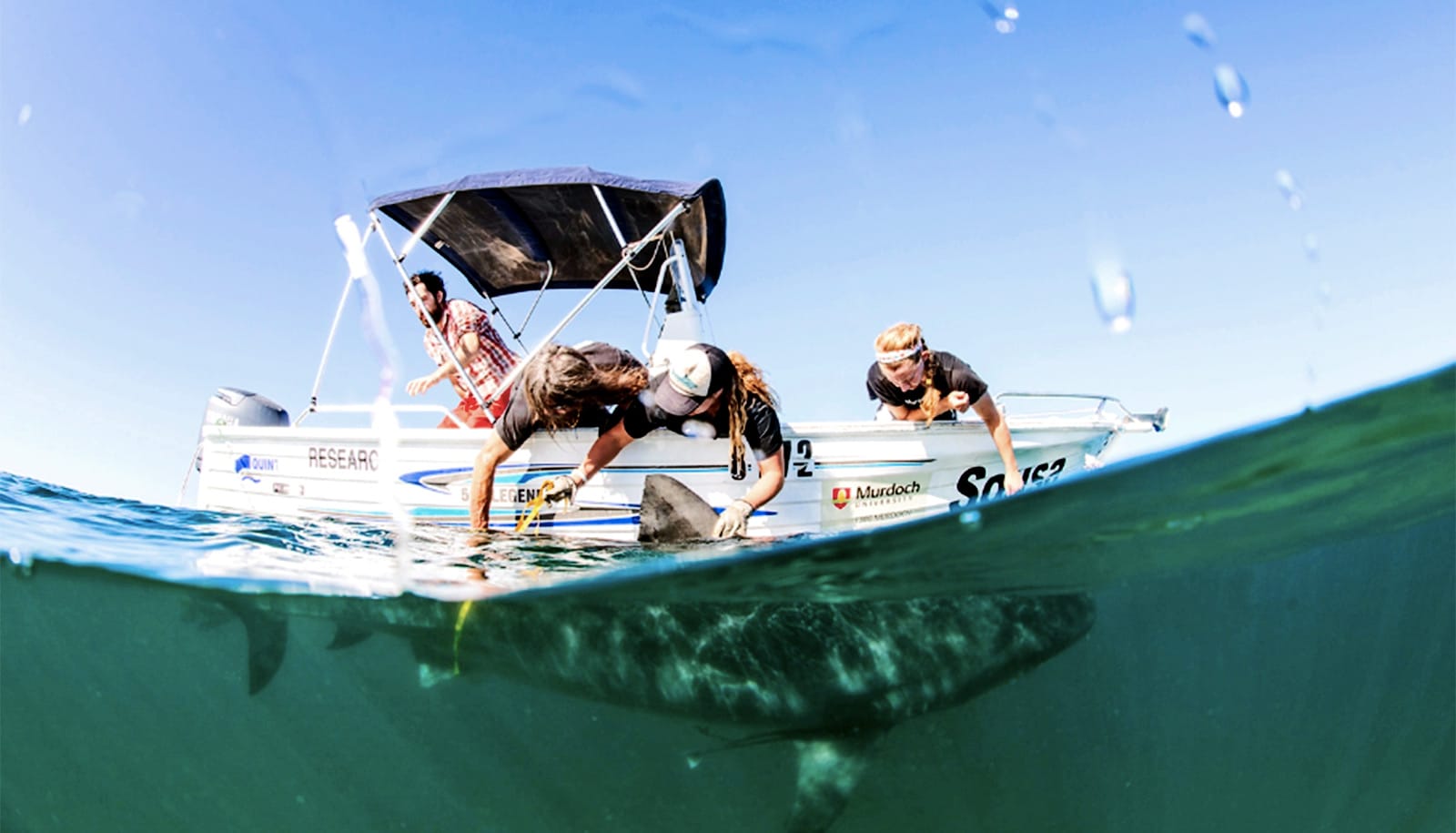
South Florida—particularly along Palm Beach County—serves as a nursery for juvenile manta rays. For nearly a decade, the Marine Megafauna Foundation has been studying these rays and documenting the challenges they face from human activities near the coast, such as boat strikes and entanglement in fishing gear, which can pose significant threats to juvenile mantas
“Using video footage collected between 2016 and 2021, we analyzed 465 videos to better understand which species swim with manta rays and how they interact,” says Emily Yeager, lead author of the study and a doctoral candidate in the environmental science and policy department at the University of Miami Rosenstiel School of Marine, Atmospheric, and Earth Science.
“We looked at which fish were present, how many there were, and where they tended to gather—often around the manta’s gills, eyes, wings, and tail.”
The study found that four families of teleost fish, the largest group of ray-finned fishes, regularly associate with young mantas. The most frequent companions are remoras—also known as suckerfish—which attach themselves to larger animals using a suction-like dorsal fin. Other fish that commonly accompany mantas include species important to Florida’s fisheries, such as jacks and cobia.
“Understanding ecological interactions between species is essential to conserving the marine environment,” says Catherine Macdonald, an associate professor in the environmental science and policy department, and the director of the Shark Research and Conservation Program at the Rosenstiel School.
“Our results suggest that these species may be interdependent and form long-lasting and relatively stable relationships, creating mobile ecosystems where fish may mature, feed, or mate.”
Because South Florida is a busy area for boating and recreational fishing, juvenile manta rays are especially vulnerable to being struck by boats or caught in fishing lines. The study underscores the importance of responsible boating to help safeguard manta rays and the communities of fish they support.
“Slowing down in areas where mantas are known to feed near the surface is a simple but crucial step toward protecting these young rays,” says Jessica Pate of the Marine Megafauna Foundation, a coauthor of the study. “Responsible boating and fishing can help protect these species and their critical ecological interactions long-term.”
“The findings provide valuable insights for marine conservation and policy, showing that manta rays act as living habitats that support biodiversity in coastal waters.” Yeager adds.
The study appears in the journal Marine Biology.
The research was supported by the University of Miami’s Maytag Fellowship and a Florida Sea Grant–Guy Harvey Fellowship held by PhD candidate Emily Yeager.
Source: University of Miami