Science & Technology - Posted by Bill Hathaway-Yale on Thursday, June 23, 2011 10:53 - 4 Comments    
1 Star2 Stars3 Stars4 Stars5 Stars (2 votes, average: 5.00 out of 5)
Loading ... Loading ...

Birds see colors invisible to humans

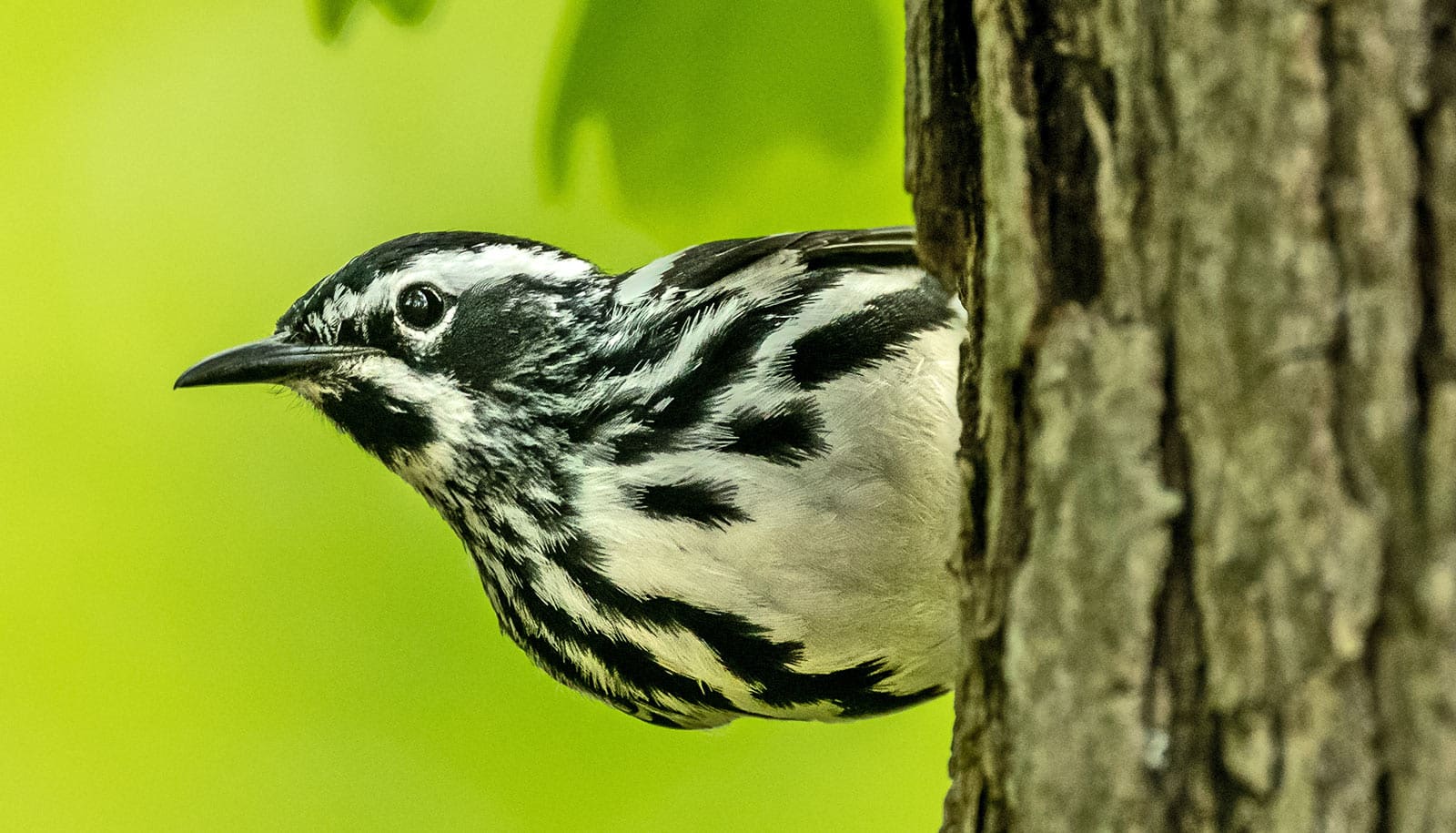
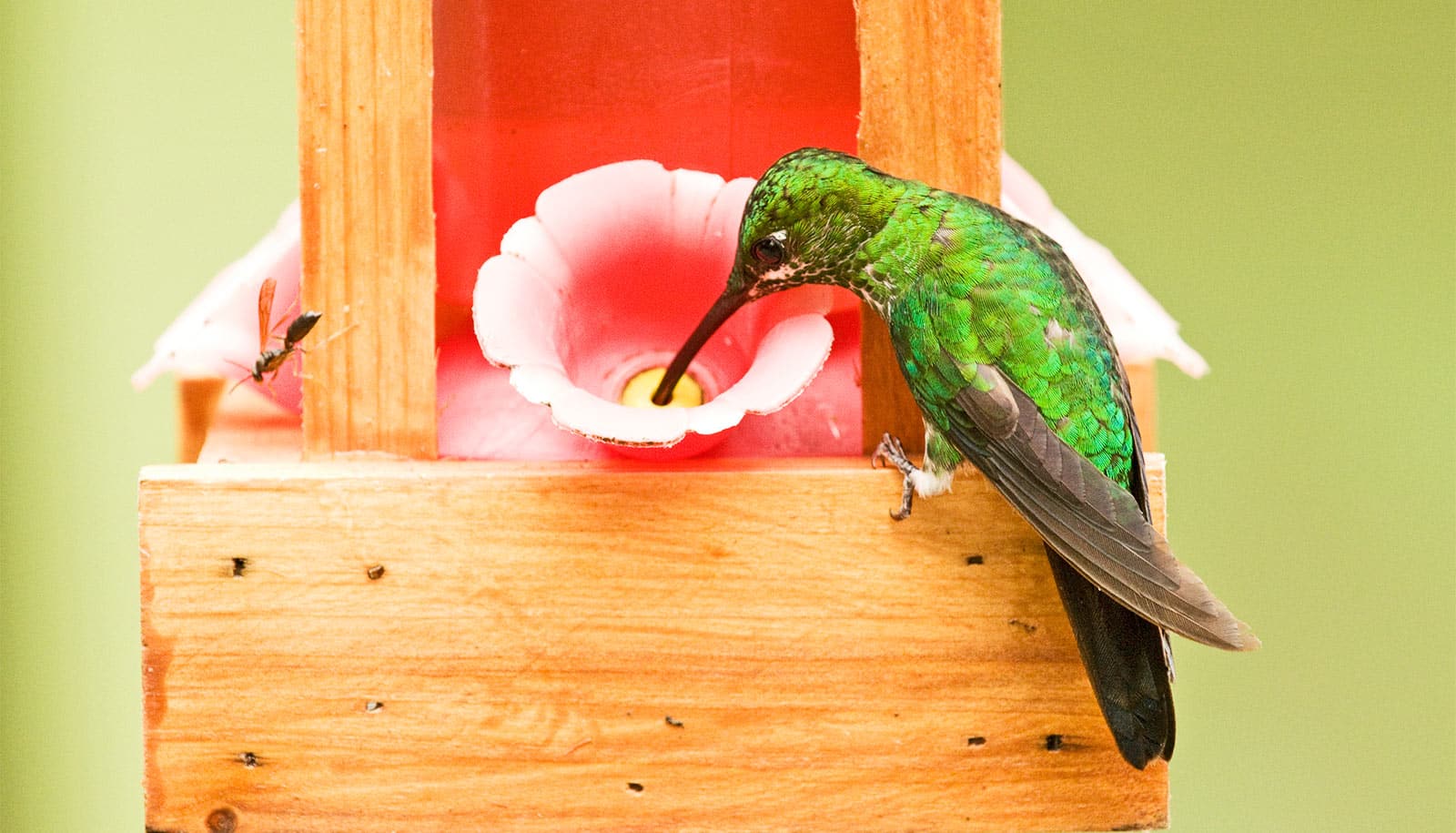
Birds can make only about 30 percent of all the colors they are capable of seeing. Researchers are interested in knowing why birds have yet to develop the ability to produce, for example, ultraviolet yellow or red colors in their feathers—colors invisible to humans but visible to the birds themselves. (Credit: iStockphoto)

YALE (US) — Birds’ plumage has changed from dull to brilliant over millions of years, but the bright hues humans see are only a fraction of what birds see.


“Our clothes were pretty drab before the invention of aniline dyes, but then color became cheap and there was an explosion in the colorful clothes we wear today,” says Richard Prum, professor of ornithology, ecology, and evolutionary biology at Yale University. “The same type of thing seemed to have happened with birds.”

A new study, published this month in the journal Behavioral Ecology, finds that birds not only can see more colors than they have in their plumage, because of additional color cones in their retina that are sensitive to ultraviolet range, but they also see colors that are invisible to humans.

Over time, birds have evolved a dazzling combination of colors that included various melanin pigments, which gives human skin its tint; carotenoid pigments, which come from their diets; and structural colors, like the blue eyes of humans.

Structural colors produce the lion’s share of color diversity to bird feathers, even though they are relatively rare among birds.
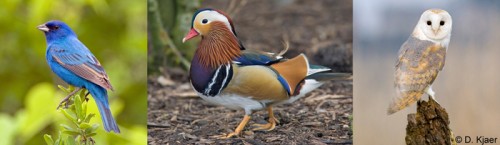

Birds can see more colors than they have in their plumage because of additional color cones in their retina that are sensitive to ultraviolet range. (Credit: Yale University)

Researchers are interested in knowing why birds have yet to develop the ability to produce, for example, ultraviolet yellow or red colors in their feathers—colors invisible to humans but visible to the birds themselves.

“We don’t know why plumage colors are confined to this subset,” says Mary Caswell Stoddard of Cambridge University.

“The out of gamut colors may be impossible to make with available mechanisms or they may be disadvantageous.”

“That doesn’t mean that birds’ color palette might not eventually evolve to expand into new colors,” Prum says.

“Birds can make only about 26 to 30 percent of the colors they are capable of seeing but they have been working hard over millions of years to overcome these limitations.

“The startling thing to realize is that although the colors of birds look so incredibly diverse and beautiful to us, we are colorblind compared to birds.”

More news from Yale University: http://opa.yale.edu/
Please wait

4 Comments

You can follow any responses to this entry through the RSS 2.0 feed. You can skip to the end and leave a response. Pinging is currently not allowed.

Sheri
Jun 24, 2011 10:47

I am baffled as to the amount of money that must have been spent on such an insane study. And who can actually prove it? Seriously!!!!

Angelina Souren
Jun 24, 2011 18:40

We humans have always had the tendency to think in terms of what is known to us. Of course! It is hard(er) to imagine something that does not exist in our own experience. It is hard to imagine the unimaginable. We have also had a tendency to see ourselves as the superior species on this planet, in all aspects of life.

More and more research is revealing more and more about the awesome capabilities animals have, some of which we will likely never fully grasp. And more and more research is revealing that animals have much more in common with us than we assumed, for example in terms of decision-making, emotions, and some form of Theory of Mind.

The role UV plays in birds’ lives – apart from the fact that they need it for their vitamin D production – is fascinating. I happen to have enjoyed the company of two parrots for many years and I still remember very vividly the first time I got (artificial) full-spectrum lighting – including UV – because of the profound effect that had on one of my parrots. It was as if she was suddenly able to see things in her companion that she had not been able to see before (maybe even a male/female distinction in this particular species). After one or two weeks, that effect subsided, but every parrot owner is aware of the effect light and lighting have on their birds. It is hard to miss, for instance after snowfall.

In the future, we may be able to apply this knowledge to expand our own capacities, so that we too may be able to see, for instance, UV and magnetic fields, either directly or indirectly.

Torbjörn Larsson, OM
Jun 27, 2011 16:35

@ Sheri:

Seriously!? The study pays off in science, as evidenced by a result. And science pays off, say in the transistors that makes your computer function.

As for “proving it” that is what you do in math, but this is observed and tested by more observation.

InkFarmer
Jul 13, 2011 18:00

Mind blowing stuff! I wonder what other species have a wider spectrum than we do.

Leave a Comment

Comment

Research news from leading universities

Daily E-News


Browse By School

Follow Futurity

RSS feedsFacebookTwitter

Media Partners

Alltop logo Pulse logo Flipboard logo Visual News logo The Conversation logo

Week's Most Discussed

  • Loading...